AQA · A-Level · History
Course version: 7042 · Version from Sept 2017
The reign of Edward IV, 1471–1483 (A-level only): Factional rivalries and…
Full specification wording
2B The Wars of the Roses, 1450–1499 – 'The Sun in Splendour': the reign of Edward IV, 1471–1483 (A-level only): Factional rivalries and court politics: hostile reactions against the influence of the Woodvilles
During Edward IV's second reign (1471–1483), factional rivalries and court politics intensified, largely driven by hostile reactions against the influence of the Woodvilles.
Checked against the AQA 7042 specification (opens in a new tab) on .
- Point 2 of 4
Study notes
From the checked teaching notes for this specification point.
The idea
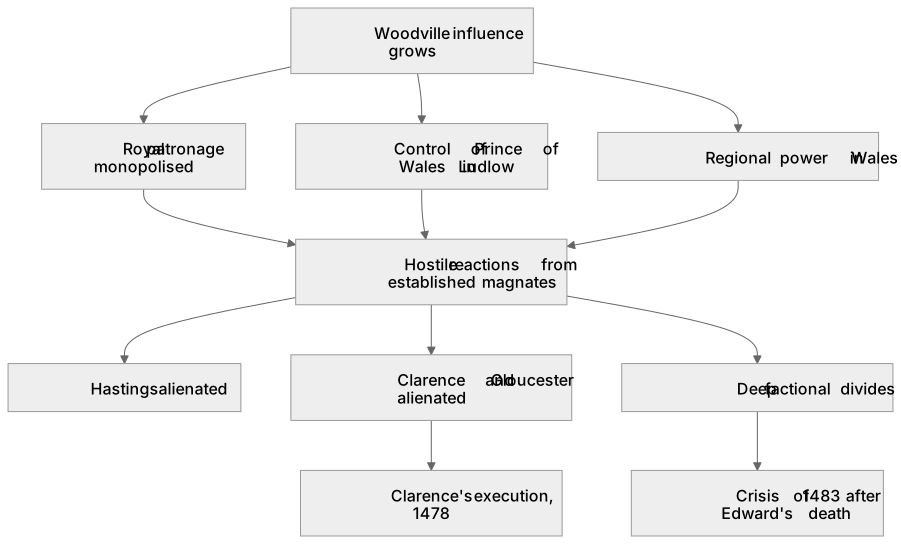
During Edward IV's second reign (1471–1483), factional rivalries and court politics intensified, largely driven by hostile reactions against the influence of the Woodvilles. Queen Elizabeth's family, including Earl Rivers and Thomas Grey, Marquis of Dorset, monopolised royal patronage and controlled the upbringing of the Prince of Wales in Ludlow. This concentration of power alienated established magnates like William, Lord Hastings, and the King's brothers, Clarence and Gloucester. Clarence's execution in 1478 was partly fuelled by these court tensions. Ultimately, the Woodvilles' dominance created deep factional divides that fatally undermined the Yorkist regime upon Edward's sudden death in 1483.
What earns the marks
- Detail the continued rise and influence of the Woodville family during Edward IV's second reign, particularly their control over the Prince of Wales.
- Explain how the Woodvilles' dominance of court patronage and regional power in Wales alienated established noble families and royal brothers.
- Analyse the specific factional rivalries at court, such as the hostility between Thomas Grey, Marquis of Dorset, and William, Lord Hastings.
- Evaluate how factional rivalries and hostile reactions to the Woodvilles contributed to the downfall of the Duke of Clarence in 1478 and the crisis of 1483.
Common mistakes and how to put them right
Focusing on the Woodville marriages of the 1460s instead of their political influence in the 1470s.
Put it right: Emphasise their control of the Prince of Wales and regional power in the 1471-1483 period.
Stating that the Woodvilles controlled all government policy.
Put it right: Clarify that while they dominated court patronage, Edward IV remained firmly in control of actual government policy until his death.
Assuming the Woodvilles were universally hated by all nobles.
Put it right: Specify that the hostility was primarily from those whose ambitions were directly thwarted by them, such as Hastings, Clarence, and Gloucester.
Exam tips
- Use specific examples of Woodville influence, such as Earl Rivers' role in the Council of Wales, to illustrate why other nobles felt aggrieved.
- Link court politics directly to the factionalism that erupted in 1483 when explaining the breakdown of the Yorkist regime.
- When assessing the stability of Edward's second reign, weigh his personal control against the underlying tensions caused by Woodville unpopularity.
Try the lesson
The start of the 2B The Wars of the Roses, 1450–1499 – 'The Sun in Splendour': the reign of Edward IV, 1471–1483 (A-level only): Factional rivalries and court politics: hostile reactions against the influence of the Woodvilles lesson, made from checked teaching notes for this specification point.
Have a go first
Which leading magnate's diplomatic plans were directly undermined by Edward IV's secret marriage to Elizabeth Woodville in 1464?
Listen
During Edward IV's second reign (1471–1483), factional rivalries and court politics intensified, largely driven by hostile reactions against the influence of the Woodvilles. Queen Elizabeth's family, including Earl Rivers and Thomas Grey, Marquis of Dorset, monopolised royal patronage and controlled the upbringing of the Prince of Wales in Ludlow. This concentration of power alienated established magnates like William, Lord Hastings, and the King's brothers, Clarence and Gloucester. Clarence's execution in 1478 was partly fuelled by these court tensions. Ultimately, the Woodvilles' dominance created deep factional divides that fatally undermined the Yorkist regime upon Edward's sudden death in 1483. A strong answer earns marks for these points. Detail the continued rise and influence of the Woodville family during Edward IV's second reign, particularly their control over the Prince of Wales. Explain how the Woodvilles' dominance of court patronage and regional power in Wales alienated established noble families and royal brothers. Analyse the specific factional rivalries at court, such as the hostility between Thomas Grey, Marquis of Dorset, and William, Lord Hastings. Evaluate how factional rivalries and hostile reactions to the Woodvilles contributed to the downfall of the Duke of Clarence in 1478 and the crisis of 1483. A common slip: Focusing on the Woodville marriages of the 1460s instead of their political influence in the 1470s. Instead, Emphasise their control of the Prince of Wales and regional power in the 1471-1483 period. Exam tip: Use specific examples of Woodville influence, such as Earl Rivers' role in the Council of Wales, to illustrate why other nobles felt aggrieved.
See it
Put the events in order
Put these events in the order they happened, earliest first.
- 1. Edward IV begins his second reign amid factional rivalries
- 2. Edward's sudden death fatally undermines the Yorkist regime
- 3. Clarence is executed partly due to court tensions
Label the diagram
Some boxes have lost their names. Pick the right name for each number.
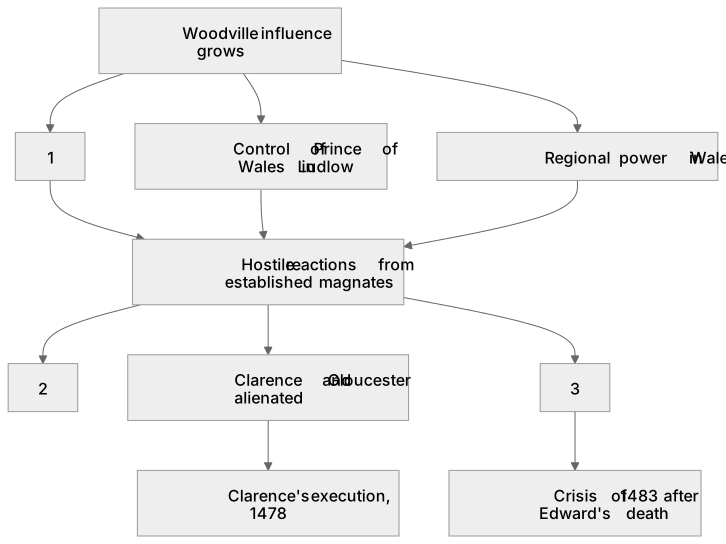
1Box 1
2Box 2
3Box 3
There is more to this lesson
The full lesson goes on to check your understanding and help you earn the marks. Create a free account to carry on, with your progress saved.
A week of Premium from your first lesson · Then the free plan continues · No card, no charge
Test your understanding of 2B The Wars of the Roses, 1450–1499 – 'The Sun in Splendour': the reign of Edward IV, 1471–1483 (A-level only): Factional rivalries and court politics: hostile reactions against the influence of the Woodvilles
Active recall beats re-reading. Take an instant quiz now to test what you’ve learned and lock it into long-term memory.
A week of Premium from your first lesson · Then the free plan continues · No card, no charge