AQA · A-Level · History
Course version: 7042 · Version from Sept 2017
The development of doctrine and further reform; two Prayer Books; the role…
Full specification wording
2D Religious conflict and the Church in England, c1529– c1570 – A more Protestant Nation, 1547–1553 (A-level only): The development of doctrine and further reform; two Prayer Books; the role and beliefs of Cranmer; the dissolution of the chantries and other vestiges of Catholicism
Edward VI's reign saw a profound shift towards Protestantism, heavily driven by Archbishop Thomas Cranmer.
Checked against the AQA 7042 specification (opens in a new tab) on .
- Point 2 of 4
- 3 key terms
Study notes
From the checked teaching notes for this specification point.
The idea
Edward VI's reign saw a profound shift towards Protestantism, heavily driven by Archbishop Thomas Cranmer. Cranmer's evolving beliefs shaped doctrinal development, moving from the cautious ambiguity of the 1549 Book of Common Prayer to the radical memorialism of the 1552 Prayer Book. Further reform systematically dismantled the vestiges of Catholicism. The 1547 Chantries Act dissolved chantries, ostensibly to end the Catholic doctrine of Purgatory, but also to fund foreign wars. Subsequent injunctions targeted other Catholic remnants, ordering the removal of stone altars, stained glass, and religious images. This systematic destruction of traditional practices firmly established a reformed Protestant Church in England by 1553.
What earns the marks
- Analyse the theological differences between the 1549 and 1552 Books of Common Prayer to demonstrate the radicalisation of doctrine.
- Evaluate Thomas Cranmer's role as the primary architect of Edwardian religious reform and the evolution of his personal theology.
- Explain the religious and financial motivations behind the dissolution of the chantries in 1547.
- Assess the impact of iconoclasm and the removal of Catholic vestiges, such as stone altars and images, on local parishes.
Common mistakes and how to put them right
Confusing the theological stances of the two Prayer Books.
Put it right: Clearly distinguish the 1549 Prayer Book's moderate compromise from the 1552 Prayer Book's radical Protestantism.
Stating the dissolution of the monasteries occurred under Edward VI.
Put it right: Specify that Edward VI dissolved the chantries (1547), whereas Henry VIII dissolved the monasteries.
Assuming Cranmer's beliefs remained static throughout the period.
Put it right: Trace Cranmer's theological journey from moderate Lutheran influences to more radical Swiss Reformed views by 1552.
Exam tips
- Link the dissolution of the chantries to both ideological attacks on Purgatory and the Crown's desperate need for revenue.
- Use specific examples of removed Catholic vestiges, such as the replacement of stone altars with wooden communion tables, to illustrate doctrinal shifts.
- Discuss how Cranmer's 1552 Prayer Book deliberately removed any implication of transubstantiation during the Eucharist.
Try the lesson
The start of the 2D Religious conflict and the Church in England, c1529– c1570 – A more Protestant Nation, 1547–1553 (A-level only): The development of doctrine and further reform; two Prayer Books; the role and beliefs of Cranmer; the dissolution of the chantries and other vestiges of Catholicism lesson, made from checked teaching notes for this specification point.
Have a go first
What was the primary theological justification used by Protestant reformers for the dissolution of the chantries in 1547?
Listen
Edward VI's reign saw a profound shift towards Protestantism, heavily driven by Archbishop Thomas Cranmer. Cranmer's evolving beliefs shaped doctrinal development, moving from the cautious ambiguity of the 1549 Book of Common Prayer to the radical memorialism of the 1552 Prayer Book. Further reform systematically dismantled the vestiges of Catholicism. The 1547 Chantries Act dissolved chantries, ostensibly to end the Catholic doctrine of Purgatory, but also to fund foreign wars. Subsequent injunctions targeted other Catholic remnants, ordering the removal of stone altars, stained glass, and religious images. This systematic destruction of traditional practices firmly established a reformed Protestant Church in England by 1553. A strong answer earns marks for these points. Analyse the theological differences between the 1549 and 1552 Books of Common Prayer to demonstrate the radicalisation of doctrine. Evaluate Thomas Cranmer's role as the primary architect of Edwardian religious reform and the evolution of his personal theology. Explain the religious and financial motivations behind the dissolution of the chantries in 1547. Assess the impact of iconoclasm and the removal of Catholic vestiges, such as stone altars and images, on local parishes. A common slip: Confusing the theological stances of the two Prayer Books. Instead, Clearly distinguish the 1549 Prayer Book's moderate compromise from the 1552 Prayer Book's radical Protestantism. Exam tip: Link the dissolution of the chantries to both ideological attacks on Purgatory and the Crown's desperate need for revenue.
See it
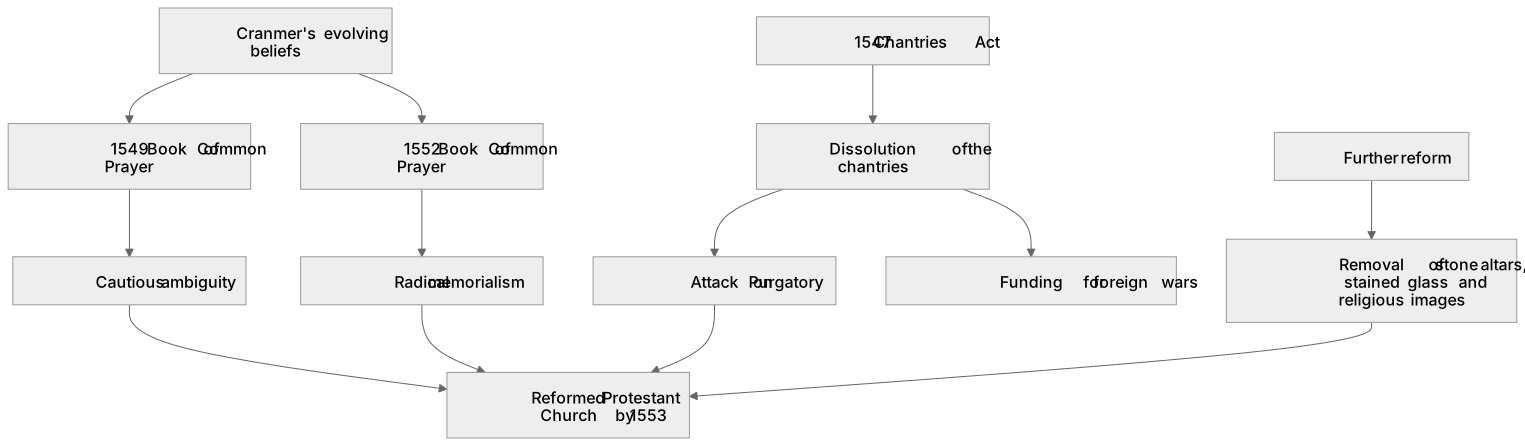
Put the events in order
Put these events in the order they happened, earliest first.
- 1. Reformed Protestant Church established in England
- 2. Chantries Act dissolved the chantries
- 3. Second Prayer Book published
- 4. Book of Common Prayer published
Key words
Say what each word means before you turn the card.
Doctrinal Change
Try answering aloud or in your head before turning the card.
Iconoclasm
Try answering aloud or in your head before turning the card.
Liturgical Reform
Try answering aloud or in your head before turning the card.
See every definition
- Doctrinal Change
- The development of doctrine, moving from the cautious ambiguity of the 1549 Book of Common Prayer to the radical memorialism of the 1552 Prayer Book.
- Iconoclasm
- The systematic destruction of traditional practices, ordering the removal of stone altars, stained glass, and religious images.
- Liturgical Reform
- Further reform through two Prayer Books, shaped by Cranmer's evolving beliefs and his role as the primary architect of Edwardian religious reform.
Label the diagram
Some boxes have lost their names. Pick the right name for each number.
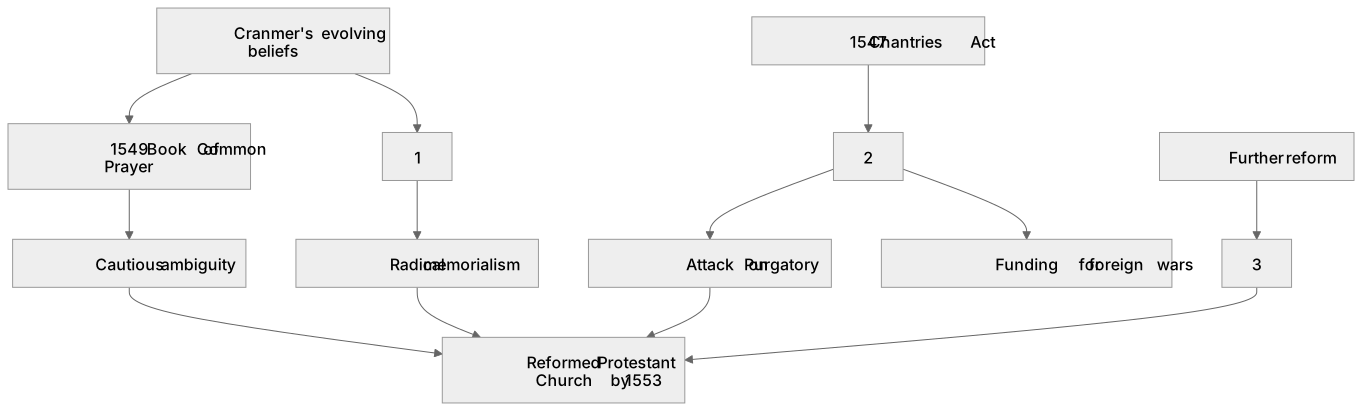
1Box 1
2Box 2
3Box 3
There is more to this lesson
The full lesson goes on to check your understanding and help you earn the marks. Create a free account to carry on, with your progress saved.
A week of Premium from your first lesson · Then the free plan continues · No card, no charge
Test your understanding of 2D Religious conflict and the Church in England, c1529– c1570 – A more Protestant Nation, 1547–1553 (A-level only): The development of doctrine and further reform; two Prayer Books; the role and beliefs of Cranmer; the dissolution of the chantries and other vestiges of Catholicism
Active recall beats re-reading. Take an instant quiz now to test what you’ve learned and lock it into long-term memory.
A week of Premium from your first lesson · Then the free plan continues · No card, no charge