Pearson Edexcel · GCSE · Music
Course version: 1MU0 · Version from Sept 2016
Musical vocabulary - Organisation of pitch: The chords that conclude a…
Full specification wording
Appendix 3: Musical vocabulary - Organisation of pitch: The chords that conclude a musical phrase. Cadences are of four main types: perfect, with chords V‒I; imperfect, with I (or other non-dominant chord) and V; plagal, with chords IV‒I; interrupted, usually with V‒VI.
A cadence is the pair of chords that closes a musical phrase, and its job is to signal how final the ending feels.
- Point 3 of 27
- 4 key terms
Study notes
From the teaching notes for this specification point.
The idea
A cadence is the pair of chords that closes a musical phrase, and its job is to signal how final the ending feels. Learn the four types by their chord movement in a key. A perfect cadence moves from chord V to chord I and sounds finished. An imperfect cadence ends on V, approached from I or another non-dominant chord, and sounds unfinished. A plagal cadence moves from IV to I, the familiar 'amen' close. An interrupted cadence usually moves from V to VI, sidestepping the expected tonic. To identify one, find the key, label the last two chords with Roman numerals, then name the movement.
For example: In C major, G to C is perfect; F to C is plagal; G to A minor is interrupted.
What earns the marks
- A cadence is defined as the chords concluding a musical phrase, not any single chord.
- Perfect cadence is identified by the movement V‒I.
- Imperfect cadence ends on V, approached from I or another non-dominant chord.
- Plagal cadence is identified by the movement IV‒I.
- Interrupted cadence is usually V‒VI, avoiding the expected tonic resolution.
- Correct identification requires first establishing the key so chords can be labelled with Roman numerals.
Common mistakes and how to put them right
Calling any two final chords a perfect cadence.
Put it right: Perfect specifically means V‒I.
Reversing plagal as I‒IV.
Put it right: Plagal moves IV‒I, ending on the tonic.
Treating an interrupted cadence as ending on I.
Put it right: It usually moves V‒VI, so it does not reach the tonic.
Exam tips
- Name the key first, then write the Roman numerals of the last two chords before choosing the cadence type.
- Match the numeral pattern to the four definitions rather than relying on how 'finished' it sounds alone.
- Remember imperfect ends on V and interrupted usually ends on VI, so check the final chord carefully.
Try the lesson
The start of the Appendix 3: Musical vocabulary - Organisation of pitch: The chords that conclude a musical phrase. Cadences are of four main types: perfect, with chords V‒I; imperfect, with I (or other non-dominant chord) and V; plagal, with chords IV‒I; interrupted, usually with V‒VI. lesson, made from teaching notes for this specification point.
Have a go first
A musical phrase ends with the chords V‒VI. Which type of cadence is this?
Listen
A cadence is the pair of chords that closes a musical phrase, and its job is to signal how final the ending feels. Learn the four types by their chord movement in a key. A perfect cadence moves from chord V to chord I and sounds finished. An imperfect cadence ends on V, approached from I or another non-dominant chord, and sounds unfinished. A plagal cadence moves from IV to I, the familiar 'amen' close. An interrupted cadence usually moves from V to VI, sidestepping the expected tonic. To identify one, find the key, label the last two chords with Roman numerals, then name the movement. For example, in C major, G to C is perfect; F to C is plagal; G to A minor is interrupted. A strong answer earns marks for these points. A cadence is defined as the chords concluding a musical phrase, not any single chord. Perfect cadence is identified by the movement V‒I. Imperfect cadence ends on V, approached from I or another non-dominant chord. Plagal cadence is identified by the movement IV‒I. A common slip: Calling any two final chords a perfect cadence. Instead, perfect specifically means V‒I. Exam tip: Name the key first, then write the Roman numerals of the last two chords before choosing the cadence type.
See it
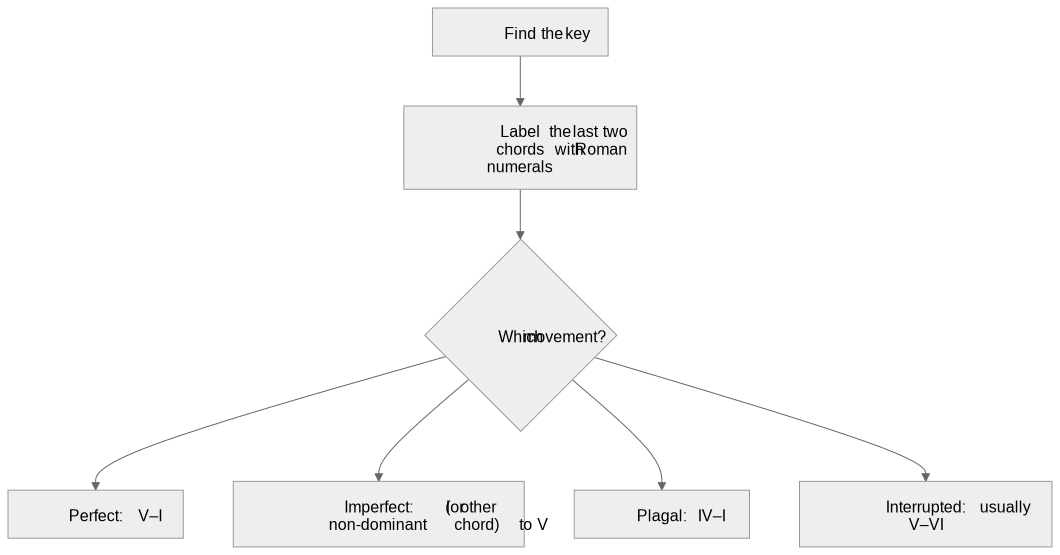
Key words
Say what each word means before you turn the card.
Cadence
Try answering aloud or in your head before turning the card.
Perfect cadence
Try answering aloud or in your head before turning the card.
Imperfect cadence
Try answering aloud or in your head before turning the card.
Plagal cadence
Try answering aloud or in your head before turning the card.
See every definition
- Cadence
- The chords that conclude a musical phrase, of which there are four main types.
- Perfect cadence
- A cadence identified by the movement V‒I, which sounds finished.
- Imperfect cadence
- A cadence that ends on V, approached from I or another non-dominant chord, and sounds unfinished.
- Plagal cadence
- A cadence identified by the movement IV‒I, ending on the tonic.
Label the diagram
Some boxes have lost their names. Pick the right name for each number.
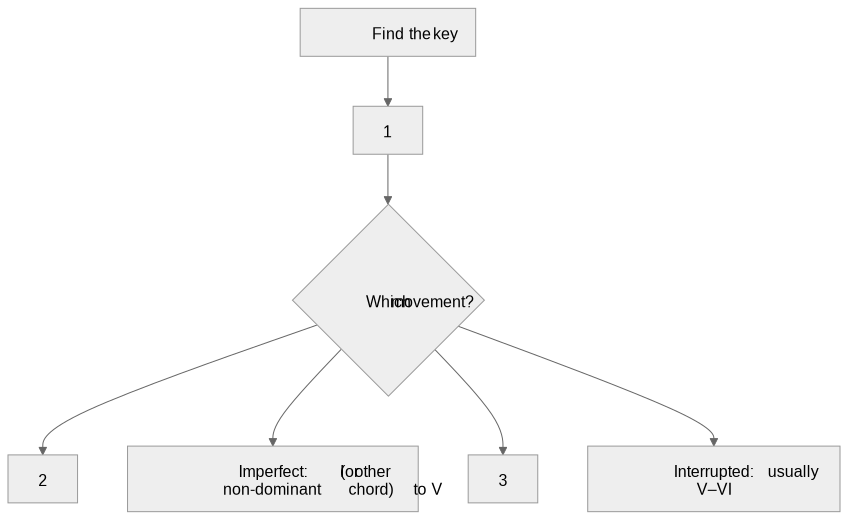
1Box 1
2Box 2
3Box 3
There is more to this lesson
The full lesson goes on to check your understanding and help you earn the marks. Create a free account to carry on, with your progress saved.
A week of Premium from your first lesson · Then the free plan continues · No card, no charge
Test your understanding of Appendix 3: Musical vocabulary - Organisation of pitch: The chords that conclude a musical phrase. Cadences are of four main types: perfect, with chords V‒I; imperfect, with I (or other non-dominant chord) and V; plagal, with chords IV‒I; interrupted, usually with V‒VI.
Active recall beats re-reading. Take an instant quiz now to test what you’ve learned and lock it into long-term memory.
A week of Premium from your first lesson · Then the free plan continues · No card, no charge