AQA · A-Level · Physical Education
Course version: 7582 · Version from Sept 2016
Cardiovascular system: Cardiovascular drift.
Cardiovascular drift is the gradual change in cardiovascular variables during prolonged steady exercise, especially in the heat.
Checked against the AQA 7582 specification (opens in a new tab) on .
- Point 21 of 25
- 4 key terms
Study notes
From the checked teaching notes for this specification point.
The idea
Cardiovascular drift is the gradual change in cardiovascular variables during prolonged steady exercise, especially in the heat. As exercise continues, plasma volume falls through sweating and fluid shifts, so stroke volume decreases. To maintain cardiac output, heart rate rises progressively even though the exercise intensity is unchanged. The drift is therefore a rise in heart rate alongside a fall in stroke volume at constant cardiac output. It reflects the body's attempt to sustain oxygen delivery as venous return and stroke volume decline.
What earns the marks
- Cardiovascular drift occurs during prolonged steady-state exercise, particularly in hot conditions.
- Plasma volume decreases through sweating and fluid shifts, reducing venous return.
- Stroke volume falls as venous return and ventricular filling decrease.
- Heart rate rises progressively to maintain cardiac output at the required level.
- Cardiac output is maintained because heart rate increases as stroke volume decreases.
- The drift reflects thermoregulatory and fluid-balance challenges during prolonged exercise.
Common mistakes and how to put them right
Thinking cardiac output falls during drift.
Put it right: Cardiac output is maintained while heart rate rises and stroke volume falls.
Believing heart rate falls during drift.
Put it right: Heart rate gradually increases as stroke volume decreases.
Confusing drift with the initial anticipatory rise in heart rate before exercise.
Put it right: Drift develops over prolonged steady exercise.
Assuming drift only occurs in trained athletes.
Put it right: It can occur in any performer during prolonged exercise, especially in heat.
Exam tips
- Define drift as a change during prolonged steady exercise, not at the start of exercise.
- Explain the sequence: plasma volume falls, stroke volume falls, heart rate rises, cardiac output is maintained.
- Use the cardiac output equation to show why heart rate must rise when stroke volume falls.
Try the lesson
The start of the Cardiovascular system: Cardiovascular drift. lesson, made from checked teaching notes for this specification point.
Have a go first
During prolonged steady-intensity exercise in a warm environment, what happens to stroke volume as cardiovascular drift develops?
Listen
Cardiovascular drift is the gradual change in cardiovascular variables during prolonged steady exercise, especially in the heat. As exercise continues, plasma volume falls through sweating and fluid shifts, so stroke volume decreases. To maintain cardiac output, heart rate rises progressively even though the exercise intensity is unchanged. The drift is therefore a rise in heart rate alongside a fall in stroke volume at constant cardiac output. It reflects the body's attempt to sustain oxygen delivery as venous return and stroke volume decline. A strong answer earns marks for these points. Cardiovascular drift occurs during prolonged steady-state exercise, particularly in hot conditions. Plasma volume decreases through sweating and fluid shifts, reducing venous return. Stroke volume falls as venous return and ventricular filling decrease. Heart rate rises progressively to maintain cardiac output at the required level. Exam tip: Define drift as a change during prolonged steady exercise, not at the start of exercise.
See it
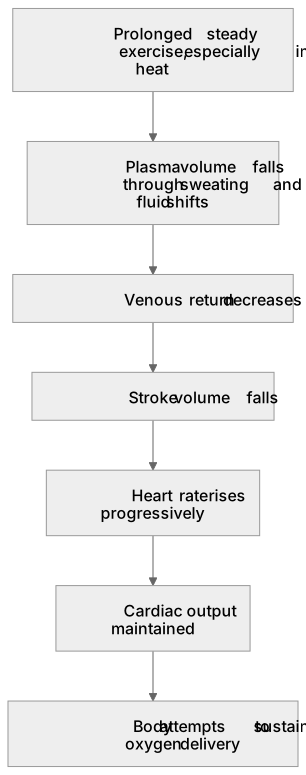
Put it in order
Put these steps in the order they happen.
- 1. Body attempts to sustain oxygen delivery
- 2. Cardiac output maintained
- 3. Venous return decreases
- 4. Heart rate rises progressively
- 5. Prolonged steady exercise, especially in heat
- 6. Plasma volume falls through sweating and fluid shifts
- 7. Stroke volume falls
Key words
Say what each word means before you turn the card.
Prolonged steady-state exercise
Try answering aloud or in your head before turning the card.
Plasma volume and sweating
Try answering aloud or in your head before turning the card.
Stroke volume and heart rate relationship
Try answering aloud or in your head before turning the card.
Thermoregulation and cardiac output maintenance
Try answering aloud or in your head before turning the card.
See every definition
- Prolonged steady-state exercise
- Exercise that continues at an unchanged intensity, during which cardiovascular drift develops as a gradual change in cardiovascular variables.
- Plasma volume and sweating
- Plasma volume falls through sweating and fluid shifts, which reduces venous return.
- Stroke volume and heart rate relationship
- Stroke volume decreases as venous return and ventricular filling decrease, while heart rate rises progressively to maintain cardiac output.
- Thermoregulation and cardiac output maintenance
- The drift reflects thermoregulatory and fluid-balance challenges, with cardiac output maintained because heart rate increases as stroke volume decreases.
Label the diagram
Some boxes have lost their names. Pick the right name for each number.
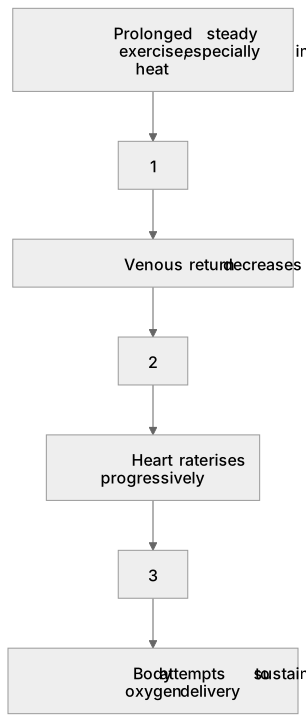
1Box 1
2Box 2
3Box 3
There is more to this lesson
The full lesson goes on to check your understanding and help you earn the marks. Create a free account to carry on, with your progress saved.
A week of Premium from your first lesson · Then the free plan continues · No card, no charge
Test your understanding of Cardiovascular system: Cardiovascular drift.
Active recall beats re-reading. Take an instant quiz now to test what you’ve learned and lock it into long-term memory.
A week of Premium from your first lesson · Then the free plan continues · No card, no charge