AQA · A-Level · Physical Education
Course version: 7582 · Version from Sept 2016
Efficiency of information processing to include:: Effector mechanism.
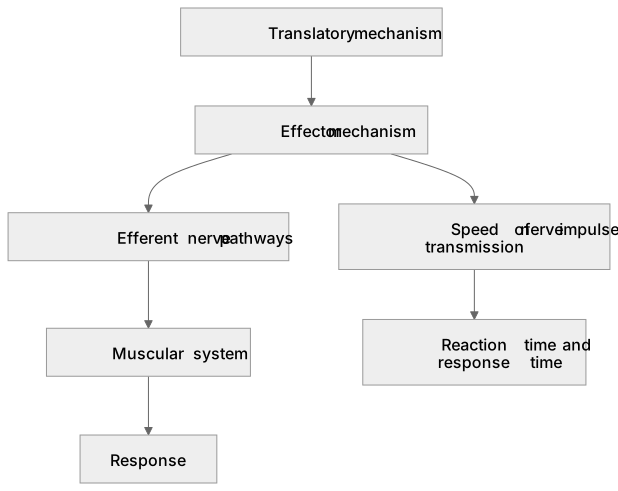
In Whiting's information processing model, the effector mechanism follows the translatory mechanism and precedes the muscular system.
Checked against the AQA 7582 specification (opens in a new tab) on .
- Point 7 of 30
- 4 key terms
Study notes
From the checked teaching notes for this specification point.
The idea
In Whiting's information processing model, the effector mechanism follows the translatory mechanism and precedes the muscular system. Once a motor programme is selected, the effector mechanism transmits this decision. It sends motor commands via efferent nerve pathways from the central nervous system to the muscular system, which then contracts to produce the response. For example, after a netball player decides to pass, the effector mechanism transmits impulses to the arm muscles to initiate the throw. The efficiency of the effector mechanism depends on the speed of nerve impulse transmission. Faster transmission reduces reaction time and response time, leading to more efficient skill execution.
What earns the marks
- The effector mechanism receives the selected motor programme from the translatory mechanism.
- Efficient effector function depends on rapid nerve impulse transmission to the muscles.
- Faster effector mechanism transmission reduces reaction time and overall response time.
Common mistakes and how to put them right
Identifying the effector mechanism as the final stage of the model.
Put it right: It is followed by the muscular system, response, and feedback.
Stating that the effector mechanism itself contracts or carries out the movement.
Put it right: It only transmits the impulses to the muscular system.
Claiming that faster effector responses reduce movement time.
Put it right: Effector transmission occurs before movement onset, so it actually reduces reaction time.
Exam tips
- Place the effector mechanism correctly between the translatory mechanism and the muscular system in Whiting's model.
- Use precise terminology: state that the effector mechanism 'transmits impulses' rather than 'makes the movement'.
- Link the efficiency of the effector mechanism to improvements in reaction time and response time.
Try the lesson
The start of the Efficiency of information processing to include:: Effector mechanism. lesson, made from checked teaching notes for this specification point.
Have a go first
According to Whiting's information processing model, what is the specific role of the effector mechanism during the performance of a sports skill?
Listen
In Whiting's information processing model, the effector mechanism follows the translatory mechanism and precedes the muscular system. Once a motor programme is selected, the effector mechanism transmits this decision. It sends motor commands via efferent nerve pathways from the central nervous system to the muscular system, which then contracts to produce the response. For example, after a netball player decides to pass, the effector mechanism transmits impulses to the arm muscles to initiate the throw. The efficiency of the effector mechanism depends on the speed of nerve impulse transmission. Faster transmission reduces reaction time and response time, leading to more efficient skill execution. A strong answer earns marks for these points. The effector mechanism receives the selected motor programme from the translatory mechanism. Efficient effector function depends on rapid nerve impulse transmission to the muscles. Faster effector mechanism transmission reduces reaction time and overall response time. Exam tip: Place the effector mechanism correctly between the translatory mechanism and the muscular system in Whiting's model.
See it
Key words
Say what each word means before you turn the card.
Whiting's model
Try answering aloud or in your head before turning the card.
Effector mechanism
Try answering aloud or in your head before turning the card.
Motor nerve transmission
Try answering aloud or in your head before turning the card.
Reaction time
Try answering aloud or in your head before turning the card.
See every definition
- Whiting's model
- An information processing model in which the effector mechanism follows the translatory mechanism and precedes the muscular system.
- Effector mechanism
- The component that receives the selected motor programme from the translatory mechanism and transmits motor commands via efferent nerve pathways to the muscular system.
- Motor nerve transmission
- The sending of motor commands via efferent nerve pathways from the central nervous system to the muscular system, which then contracts to produce the response.
- Reaction time
- A measure reduced by faster transmission of nerve impulses, along with overall response time, leading to more efficient skill execution.
Label the diagram
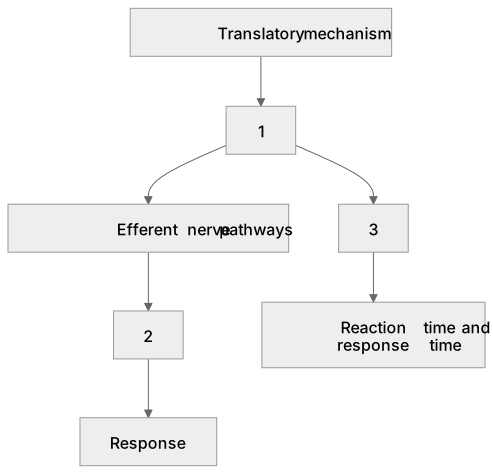
Some boxes have lost their names. Pick the right name for each number.
1Box 1
2Box 2
3Box 3
There is more to this lesson
The full lesson goes on to check your understanding and help you earn the marks. Create a free account to carry on, with your progress saved.
A week of Premium from your first lesson · Then the free plan continues · No card, no charge
Test your understanding of Efficiency of information processing to include:: Effector mechanism.
Active recall beats re-reading. Take an instant quiz now to test what you’ve learned and lock it into long-term memory.
A week of Premium from your first lesson · Then the free plan continues · No card, no charge