AQA · A-Level · Physical Education
Course version: 7582 · Version from Sept 2016
Efficiency of information processing to include:: Response specifications.
Response specifications form a crucial part of the recall schema in Schmidt’s schema theory, determining the specific parameters of a movement.
Checked against the AQA 7582 specification (opens in a new tab) on .
- Point 25 of 30
- 4 key terms
Study notes
From the checked teaching notes for this specification point.
The idea
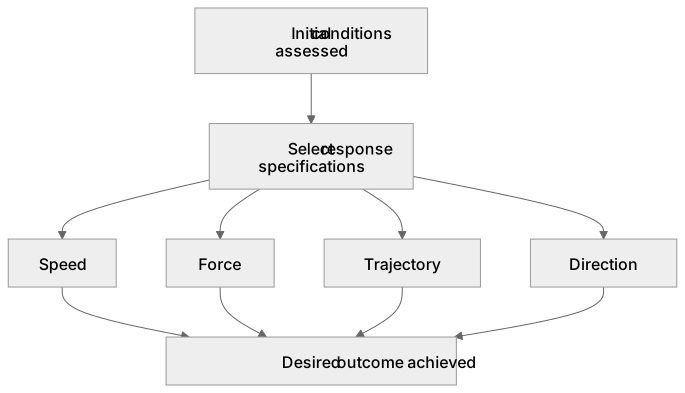
Response specifications form a crucial part of the recall schema in Schmidt’s schema theory, determining the specific parameters of a movement. Before initiating a skill, a performer processes information regarding the initial conditions (such as their position and the environment). They then select the response specifications required to achieve the desired outcome, including the speed, force, trajectory, and direction of the movement. For example, a netball player efficiently processes the distance to a teammate to specify the exact force and angle of a pass. Rapidly generating accurate response specifications improves the efficiency of information processing and decision-making.
What earns the marks
- Defines response specifications as the movement parameters chosen to achieve a specific outcome, such as speed, force, and direction.
- Identifies response specifications as a component of the recall schema used to initiate movement.
- Explains that response specifications are determined based on the assessment of initial conditions.
- Links the rapid selection of response specifications to efficient information processing and decision-making.
- Applies the concept to a sporting example, detailing the specific force or angle required for a successful action.
Common mistakes and how to put them right
Defining response specifications as the rules of the game.
Put it right: Describe them as the physical parameters of the movement (e.g., force, speed).
Confusing response specifications with sensory consequences.
Put it right: State that response specifications are decided before movement, while sensory consequences are feedback.
Failing to link response specifications to initial conditions.
Put it right: Explain that parameters are chosen based on the current environmental situation.
Exam tips
- Clearly link response specifications to the recall schema and the initiation of a motor programme.
- Provide specific examples of movement parameters, such as the exact force and trajectory of a basketball shot.
- Explain how efficient processing of initial conditions allows for more accurate and rapid response specifications.
Try the lesson
The start of the Efficiency of information processing to include:: Response specifications. lesson, made from checked teaching notes for this specification point.
Have a go first
In Schmidt's Schema Theory, what is the role of response specifications?
Listen
Response specifications form a crucial part of the recall schema in Schmidt’s schema theory, determining the specific parameters of a movement. Before initiating a skill, a performer processes information regarding the initial conditions (such as their position and the environment). They then select the response specifications required to achieve the desired outcome, including the speed, force, trajectory, and direction of the movement. For example, a netball player efficiently processes the distance to a teammate to specify the exact force and angle of a pass. Rapidly generating accurate response specifications improves the efficiency of information processing and decision-making. A strong answer earns marks for these points. Defines response specifications as the movement parameters chosen to achieve a specific outcome, such as speed, force, and direction. Identifies response specifications as a component of the recall schema used to initiate movement. Explains that response specifications are determined based on the assessment of initial conditions. Links the rapid selection of response specifications to efficient information processing and decision-making. A common slip: Defining response specifications as the rules of the game. Instead, describe them as the physical parameters of the movement (e.g., force, speed). Exam tip: Clearly link response specifications to the recall schema and the initiation of a motor programme.
See it
Key words
Say what each word means before you turn the card.
Schmidt's schema theory
Try answering aloud or in your head before turning the card.
Recall schema
Try answering aloud or in your head before turning the card.
Movement parameters
Try answering aloud or in your head before turning the card.
Information processing and decision-making
Try answering aloud or in your head before turning the card.
See every definition
- Schmidt's schema theory
- A theory in which response specifications form a crucial part of the recall schema, determining the specific parameters of a movement.
- Recall schema
- The component of Schmidt's schema theory that contains response specifications, which are used to initiate movement.
- Movement parameters
- The speed, force, trajectory and direction of a movement, selected as response specifications to achieve the desired outcome.
- Information processing and decision-making
- Becoming more efficient when accurate response specifications are rapidly generated, based on processing information about initial conditions.
Label the diagram
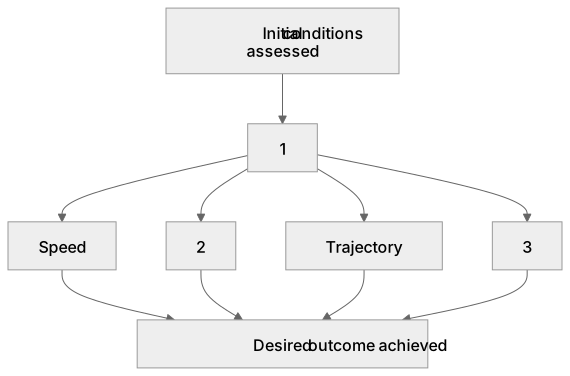
Some boxes have lost their names. Pick the right name for each number.
1Box 1
2Box 2
3Box 3
There is more to this lesson
The full lesson goes on to check your understanding and help you earn the marks. Create a free account to carry on, with your progress saved.
A week of Premium from your first lesson · Then the free plan continues · No card, no charge
Test your understanding of Efficiency of information processing to include:: Response specifications.
Active recall beats re-reading. Take an instant quiz now to test what you’ve learned and lock it into long-term memory.
A week of Premium from your first lesson · Then the free plan continues · No card, no charge