AQA · A-Level · Physical Education
Course version: 7582 · Version from Sept 2016
General information processing model, to include:: DCR process
The DCR process stands for Detection, Comparison, and Recognition, key elements of perception within the general information processing model.
Checked against the AQA 7582 specification (opens in a new tab) on .
- Point 6 of 13
- 4 key terms
Study notes
From the checked teaching notes for this specification point.
The idea
The DCR process stands for Detection, Comparison, and Recognition, key elements of perception within the general information processing model. Detection is registering sensory stimuli from the environment, such as seeing a ball in flight. Comparison involves matching this incoming sensory information with stored memories of previous experiences. Recognition occurs when the stimulus is identified and understood, allowing the performer to make an appropriate decision. For example, a tennis player detects the spin on an opponent's serve, compares it to past serves stored in long-term memory, and recognises it as a topspin serve. This perceptual process must occur before decision making and response execution.
What earns the marks
- DCR stands for Detection, Comparison, and Recognition.
- Detection involves picking up relevant sensory information or cues from the environment.
- Comparison involves matching the detected information with past experiences stored in long-term memory.
- Recognition is the identification of the stimulus, allowing the performer to understand what is happening.
- A sporting example: detecting a ball's flight path, comparing it to previous catches, and recognising it as a fast, dipping throw.
Common mistakes and how to put them right
Defining DCR incorrectly: confusing it with Decision making, Response, and Feedback, whereas it actually stands for Detection, Comparison, and Recognition.
Placing DCR at the wrong stage of information processing.
Put it right: DCR is part of perception (stimulus identification), which happens before decision making and response execution.
Failing to link comparison to memory.
Put it right: Comparison specifically involves matching incoming stimuli with past experiences stored in long-term memory.
Exam tips
- Clearly state what each letter of DCR stands for: Detection, Comparison, Recognition.
- Use a specific sporting example to illustrate each of the three stages in sequence.
- Emphasise that DCR is the perceptual part of information processing that precedes decision making.
Try the lesson
The start of the General information processing model, to include:: DCR process lesson, made from checked teaching notes for this specification point.
Have a go first
In the DCR process of the general information processing model, what does the letter C stand for?
Listen
The DCR process stands for Detection, Comparison, and Recognition, key elements of perception within the general information processing model. Detection is registering sensory stimuli from the environment, such as seeing a ball in flight. Comparison involves matching this incoming sensory information with stored memories of previous experiences. Recognition occurs when the stimulus is identified and understood, allowing the performer to make an appropriate decision. For example, a tennis player detects the spin on an opponent's serve, compares it to past serves stored in long-term memory, and recognises it as a topspin serve. This perceptual process must occur before decision making and response execution. A strong answer earns marks for these points. DCR stands for Detection, Comparison, and Recognition. Detection involves picking up relevant sensory information or cues from the environment. Comparison involves matching the detected information with past experiences stored in long-term memory. Recognition is the identification of the stimulus, allowing the performer to understand what is happening. Exam tip: Clearly state what each letter of DCR stands for: Detection, Comparison, Recognition.
See it
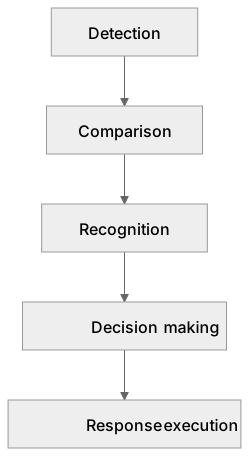
Put it in order
Put these steps in the order they happen.
- 1. Comparison
- 2. Recognition
- 3. Detection
- 4. Response execution
- 5. Decision making
Key words
Say what each word means before you turn the card.
Detection
Try answering aloud or in your head before turning the card.
Comparison
Try answering aloud or in your head before turning the card.
Recognition
Try answering aloud or in your head before turning the card.
Perception
Try answering aloud or in your head before turning the card.
See every definition
- Detection
- Registering sensory stimuli or relevant cues from the environment, such as seeing a ball in flight.
- Comparison
- Matching incoming sensory information with stored memories of previous experiences held in long-term memory.
- Recognition
- The identification of the stimulus, allowing the performer to understand what is happening and make an appropriate decision.
- Perception
- A process within the general information processing model that must occur before decision making and response execution.
Label the diagram
Some boxes have lost their names. Pick the right name for each number.
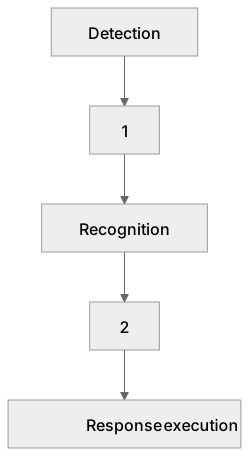
1Box 1
2Box 2
There is more to this lesson
The full lesson goes on to check your understanding and help you earn the marks. Create a free account to carry on, with your progress saved.
A week of Premium from your first lesson · Then the free plan continues · No card, no charge
Test your understanding of General information processing model, to include:: DCR process
Active recall beats re-reading. Take an instant quiz now to test what you’ve learned and lock it into long-term memory.
A week of Premium from your first lesson · Then the free plan continues · No card, no charge