AQA · A-Level · Physical Education
Course version: 7582 · Version from Sept 2016
General information processing model, to include:: Proprioception.
Proprioception is the sense of the position, movement and orientation of body parts, generated by receptors in muscles, tendons and joints and carried to the central nervous system.
Checked against the AQA 7582 specification (opens in a new tab) on .
- Point 4 of 13
Study notes
From the checked teaching notes for this specification point.
The idea
Proprioception is the sense of the position, movement and orientation of body parts, generated by receptors in muscles, tendons and joints and carried to the central nervous system. It supplies continuous feedback within the general information processing model, allowing the performer to monitor and adjust movement without watching every limb. A gymnast holding a handstand uses proprioceptive information from the shoulders, trunk and wrists to keep the body aligned; a cricketer feels the bat position while driving. Proprioceptive feedback supports balance, coordination, timing and correction of technique, and it works alongside visual and vestibular information to refine skilled performance.
What earns the marks
- Proprioception is the sense of position, movement and orientation of body parts.
- Proprioceptive information travels to the central nervous system and provides feedback within the general information processing model.
- Proprioception supports balance, coordination, timing and technique refinement in skilled performance.
Common mistakes and how to put them right
Treating proprioception as the same as balance.
Put it right: Balance also depends on vestibular and visual information, while proprioception concerns body position and movement.
Thinking proprioception only matters in static positions.
Put it right: It also reports movement and is vital during dynamic skills.
Assuming proprioception replaces vision.
Put it right: It complements visual information and is especially useful when vision is limited.
Believing proprioception is conscious awareness of every joint angle.
Put it right: Much of it operates below conscious attention to guide automatic movement.
Exam tips
- Define proprioception precisely as the sense of body position and movement before giving an example.
- Use a skill where vision is restricted, such as a handstand or a rugby pass under pressure, to show its value.
- Link proprioceptive feedback to the feedback and correction stages of the information processing model.
- Name the receptor sources, such as muscle spindles and joint receptors, rather than saying 'the body just knows'.
Try the lesson
The start of the General information processing model, to include:: Proprioception. lesson, made from checked teaching notes for this specification point.
Have a go first
What does the term proprioception describe in the general information processing model?
Listen
Proprioception is the sense of the position, movement and orientation of body parts, generated by receptors in muscles, tendons and joints and carried to the central nervous system. It supplies continuous feedback within the general information processing model, allowing the performer to monitor and adjust movement without watching every limb. A gymnast holding a handstand uses proprioceptive information from the shoulders, trunk and wrists to keep the body aligned; a cricketer feels the bat position while driving. Proprioceptive feedback supports balance, coordination, timing and correction of technique, and it works alongside visual and vestibular information to refine skilled performance. A strong answer earns marks for these points. Proprioception is the sense of position, movement and orientation of body parts. Proprioceptive information travels to the central nervous system and provides feedback within the general information processing model. Proprioception supports balance, coordination, timing and technique refinement in skilled performance. Exam tip: Define proprioception precisely as the sense of body position and movement before giving an example.
See it
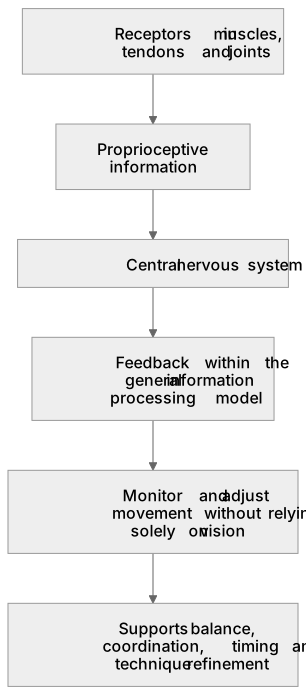
Put it in order
Put these steps in the order they happen.
- 1. Central nervous system
- 2. Proprioceptive information
- 3. Receptors in muscles, tendons and joints
- 4. Supports balance, coordination, timing and technique refinement
- 5. Monitor and adjust movement without relying solely on vision
- 6. Feedback within the general information processing model
Label the diagram
Some boxes have lost their names. Pick the right name for each number.
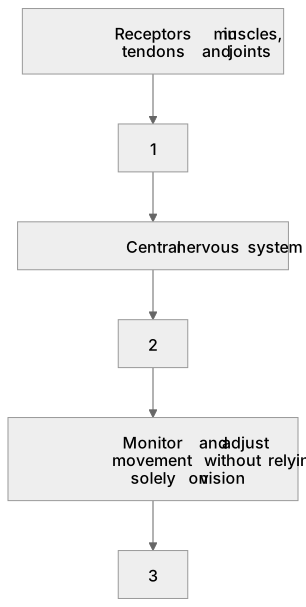
1Box 1
2Box 2
3Box 3
There is more to this lesson
The full lesson goes on to check your understanding and help you earn the marks. Create a free account to carry on, with your progress saved.
A week of Premium from your first lesson · Then the free plan continues · No card, no charge
Test your understanding of General information processing model, to include:: Proprioception.
Active recall beats re-reading. Take an instant quiz now to test what you’ve learned and lock it into long-term memory.
A week of Premium from your first lesson · Then the free plan continues · No card, no charge