AQA · A-Level · Physical Education
Course version: 7582 · Version from Sept 2016
General information processing model, to include:: Receptors.
Receptors are the sensory structures that detect a stimulus and convert it into electrical impulses travelling along sensory neurones towards the central nervous system.
Checked against the AQA 7582 specification (opens in a new tab) on .
- Point 3 of 13
- 4 key terms
Study notes
From the checked teaching notes for this specification point.
The idea
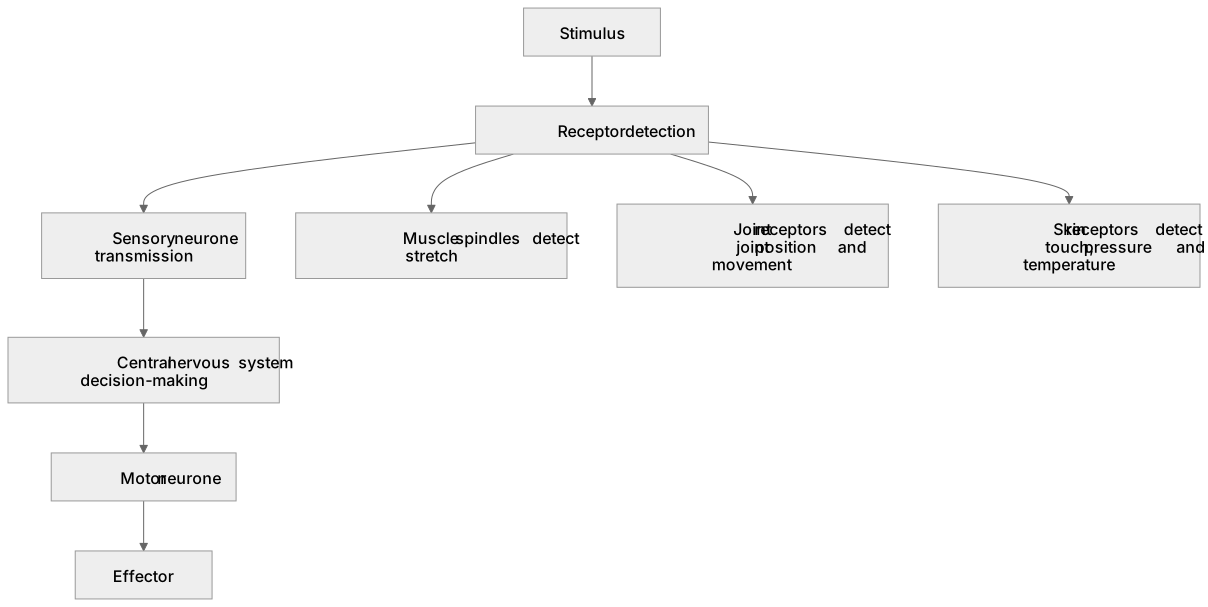
Receptors are the sensory structures that detect a stimulus and convert it into electrical impulses travelling along sensory neurones towards the central nervous system. In the general information processing model they form the input stage: stimulus, receptor detection, sensory transmission, central decision-making, then output via the effector. Different receptors are tuned to different stimuli, for example muscle spindles detect stretch, joint receptors detect joint position and movement, and skin receptors detect touch, pressure and temperature. A performer catching a ball relies on visual receptors detecting the ball and proprioceptors reporting arm position, so the CNS can select and execute the correct response.
What earns the marks
- Receptors detect a stimulus and convert it into a nerve impulse, forming the input stage of the general information processing model.
- Sensory neurones carry impulses from receptors to the central nervous system for interpretation and decision-making.
- Different receptors are specialised for different stimuli, such as muscle spindles for stretch and skin receptors for touch, pressure and temperature.
- Receptor information is integrated with proprioceptive feedback so the CNS can select and execute an appropriate motor response.
- Accurate receptor function underpins skilled movement; impaired or delayed detection reduces the quality and timing of the response.
Common mistakes and how to put them right
Thinking receptors produce movement.
Put it right: Receptors only detect stimuli and send impulses; the effector muscles produce the movement.
Confusing receptors with effectors.
Put it right: Receptors are at the input end of the model, whereas effectors act at the output end.
Assuming one receptor detects all stimuli.
Put it right: Receptors are specialised, so muscle spindles detect stretch while skin receptors detect touch and temperature.
Believing the brain detects the stimulus directly.
Put it right: Detection happens at the receptor, and the impulse is then transmitted to the CNS.
Exam tips
- Link each receptor to its specific stimulus and to the stage of the information processing model it serves.
- Use a sporting example, such as visual receptors tracking a ball, to show how input leads to a selected response.
- Check the direction of the pathway: stimulus, receptor, sensory neurone, CNS, motor neurone, effector.
- Avoid vague wording such as 'the body senses'; name the receptor type and the stimulus it detects.
Try the lesson
The start of the General information processing model, to include:: Receptors. lesson, made from checked teaching notes for this specification point.
Have a go first
In the general information processing model, which component detects a change in the internal or external environment and converts it into a nerve impulse?
Listen
Receptors are the sensory structures that detect a stimulus and convert it into electrical impulses travelling along sensory neurones towards the central nervous system. In the general information processing model they form the input stage: stimulus, receptor detection, sensory transmission, central decision-making, then output via the effector. Different receptors are tuned to different stimuli, for example muscle spindles detect stretch, joint receptors detect joint position and movement, and skin receptors detect touch, pressure and temperature. A performer catching a ball relies on visual receptors detecting the ball and proprioceptors reporting arm position, so the CNS can select and execute the correct response. A strong answer earns marks for these points. Receptors detect a stimulus and convert it into a nerve impulse, forming the input stage of the general information processing model. Sensory neurones carry impulses from receptors to the central nervous system for interpretation and decision-making. Different receptors are specialised for different stimuli, such as muscle spindles for stretch and skin receptors for touch, pressure and temperature. Receptor information is integrated with proprioceptive feedback so the CNS can select and execute an appropriate motor response. Exam tip: Link each receptor to its specific stimulus and to the stage of the information processing model it serves.
See it
Key words
Say what each word means before you turn the card.
Receptors
Try answering aloud or in your head before turning the card.
Sensory input
Try answering aloud or in your head before turning the card.
Stimulus detection
Try answering aloud or in your head before turning the card.
Neural transmission
Try answering aloud or in your head before turning the card.
See every definition
- Receptors
- Sensory structures that detect a stimulus and convert it into electrical impulses travelling along sensory neurones towards the central nervous system.
- Sensory input
- The input stage of the general information processing model, formed by receptors detecting a stimulus and converting it into a nerve impulse.
- Stimulus detection
- Detection happens at the receptor, which converts the stimulus into an impulse that is then transmitted to the CNS.
- Neural transmission
- Sensory neurones carry impulses from receptors to the central nervous system for interpretation and decision-making.
Label the diagram
Some boxes have lost their names. Pick the right name for each number.
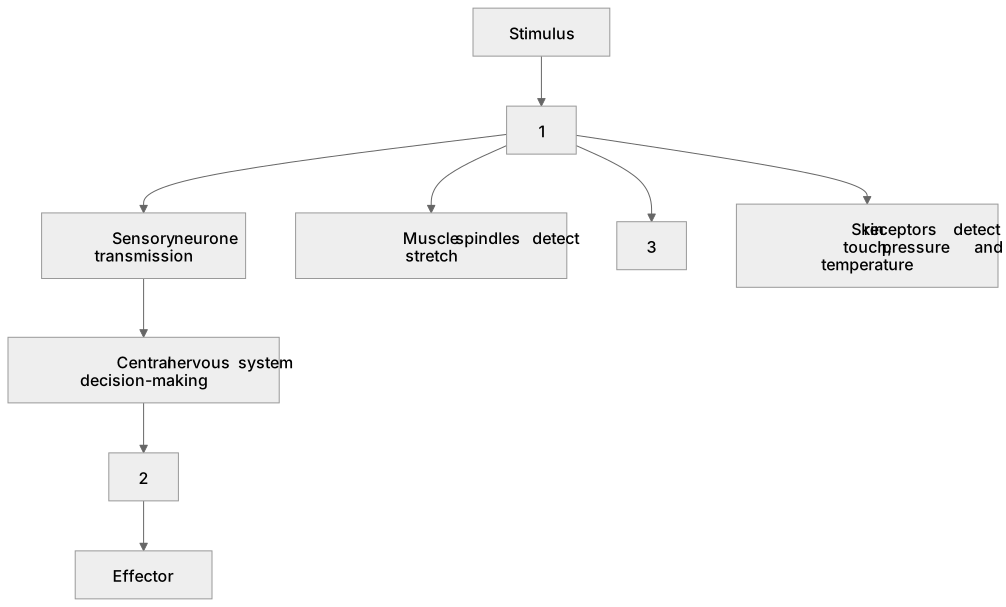
1Box 1
2Box 2
3Box 3
There is more to this lesson
The full lesson goes on to check your understanding and help you earn the marks. Create a free account to carry on, with your progress saved.
A week of Premium from your first lesson · Then the free plan continues · No card, no charge
Test your understanding of General information processing model, to include:: Receptors.
Active recall beats re-reading. Take an instant quiz now to test what you’ve learned and lock it into long-term memory.
A week of Premium from your first lesson · Then the free plan continues · No card, no charge