AQA · A-Level · Physical Education
Course version: 7582 · Version from Sept 2016
Injury rehabilitation methods (proprioceptive training, strength training,…
Full specification wording
Injury prevention and the rehabilitation of injury: Injury rehabilitation methods (proprioceptive training, strength training, hyperbaric chambers, cryotherapy, hydrotherapy).
Rehabilitation restores function after injury.
Checked against the AQA 7582 specification (opens in a new tab) on .
- Point 8 of 12
- 4 key terms
Study notes
From the checked teaching notes for this specification point.
The idea
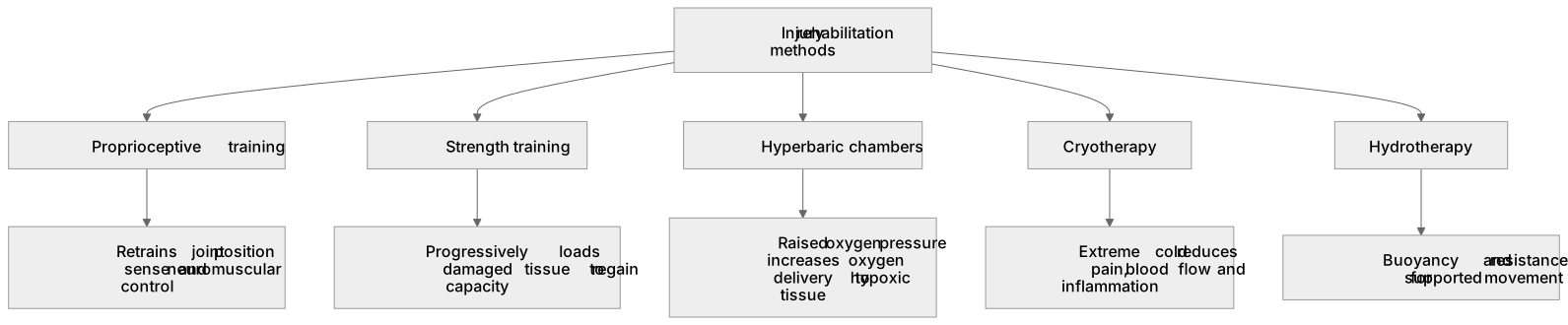
Rehabilitation restores function after injury. Proprioceptive training retrains joint position sense using unstable surfaces or single-leg balances, rebuilding neuromuscular control. Strength training progressively loads damaged tissue so muscle and tendon regain capacity. Hyperbaric chambers expose the body to raised oxygen pressure, increasing oxygen delivery to hypoxic tissue. Cryotherapy applies extreme cold to reduce pain, blood flow and inflammation. Hydrotherapy uses water's buoyancy and resistance for supported movement. Each method suits different injuries and stages, so match the method to the tissue and phase of healing.
What earns the marks
- Proprioceptive training retrains joint position sense and neuromuscular control, often using unstable surfaces or single-leg balance work.
- Strength training progressively loads muscle and tendon so the injured tissue regains force capacity without re-injury.
- Hyperbaric chambers raise the pressure of oxygen breathed, increasing oxygen delivery to poorly perfused or hypoxic tissue.
- Cryotherapy applies extreme cold to reduce pain, local blood flow and inflammation in the early stage of healing.
- Hydrotherapy uses buoyancy to reduce joint load and water resistance to provide graded exercise during rehabilitation.
- Selecting the correct method depends on the injured tissue, the stage of healing and the rehabilitation goal.
Common mistakes and how to put them right
Confusing cryotherapy with hydrotherapy.
Put it right by linking each to its medium and main effect.
Believing hyperbaric chambers build muscle.
Put it right by matching each method to its physiological aim.
Thinking proprioceptive training only builds strength.
Put it right by describing the balance or unstable-surface task.
Assuming all rehabilitation methods suit every stage.
Put it right by stating the stage each method fits.
Exam tips
- Read the question stem for the injured tissue and stage before choosing, because the best method changes with context.
- Eliminate options that describe the wrong medium, such as water exercise for a cold-therapy question.
- Link each method to one clear physiological effect so you can justify the correct option quickly.
Try the lesson
The start of the Injury prevention and the rehabilitation of injury: Injury rehabilitation methods (proprioceptive training, strength training, hyperbaric chambers, cryotherapy, hydrotherapy). lesson, made from checked teaching notes for this specification point.
Have a go first
Which rehabilitation method uses a pressurised chamber to increase the amount of oxygen delivered to damaged tissue?
Listen
Rehabilitation restores function after injury. Proprioceptive training retrains joint position sense using unstable surfaces or single-leg balances, rebuilding neuromuscular control. Strength training progressively loads damaged tissue so muscle and tendon regain capacity. Hyperbaric chambers expose the body to raised oxygen pressure, increasing oxygen delivery to hypoxic tissue. Cryotherapy applies extreme cold to reduce pain, blood flow and inflammation. Hydrotherapy uses water's buoyancy and resistance for supported movement. Each method suits different injuries and stages, so match the method to the tissue and phase of healing. A strong answer earns marks for these points. Proprioceptive training retrains joint position sense and neuromuscular control, often using unstable surfaces or single-leg balance work. Strength training progressively loads muscle and tendon so the injured tissue regains force capacity without re-injury. Hyperbaric chambers raise the pressure of oxygen breathed, increasing oxygen delivery to poorly perfused or hypoxic tissue. Cryotherapy applies extreme cold to reduce pain, local blood flow and inflammation in the early stage of healing. A common slip: Confusing cryotherapy with hydrotherapy: cryotherapy is cold application, whereas hydrotherapy is exercise in water. Instead, linking each to its medium and main effect. Exam tip: Read the question stem for the injured tissue and stage before choosing, because the best method changes with context.
See it
Key words
Say what each word means before you turn the card.
Proprioceptive training
Try answering aloud or in your head before turning the card.
Strength training
Try answering aloud or in your head before turning the card.
Hyperbaric chambers
Try answering aloud or in your head before turning the card.
Cryotherapy
Try answering aloud or in your head before turning the card.
See every definition
- Proprioceptive training
- Retrains joint position sense using unstable surfaces or single-leg balances, rebuilding neuromuscular control.
- Strength training
- Progressively loads damaged tissue so muscle and tendon regain capacity.
- Hyperbaric chambers
- Expose the body to raised oxygen pressure, increasing oxygen delivery to hypoxic tissue.
- Cryotherapy
- Applies extreme cold to reduce pain, blood flow and inflammation.
Label the diagram
Some boxes have lost their names. Pick the right name for each number.
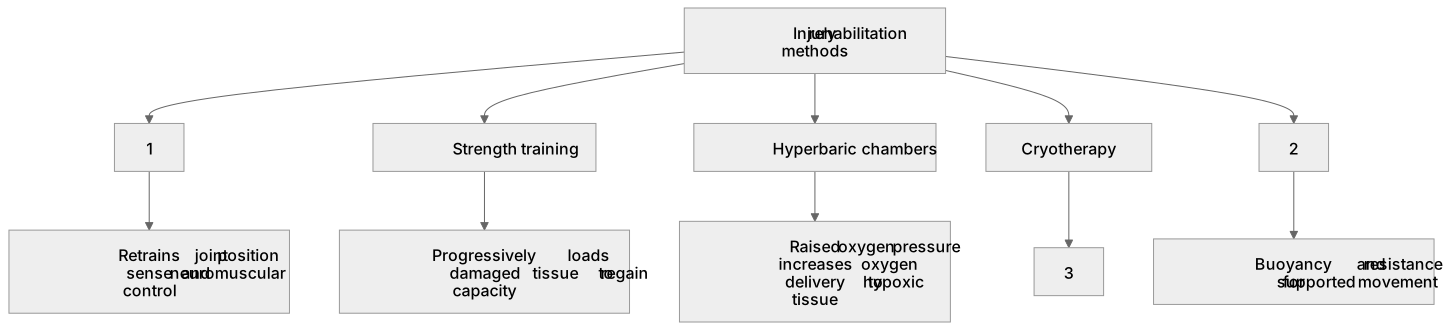
1Box 1
2Box 2
3Box 3
There is more to this lesson
The full lesson goes on to check your understanding and help you earn the marks. Create a free account to carry on, with your progress saved.
A week of Premium from your first lesson · Then the free plan continues · No card, no charge
Test your understanding of Injury prevention and the rehabilitation of injury: Injury rehabilitation methods (proprioceptive training, strength training, hyperbaric chambers, cryotherapy, hydrotherapy).
Active recall beats re-reading. Take an instant quiz now to test what you’ve learned and lock it into long-term memory.
A week of Premium from your first lesson · Then the free plan continues · No card, no charge