AQA · A-Level · Physical Education
Course version: 7582 · Version from Sept 2016
Understanding different methods used in injury prevention, rehabilitation…
Full specification wording
Injury prevention and the rehabilitation of injury: Understanding different methods used in injury prevention, rehabilitation and recovery.
This topic links three phases of athlete care.
Checked against the AQA 7582 specification (opens in a new tab) on .
- Point 4 of 12
- 4 key terms
Study notes
From the checked teaching notes for this specification point.
The idea
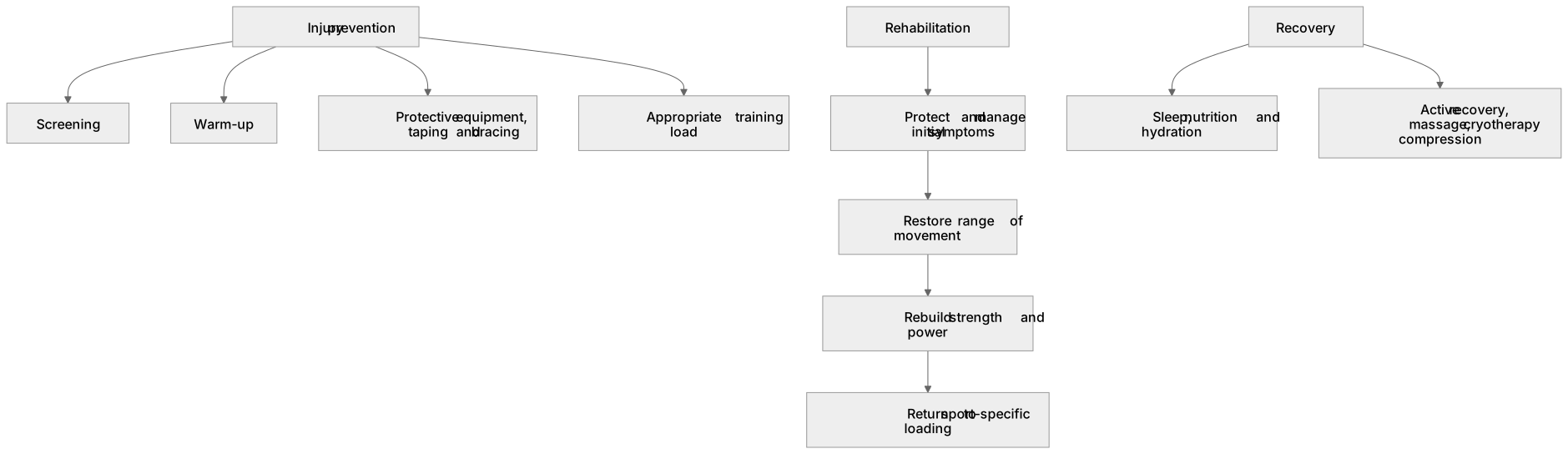
This topic links three phases of athlete care. Injury prevention reduces the chance of harm before it occurs, using screening to flag risk factors, warm-ups to prepare tissue, and protective equipment or taping to limit forces. Rehabilitation is the structured process after injury: protect the area, restore range of movement, rebuild strength and gradually reload sport-specific movement. Recovery covers strategies that help the athlete return to normal function and training, such as sleep, nutrition, hydration, active recovery and cryotherapy. A performer with a hamstring strain might be screened for weakness, complete a progressive rehabilitation programme, then use recovery methods before full training. Understanding how these methods differ, and when each is appropriate, is the skill assessed here.
What earns the marks
- Injury prevention methods include screening, warm-up, protective equipment, taping and bracing, and appropriate training load.
- Screening identifies risk factors such as muscle imbalance, joint instability or previous injury history before participation.
- Rehabilitation is a staged process: protect and manage initial symptoms, restore range of movement, rebuild strength and power, then return to sport-specific loading.
- Recovery methods include sleep, nutrition and hydration, active recovery, massage, cryotherapy and compression, used to restore the athlete after training or competition.
- Prevention, rehabilitation and recovery are distinct but linked phases, and the method chosen depends on the athlete's stage and the nature of the injury.
Common mistakes and how to put them right
Confusing prevention with rehabilitation.
Put it right by linking each method to the athlete's current stage.
Treating recovery as identical to rehabilitation.
Put it right by defining the purpose of each.
Assuming screening guarantees no injury.
Put it right by explaining that screening informs prevention, not replaces it.
Believing one method suits every athlete.
Put it right by matching the method to the context.
Exam tips
- Read the question stem carefully to identify whether it asks about prevention, rehabilitation or recovery before selecting an option.
- Eliminate options that describe a method from the wrong phase, such as choosing a rehabilitation method for a prevention question.
- Link each method to its purpose: prevention reduces risk, rehabilitation restores function, recovery restores readiness.
Try the lesson
The start of the Injury prevention and the rehabilitation of injury: Understanding different methods used in injury prevention, rehabilitation and recovery. lesson, made from checked teaching notes for this specification point.
Have a go first
Which method is used to prevent injury by identifying a performer's weaknesses and risk factors before a training programme begins?
Listen
This topic links three phases of athlete care. Injury prevention reduces the chance of harm before it occurs, using screening to flag risk factors, warm-ups to prepare tissue, and protective equipment or taping to limit forces. Rehabilitation is the structured process after injury: protect the area, restore range of movement, rebuild strength and gradually reload sport-specific movement. Recovery covers strategies that help the athlete return to normal function and training, such as sleep, nutrition, hydration, active recovery and cryotherapy. A performer with a hamstring strain might be screened for weakness, complete a progressive rehabilitation programme, then use recovery methods before full training. Understanding how these methods differ, and when each is appropriate, is the skill assessed here. A strong answer earns marks for these points. Injury prevention methods include screening, warm-up, protective equipment, taping and bracing, and appropriate training load. Screening identifies risk factors such as muscle imbalance, joint instability or previous injury history before participation. Rehabilitation is a staged process: protect and manage initial symptoms, restore range of movement, rebuild strength and power, then return to sport-specific loading. Recovery methods include sleep, nutrition and hydration, active recovery, massage, cryotherapy and compression, used to restore the athlete after training or competition. A common slip: Confusing prevention with rehabilitation: prevention happens before injury, while rehabilitation is the structured process after injury. Instead, linking each method to the athlete's current stage. Exam tip: Read the question stem carefully to identify whether it asks about prevention, rehabilitation or recovery before selecting an option.
See it
Key words
Say what each word means before you turn the card.
Prevention of injury before it occurs
Try answering aloud or in your head before turning the card.
Structured rehabilitation after injury
Try answering aloud or in your head before turning the card.
Recovery strategies for restoring readiness
Try answering aloud or in your head before turning the card.
Matching methods to the athlete's stage and context
Try answering aloud or in your head before turning the card.
See every definition
- Prevention of injury before it occurs
- Reduces the chance of harm before it occurs, using screening to flag risk factors, warm-ups to prepare tissue, and protective equipment or taping to limit forces.
- Structured rehabilitation after injury
- The structured process after injury: protect the area, restore range of movement, rebuild strength and gradually reload sport-specific movement.
- Recovery strategies for restoring readiness
- Covers strategies that help the athlete return to normal function and training, such as sleep, nutrition, hydration, active recovery and cryotherapy.
- Matching methods to the athlete's stage and context
- Prevention, rehabilitation and recovery are distinct but linked phases, and the method chosen depends on the athlete's stage and the nature of the injury.
Label the diagram
Some boxes have lost their names. Pick the right name for each number.
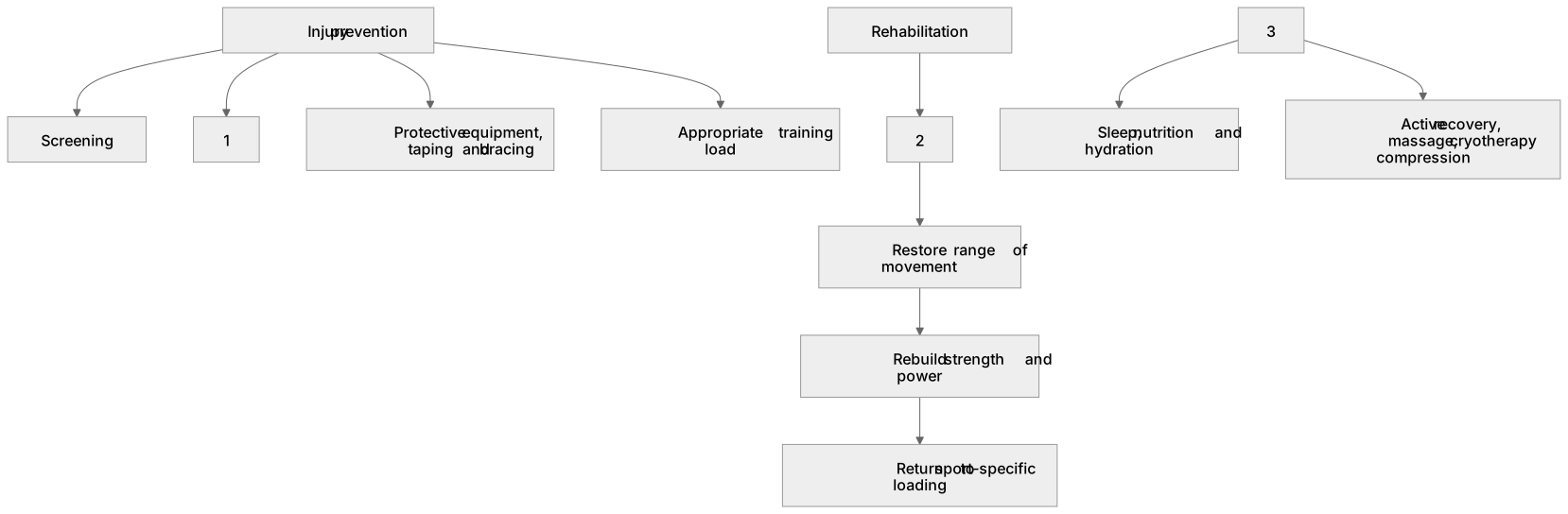
1Box 1
2Box 2
3Box 3
There is more to this lesson
The full lesson goes on to check your understanding and help you earn the marks. Create a free account to carry on, with your progress saved.
A week of Premium from your first lesson · Then the free plan continues · No card, no charge
Test your understanding of Injury prevention and the rehabilitation of injury: Understanding different methods used in injury prevention, rehabilitation and recovery.
Active recall beats re-reading. Take an instant quiz now to test what you’ve learned and lock it into long-term memory.
A week of Premium from your first lesson · Then the free plan continues · No card, no charge