AQA · A-Level · Physical Education
Course version: 7582 · Version from Sept 2016
Performance accomplishments, vicarious experiences, verbal persuasion and…
Full specification wording
Self-efficacy and confidence: Performance accomplishments, vicarious experiences, verbal persuasion and emotional arousal.
Self-efficacy is a performer's belief in their ability to succeed at a specific task in a specific situation.
Checked against the AQA 7582 specification (opens in a new tab) on .
- Point 3 of 6
- 4 key terms
Study notes
From the checked teaching notes for this specification point.
The idea
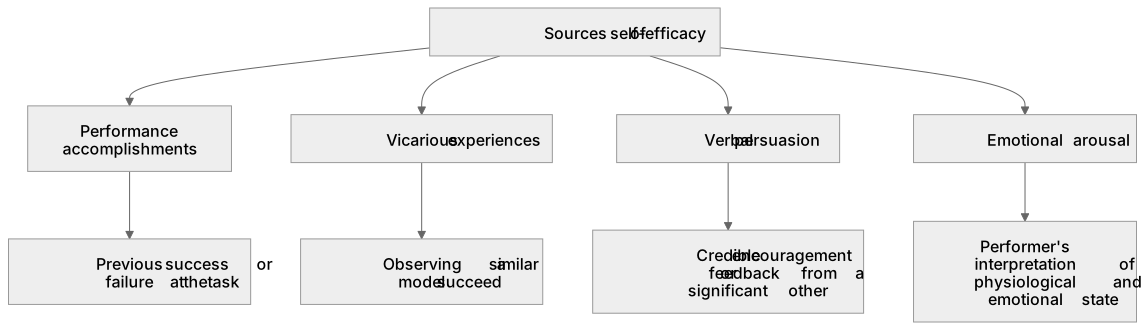
Self-efficacy is a performer's belief in their ability to succeed at a specific task in a specific situation. Bandura identified four sources. Performance accomplishments are the strongest: past success at a similar task raises efficacy, repeated failure lowers it. Vicarious experiences involve watching a similar other succeed, which raises the observer's belief that they too can succeed. Verbal persuasion is encouragement or feedback from a credible significant other, such as a coach, and works best when realistic and combined with evidence. Emotional arousal is the performer's interpretation of physiological state: reading raised heart rate as readiness helps, reading it as fear harms. A gymnast who has landed a vault before, watches a teammate land it, hears the coach's calm instruction and interprets pre-performance nerves as useful is drawing on all four sources.
What earns the marks
- Performance accomplishments: previous success or failure at the task is the most influential source of self-efficacy.
- Vicarious experiences: observing a similar model succeed raises the observer's belief in their own capability.
- Verbal persuasion: credible encouragement or feedback from a significant other can raise or lower self-efficacy.
- Emotional arousal: the performer's interpretation of physiological and emotional state affects self-efficacy, with arousal read as readiness helping and arousal read as fear harming.
Common mistakes and how to put them right
Treating confidence and self-efficacy as identical.
Put it right: Self-efficacy is task- and situation-specific belief, whereas confidence is a broader, more general belief, so a performer can be confident overall yet have low efficacy for one skill.
Assuming verbal persuasion alone is enough.
Put it right: Encouragement works best when realistic and supported by evidence such as past success, so a coach's praise without any basis is unlikely to raise efficacy.
Believing arousal is always harmful.
Put it right: The effect depends on how the performer interprets the arousal, so the same raised heart rate can help one performer and harm another.
Exam tips
- Name the source first, then explain its effect on the performer's belief, so each mark-earning point is clearly identifiable.
- Use a specific sporting example for each source, such as a netball shooter recalling previous successful shots for performance accomplishments.
- When discussing emotional arousal, state the performer's interpretation rather than the physiological change alone, because interpretation is what links arousal to self-efficacy.
Try the lesson
The start of the Self-efficacy and confidence: Performance accomplishments, vicarious experiences, verbal persuasion and emotional arousal. lesson, made from checked teaching notes for this specification point.
Have a go first
According to Bandura's model of self-efficacy, which of the following is one of the four sources of self-efficacy?
Listen
Self-efficacy is a performer's belief in their ability to succeed at a specific task in a specific situation. Bandura identified four sources. Performance accomplishments are the strongest: past success at a similar task raises efficacy, repeated failure lowers it. Vicarious experiences involve watching a similar other succeed, which raises the observer's belief that they too can succeed. Verbal persuasion is encouragement or feedback from a credible significant other, such as a coach, and works best when realistic and combined with evidence. Emotional arousal is the performer's interpretation of physiological state: reading raised heart rate as readiness helps, reading it as fear harms. A gymnast who has landed a vault before, watches a teammate land it, hears the coach's calm instruction and interprets pre-performance nerves as useful is drawing on all four sources. A strong answer earns marks for these points. Performance accomplishments: previous success or failure at the task is the most influential source of self-efficacy. Vicarious experiences: observing a similar model succeed raises the observer's belief in their own capability. Verbal persuasion: credible encouragement or feedback from a significant other can raise or lower self-efficacy. Emotional arousal: the performer's interpretation of physiological and emotional state affects self-efficacy, with arousal read as readiness helping and arousal read as fear harming. Exam tip: Name the source first, then explain its effect on the performer's belief, so each mark-earning point is clearly identifiable.
See it
Key words
Say what each word means before you turn the card.
Self-efficacy
Try answering aloud or in your head before turning the card.
Performance accomplishments
Try answering aloud or in your head before turning the card.
Vicarious experiences
Try answering aloud or in your head before turning the card.
Verbal persuasion
Try answering aloud or in your head before turning the card.
See every definition
- Self-efficacy
- A performer's belief in their ability to succeed at a specific task in a specific situation.
- Performance accomplishments
- Previous success or failure at the task, the most influential source of self-efficacy, where past success raises efficacy and repeated failure lowers it.
- Vicarious experiences
- Observing a similar model succeed, which raises the observer's belief that they too can succeed.
- Verbal persuasion
- Encouragement or feedback from a credible significant other, such as a coach, which works best when realistic and combined with evidence.
Label the diagram
Some boxes have lost their names. Pick the right name for each number.
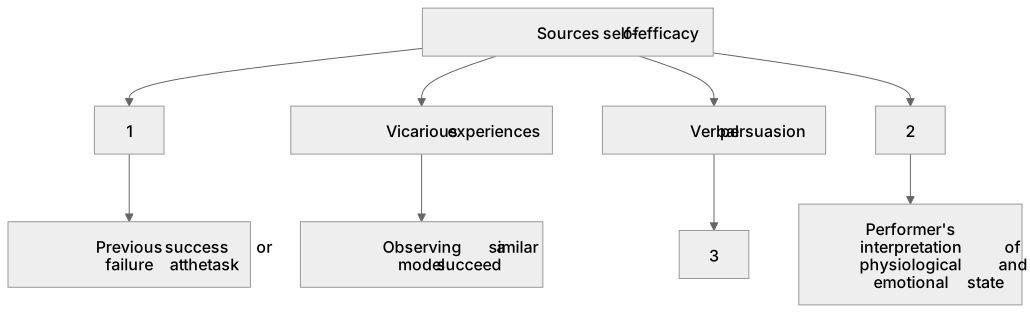
1Box 1
2Box 2
3Box 3
There is more to this lesson
The full lesson goes on to check your understanding and help you earn the marks. Create a free account to carry on, with your progress saved.
A week of Premium from your first lesson · Then the free plan continues · No card, no charge
Test your understanding of Self-efficacy and confidence: Performance accomplishments, vicarious experiences, verbal persuasion and emotional arousal.
Active recall beats re-reading. Take an instant quiz now to test what you’ve learned and lock it into long-term memory.
A week of Premium from your first lesson · Then the free plan continues · No card, no charge