AQA · A-Level · Physical Education
Course version: 7582 · Version from Sept 2016
Skill, skill continuums and transfer of skills: Negative.
Negative transfer occurs when the learning or performance of one skill hinders the learning or performance of another.
Checked against the AQA 7582 specification (opens in a new tab) on .
- Point 11 of 14
Study notes
From the checked teaching notes for this specification point.
The idea
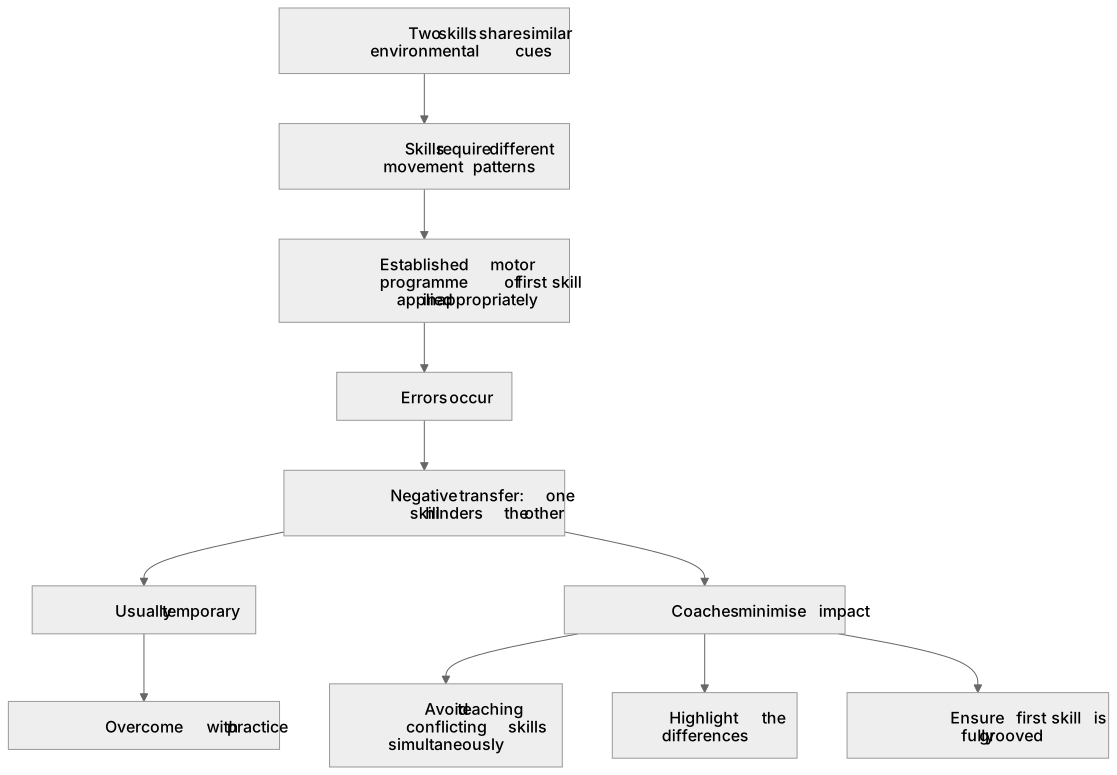
Negative transfer occurs when the learning or performance of one skill hinders the learning or performance of another. This interference happens when two skills share similar environmental cues but require different movement patterns. The performer inappropriately applies the established motor programme of the first skill to the second, causing errors. For example, a tennis player learning badminton may find the firm wrist required for tennis interferes with the flexible wrist action needed for badminton. Negative transfer is usually temporary and can be overcome with practice. Coaches can minimise its impact by avoiding teaching conflicting skills simultaneously, highlighting the differences, and ensuring the first skill is fully grooved.
What earns the marks
- Negative transfer is defined as the process where the learning or performance of one skill hinders or interferes with another.
- The interference is caused by the inappropriate application of an established motor programme to a new skill.
- A classic example is the firm wrist of a tennis shot interfering with the flexible wrist required in badminton.
- Negative transfer is usually a temporary phase in learning and can be resolved through targeted practice and highlighting differences.
Common mistakes and how to put them right
Believing that negative transfer is a permanent barrier to learning.
Put it right: It is usually a temporary effect that diminishes with practice.
Confusing negative transfer with a lack of physical ability or poor motivation.
Put it right: It is a specific cognitive and motor interference between two skills.
Assuming negative transfer happens between completely unrelated sports.
Put it right: It occurs when skills look similar but have different technical requirements.
Exam tips
- Clearly state that negative transfer involves one skill hindering or interfering with another.
- Explain the mechanism of negative transfer by referencing conflicting motor programmes or different responses to similar cues.
- Use the tennis and badminton wrist action example to clearly illustrate how similar contexts can lead to conflicting movements.
Try the lesson
The start of the Skill, skill continuums and transfer of skills: Negative. lesson, made from checked teaching notes for this specification point.
Have a go first
A badminton player who is used to a low wristy serve struggles to learn a tennis serve, which needs a high overhead action. Which type of transfer does this describe?
Listen
Negative transfer occurs when the learning or performance of one skill hinders the learning or performance of another. This interference happens when two skills share similar environmental cues but require different movement patterns. The performer inappropriately applies the established motor programme of the first skill to the second, causing errors. For example, a tennis player learning badminton may find the firm wrist required for tennis interferes with the flexible wrist action needed for badminton. Negative transfer is usually temporary and can be overcome with practice. Coaches can minimise its impact by avoiding teaching conflicting skills simultaneously, highlighting the differences, and ensuring the first skill is fully grooved. A strong answer earns marks for these points. Negative transfer is defined as the process where the learning or performance of one skill hinders or interferes with another. The interference is caused by the inappropriate application of an established motor programme to a new skill. A classic example is the firm wrist of a tennis shot interfering with the flexible wrist required in badminton. Negative transfer is usually a temporary phase in learning and can be resolved through targeted practice and highlighting differences. A common slip: Believing that negative transfer is a permanent barrier to learning. Instead, it is usually a temporary effect that diminishes with practice. Exam tip: Clearly state that negative transfer involves one skill hindering or interfering with another.
See it
Label the diagram
Some boxes have lost their names. Pick the right name for each number.
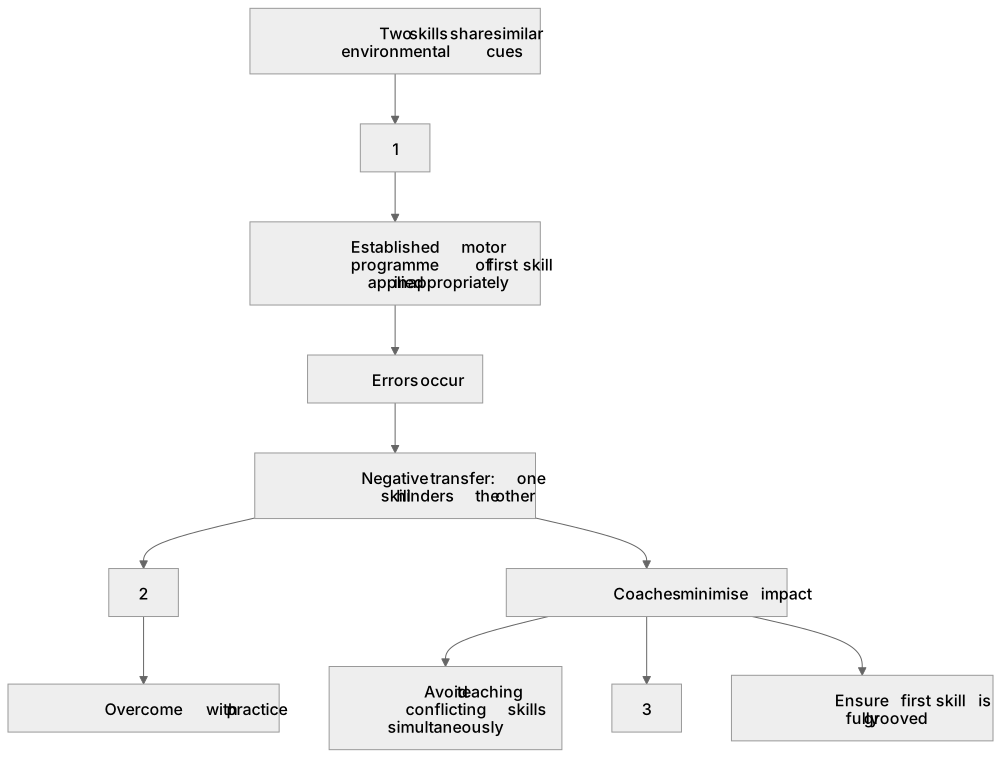
1Box 1
2Box 2
3Box 3
There is more to this lesson
The full lesson goes on to check your understanding and help you earn the marks. Create a free account to carry on, with your progress saved.
A week of Premium from your first lesson · Then the free plan continues · No card, no charge
Test your understanding of Skill, skill continuums and transfer of skills: Negative.
Active recall beats re-reading. Take an instant quiz now to test what you’ve learned and lock it into long-term memory.
A week of Premium from your first lesson · Then the free plan continues · No card, no charge