AQA · A-Level · Physical Education
Course version: 7582 · Version from Sept 2016
Skill, skill continuums and transfer of skills: Transfer of learning.
Transfer of learning describes how learning one skill affects the learning or performance of another.
Checked against the AQA 7582 specification (opens in a new tab) on .
- Point 9 of 14
- 4 key terms
Study notes
From the checked teaching notes for this specification point.
The idea
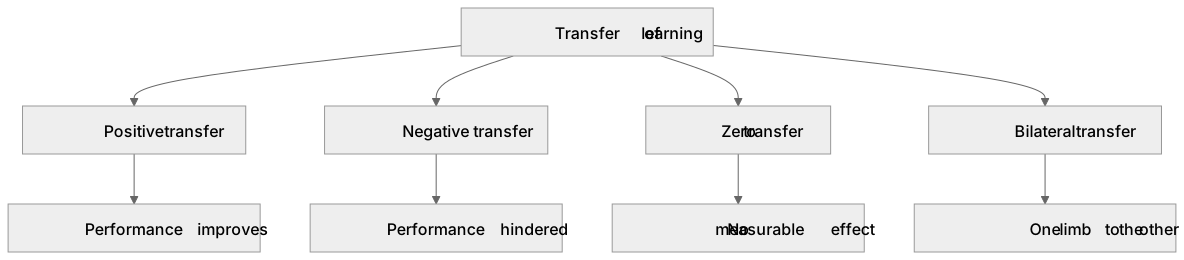
Transfer of learning describes how learning one skill affects the learning or performance of another. Positive transfer helps: a badminton clear can support a tennis serve because both involve a similar striking action. Negative transfer hinders: a tennis player may struggle with a squash drive because the wrist action differs. Zero transfer means no measurable effect between unrelated skills, like swimming and darts. Bilateral transfer occurs when learning is transferred from one limb to the other, such as a footballer learning to pass with their weaker left foot. Coaches use this by pointing out similarities, practising linked skills together and correcting conflicting habits early.
What earns the marks
- Defines transfer of learning as the influence of one skill on the learning or performance of another.
- Distinguishes positive transfer, where performance improves, from negative transfer, where it is hindered.
- Recognises zero transfer, where there is no measurable effect between unrelated skills.
- Identifies bilateral transfer, where learning is transferred from one limb to the other.
- Applies the concept to a sporting example and explains the similarity or conflict causing the transfer.
- Suggests a coaching response, such as highlighting similarities or correcting conflicting technique.
Common mistakes and how to put them right
Confusing negative transfer with lack of motivation.
Put it right: Negative transfer is when an existing skill pattern interferes with learning a new skill.
Assuming all transfer is positive.
Put it right: Transfer can be positive, negative, zero or bilateral depending on the skills and limbs involved.
Mixing up bilateral transfer with other types.
Put it right: Bilateral transfer specifically refers to transferring a skill from one side of the body to the other.
Thinking transfer only happens between different sports.
Put it right: It can occur between skills within the same sport.
Exam tips
- Name the type of transfer first, then give the sporting example and the reason.
- Use the words similar or conflicting to explain why the transfer is positive or negative.
- If asked for a coaching strategy, link it directly to the type of transfer you identified.
Try the lesson
The start of the Skill, skill continuums and transfer of skills: Transfer of learning. lesson, made from checked teaching notes for this specification point.
Have a go first
A player who has learned to throw a ball overarm in cricket finds it easier to learn the overarm throw in rounders. Which type of transfer of learning does this describe?
Listen
Transfer of learning describes how learning one skill affects the learning or performance of another. Positive transfer helps: a badminton clear can support a tennis serve because both involve a similar striking action. Negative transfer hinders: a tennis player may struggle with a squash drive because the wrist action differs. Zero transfer means no measurable effect between unrelated skills, like swimming and darts. Bilateral transfer occurs when learning is transferred from one limb to the other, such as a footballer learning to pass with their weaker left foot. Coaches use this by pointing out similarities, practising linked skills together and correcting conflicting habits early. A strong answer earns marks for these points. Defines transfer of learning as the influence of one skill on the learning or performance of another. Distinguishes positive transfer, where performance improves, from negative transfer, where it is hindered. Recognises zero transfer, where there is no measurable effect between unrelated skills. Identifies bilateral transfer, where learning is transferred from one limb to the other. A common slip: Confusing negative transfer with lack of motivation. Instead, negative transfer is when an existing skill pattern interferes with learning a new skill. Exam tip: Name the type of transfer first, then give the sporting example and the reason.
See it
Key words
Say what each word means before you turn the card.
Influence of prior learning
Try answering aloud or in your head before turning the card.
Positive and negative transfer
Try answering aloud or in your head before turning the card.
Zero transfer
Try answering aloud or in your head before turning the card.
Bilateral transfer
Try answering aloud or in your head before turning the card.
See every definition
- Influence of prior learning
- Transfer of learning describes how learning one skill affects the learning or performance of another.
- Positive and negative transfer
- Positive transfer helps, where performance improves, while negative transfer hinders, where an existing skill pattern interferes with learning a new skill.
- Zero transfer
- No measurable effect occurs between unrelated skills.
- Bilateral transfer
- Learning is transferred from one limb to the other.
Label the diagram
Some boxes have lost their names. Pick the right name for each number.
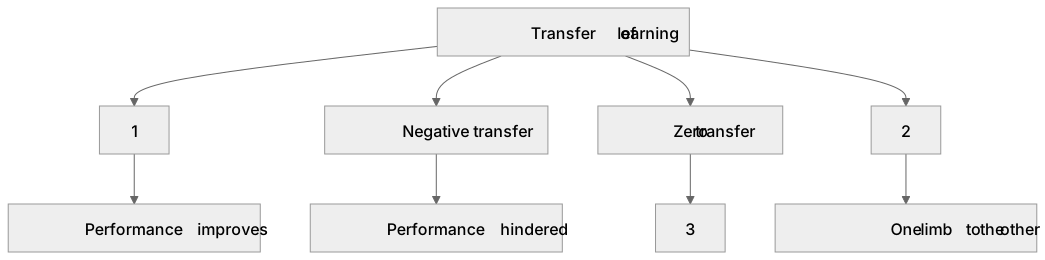
1Box 1
2Box 2
3Box 3
There is more to this lesson
The full lesson goes on to check your understanding and help you earn the marks. Create a free account to carry on, with your progress saved.
A week of Premium from your first lesson · Then the free plan continues · No card, no charge
Test your understanding of Skill, skill continuums and transfer of skills: Transfer of learning.
Active recall beats re-reading. Take an instant quiz now to test what you’ve learned and lock it into long-term memory.
A week of Premium from your first lesson · Then the free plan continues · No card, no charge