AQA · A-Level · Physical Education
Course version: 7582 · Version from Sept 2016
Stress management: Use of warm up for stress management.
A warm up prepares the body and mind before activity and acts as a vital stress management technique.
Checked against the AQA 7582 specification (opens in a new tab) on .
- Point 2 of 12
- 4 key terms
Study notes
From the checked teaching notes for this specification point.
The idea
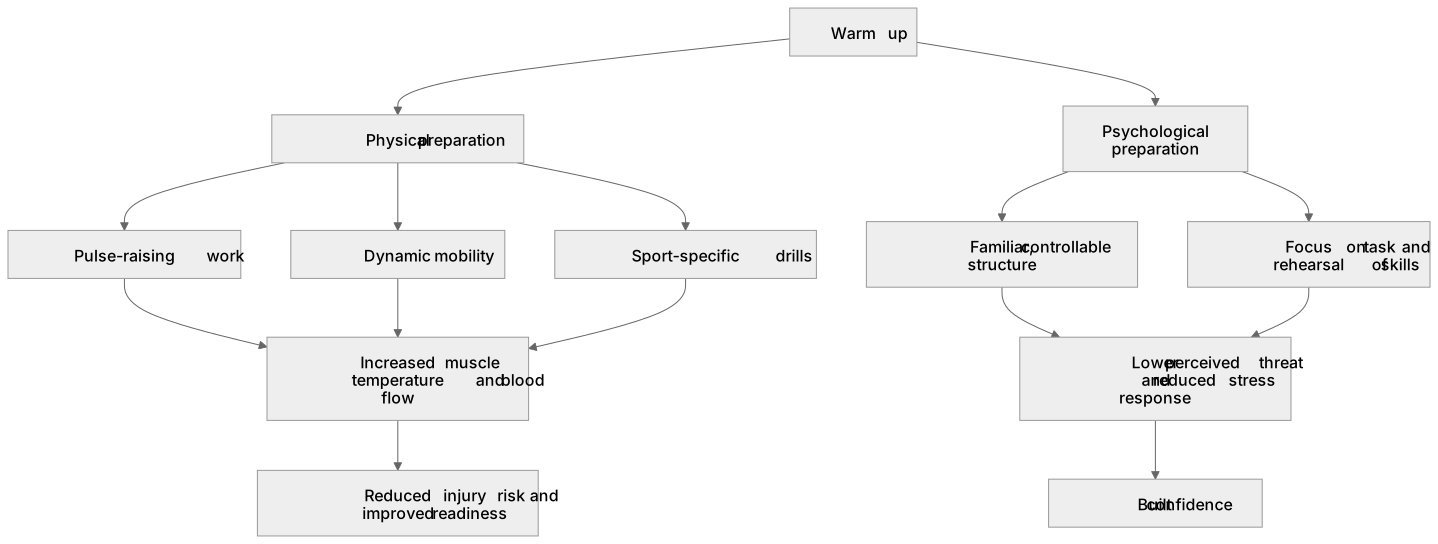
A warm up prepares the body and mind before activity and acts as a vital stress management technique. Physically, progressive pulse-raising work, dynamic mobility and sport-specific drills increase muscle temperature and blood flow, reducing injury risk and improving readiness. Psychologically, the routine gives the performer a familiar, controllable structure, time to focus on the task, and an opportunity to rehearse skills, which lowers perceived threat and builds confidence. Because the warm up is predictable and within the performer's control, it can reduce the stress response triggered by an upcoming competition. Its effectiveness depends on being appropriate in duration, intensity and specificity to the event.
What earns the marks
- A warm up raises body and muscle temperature, increasing blood flow and preparing the body for activity.
- Dynamic mobility and sport-specific drills improve range of movement and skill readiness.
- The predictable routine gives the performer a sense of control, which reduces perceived threat and manages stress.
- Focusing on technique and breathing during the warm up can lower anxiety and narrow attention appropriately.
- Rehearsing key skills in the warm up builds confidence and self-efficacy before competition.
- Warm up is most effective for stress management when it is consistent, appropriately intense and specific to the event.
Common mistakes and how to put them right
Treating the warm up as only physical.
Put it right by explaining its psychological benefits, such as control, focus and confidence, which are equally relevant to stress management.
Assuming any warm up reduces stress.
Put it right by noting that an overly long, too intense or unfamiliar routine can increase fatigue and anxiety.
Believing the warm up removes stress entirely.
Put it right by stating it manages the stress response, but the stressor itself may remain.
Exam tips
- Link each warm up component to a specific stress-management effect rather than just listing physical activities.
- Use the terms control, focus, confidence and readiness to show psychological understanding of stress management.
- Apply the technique to the scenario given, naming the sport and the demand the performer faces.
Try the lesson
The start of the Stress management: Use of warm up for stress management. lesson, made from checked teaching notes for this specification point.
Have a go first
How does a structured warm-up help a performer manage stress before a competition?
Listen
A warm up prepares the body and mind before activity and acts as a vital stress management technique. Physically, progressive pulse-raising work, dynamic mobility and sport-specific drills increase muscle temperature and blood flow, reducing injury risk and improving readiness. Psychologically, the routine gives the performer a familiar, controllable structure, time to focus on the task, and an opportunity to rehearse skills, which lowers perceived threat and builds confidence. Because the warm up is predictable and within the performer's control, it can reduce the stress response triggered by an upcoming competition. Its effectiveness depends on being appropriate in duration, intensity and specificity to the event. A strong answer earns marks for these points. A warm up raises body and muscle temperature, increasing blood flow and preparing the body for activity. Dynamic mobility and sport-specific drills improve range of movement and skill readiness. The predictable routine gives the performer a sense of control, which reduces perceived threat and manages stress. Focusing on technique and breathing during the warm up can lower anxiety and narrow attention appropriately. A common slip: Treating the warm up as only physical. Instead, explaining its psychological benefits, such as control, focus and confidence, which are equally relevant to stress management. Exam tip: Link each warm up component to a specific stress-management effect rather than just listing physical activities.
See it
Key words
Say what each word means before you turn the card.
Physical preparation and injury risk reduction
Try answering aloud or in your head before turning the card.
Psychological readiness and perceived control
Try answering aloud or in your head before turning the card.
Familiar routine as a coping strategy
Try answering aloud or in your head before turning the card.
Specificity and appropriateness of preparation
Try answering aloud or in your head before turning the card.
See every definition
- Physical preparation and injury risk reduction
- Progressive pulse-raising work, dynamic mobility and sport-specific drills increase muscle temperature and blood flow, reducing injury risk and improving readiness.
- Psychological readiness and perceived control
- The routine gives the performer a familiar, controllable structure, time to focus on the task and an opportunity to rehearse skills, which lowers perceived threat and builds confidence.
- Familiar routine as a coping strategy
- Because the warm up is predictable and within the performer's control, it can reduce the stress response triggered by an upcoming competition.
- Specificity and appropriateness of preparation
- Its effectiveness depends on being appropriate in duration, intensity and specificity to the event.
Label the diagram
Some boxes have lost their names. Pick the right name for each number.
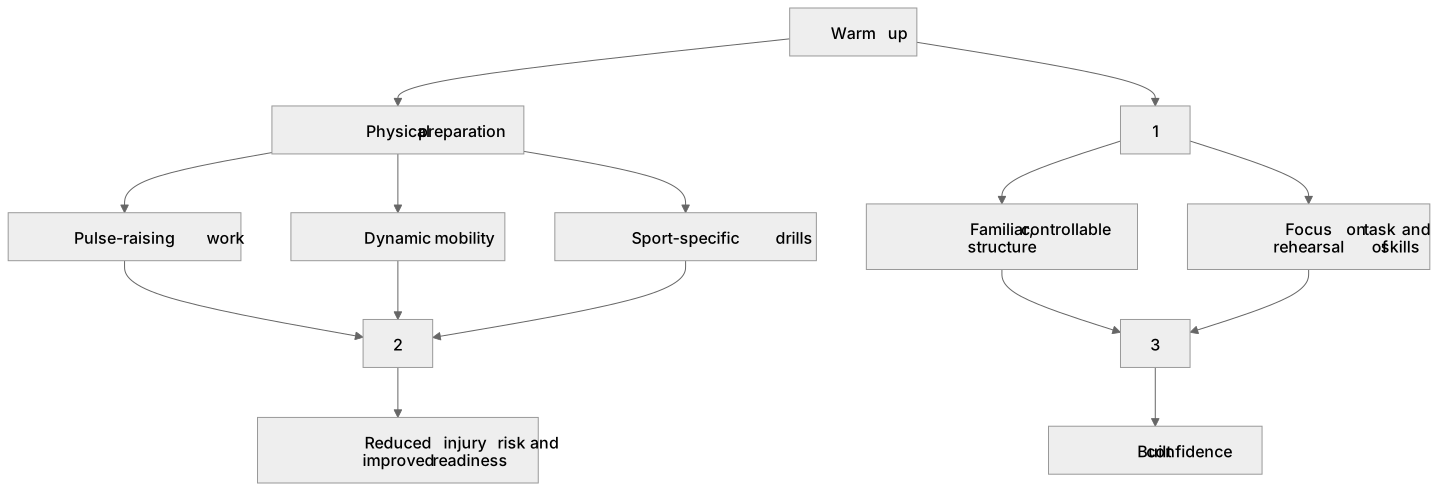
1Box 1
2Box 2
3Box 3
There is more to this lesson
The full lesson goes on to check your understanding and help you earn the marks. Create a free account to carry on, with your progress saved.
A week of Premium from your first lesson · Then the free plan continues · No card, no charge
Test your understanding of Stress management: Use of warm up for stress management.
Active recall beats re-reading. Take an instant quiz now to test what you’ve learned and lock it into long-term memory.
A week of Premium from your first lesson · Then the free plan continues · No card, no charge