AQA · GCSE · Physics
Course version: 8463 · Version from Sept 2016
The turning effect of a force is called the moment of the force. The size…
Full specification wording
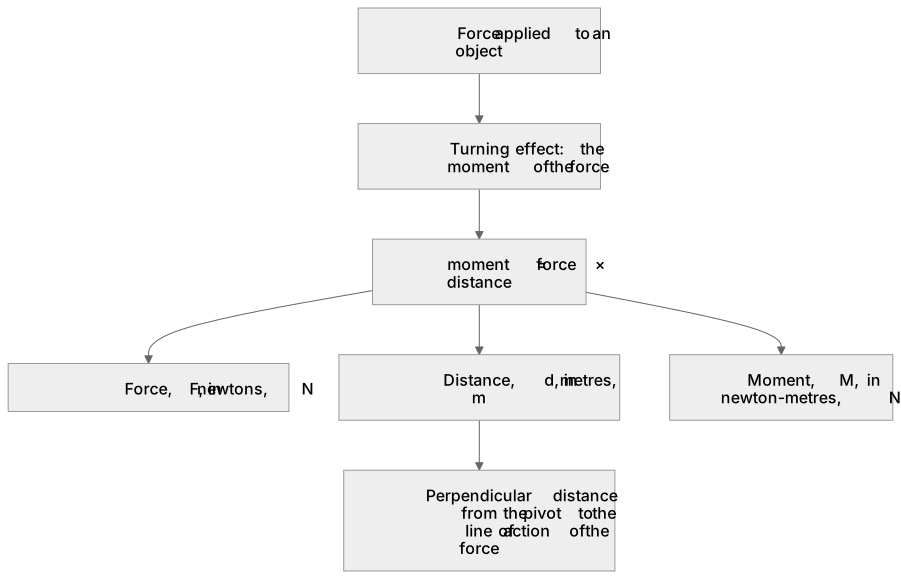
Moments, levers and gears (physics only): The turning effect of a force is called the moment of the force. The size of the moment is defined by the equation: moment o f a f orce = f orce × distance M = F d moment of a force, M, in newton-metres, Nm force, F, in newtons, N distance, d, is the perpendicular distance from the pivot to the line of action of the force, in metres, m.
A moment is the turning effect of a force, and the equation puts a number on it: the force in newtons multiplied by the perpendicular distance in metres from the pivot to the line of action of the…
Checked against the AQA 8463 specification (opens in a new tab) on .
- Point 3 of 7
- 3 key terms
Study notes
From the checked teaching notes for this specification point.
The idea
A moment is the turning effect of a force, and the equation puts a number on it: the force in newtons multiplied by the perpendicular distance in metres from the pivot to the line of action of the force, giving newton-metres. Perpendicular is the word that earns and loses marks. If the force is applied at an angle, the distance to use is the shortest distance from the pivot to the line the force acts along, not the length of the handle, which is why the same force produces its largest moment when applied at right angles. A 40 N push acting 0.30 m from a pivot gives a moment of 12 N m. The unit looks like an energy, but a moment is a turning effect and is never written in joules.
What earns the marks
- The moment described as the turning effect of a force.
- The equation moment = force × distance.
- The distance taken perpendicular from the pivot to the line of action of the force.
- The answer in newton-metres.
Common mistakes and how to put them right
Using the length of the spanner or lever when the force is applied at an angle to it.
Giving the moment in joules because the unit is the newton-metre.
Measuring the distance from the end of the object rather than from the pivot.
Answering increase the length of the lever when asked how to increase the moment, which mark schemes refuse.
Put it right: The credited answer is to apply the force further from the pivot.
Exam tips
- Write perpendicular distance from the pivot into any definition answer.
- Convert centimetres into metres before multiplying, or the moment comes out a hundred times too big.
Try the lesson
The start of the Moments, levers and gears (physics only): The turning effect of a force is called the moment of the force. The size of the moment is defined by the equation: moment o f a f orce = f orce × distance M = F d moment of a force, M, in newton-metres, Nm force, F, in newtons, N distance, d, is the perpendicular distance from the pivot to the line of action of the force, in metres, m. lesson, made from checked teaching notes for this specification point.
Have a go first
A force of 60 N is applied at a perpendicular distance of 0.30 m from the pivot. What is the moment of the force?
Listen
A moment is the turning effect of a force, and the equation puts a number on it: the force in newtons multiplied by the perpendicular distance in metres from the pivot to the line of action of the force, giving newton-metres. Perpendicular is the word that earns and loses marks. If the force is applied at an angle, the distance to use is the shortest distance from the pivot to the line the force acts along, not the length of the handle, which is why the same force produces its largest moment when applied at right angles. A 40 N push acting 0.30 m from a pivot gives a moment of 12 N m. The unit looks like an energy, but a moment is a turning effect and is never written in joules. A strong answer earns marks for these points. the moment described as the turning effect of a force. the equation moment = force × distance. the distance taken perpendicular from the pivot to the line of action of the force. the answer in newton-metres. Exam tip: Write perpendicular distance from the pivot into any definition answer.
See it
Key words
Say what each word means before you turn the card.
moment of a force
Try answering aloud or in your head before turning the card.
newton-metres
Try answering aloud or in your head before turning the card.
pivot
Try answering aloud or in your head before turning the card.
See every definition
- moment of a force
- The turning effect of a force, defined by the equation moment of a force = force × distance.
- newton-metres
- The unit of a moment of a force, written Nm.
- pivot
- The point from which the perpendicular distance to the line of action of the force is measured.
Label the diagram
Some boxes have lost their names. Pick the right name for each number.
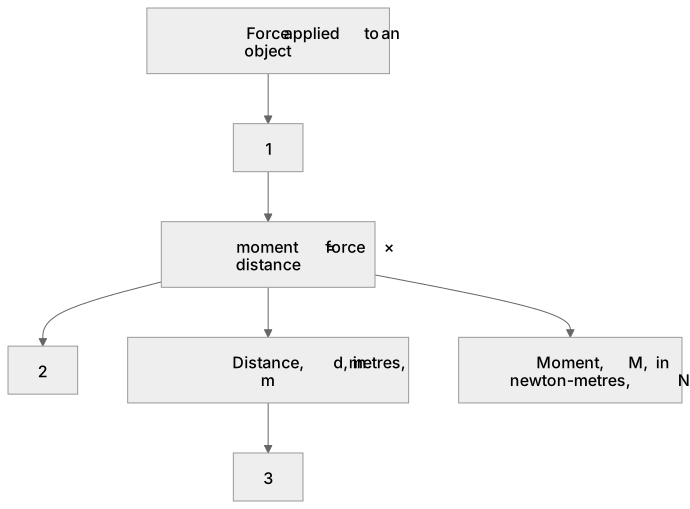
1Box 1
2Box 2
3Box 3
There is more to this lesson
The full lesson goes on to check your understanding and help you earn the marks. Create a free account to carry on, with your progress saved.
A week of Premium from your first lesson · Then the free plan continues · No card, no charge
Test your understanding of Moments, levers and gears (physics only): The turning effect of a force is called the moment of the force. The size of the moment is defined by the equation: moment o f a f orce = f orce × distance M = F d moment of a force, M, in newton-metres, Nm force, F, in newtons, N distance, d, is the perpendicular distance from the pivot to the line of action of the force, in metres, m.
Active recall beats re-reading. Take an instant quiz now to test what you’ve learned and lock it into long-term memory.
A week of Premium from your first lesson · Then the free plan continues · No card, no charge