AQA · GCSE · Physics
Course version: 8463 · Version from Sept 2016
Pressure in a fluid 2 (HT only): This force is called the upthrust.
Upthrust is the name for that upward resultant, and it is a contact force, so mark schemes accept it alongside tension and the normal contact force when examples are asked for.
Checked against the AQA 8463 specification (opens in a new tab) on .
- Point 5 of 6
Study notes
From the checked teaching notes for this specification point.
The idea
Upthrust is the name for that upward resultant, and it is a contact force, so mark schemes accept it alongside tension and the normal contact force when examples are asked for. It always acts upwards through the submerged volume and is equal in size to the weight of the fluid displaced. Whether an object rises, sinks or stays put depends on how the upthrust compares with the weight. A brick resting on the floor of a pool is held still by three forces: its weight downwards, the upthrust upwards and the normal contact force from the floor upwards, so the weight equals the upthrust plus the contact force. A helium balloon rises because the upthrust from the air exceeds its weight, and a floating object has settled where upthrust and weight are equal.
What earns the marks
- Upthrust named as the upward force from a fluid on a submerged object.
- Upthrust equal to the weight of the fluid displaced.
- Identifying upthrust as a contact force.
- The balance of weight, upthrust and normal contact force on an object resting on the bottom.
Common mistakes and how to put them right
Writing that the upthrust on a brick lying on the bottom is zero.
Saying upthrust equals the weight of the object rather than the weight of the fluid displaced.
Listing upthrust as a non-contact force alongside gravity and magnetism.
Leaving the normal contact force out of the force balance for an object resting on the bottom.
Exam tips
- Label the upthrust on any diagram of an object in a fluid, even a sinking one.
- For an object resting on the bottom, expect three vertical forces rather than two.
Try the lesson
The start of the Pressure in a fluid 2 (HT only): This force is called the upthrust. lesson, made from checked teaching notes for this specification point.
Have a go first
A sealed metal block is fully submerged in water and held at rest. Which statement describes the upthrust acting on the block?
Listen
Upthrust is the name for that upward resultant, and it is a contact force, so mark schemes accept it alongside tension and the normal contact force when examples are asked for. It always acts upwards through the submerged volume and is equal in size to the weight of the fluid displaced. Whether an object rises, sinks or stays put depends on how the upthrust compares with the weight. A brick resting on the floor of a pool is held still by three forces: its weight downwards, the upthrust upwards and the normal contact force from the floor upwards, so the weight equals the upthrust plus the contact force. A helium balloon rises because the upthrust from the air exceeds its weight, and a floating object has settled where upthrust and weight are equal. A strong answer earns marks for these points. upthrust named as the upward force from a fluid on a submerged object. upthrust equal to the weight of the fluid displaced. identifying upthrust as a contact force. the balance of weight, upthrust and normal contact force on an object resting on the bottom. Exam tip: Label the upthrust on any diagram of an object in a fluid, even a sinking one.
See it
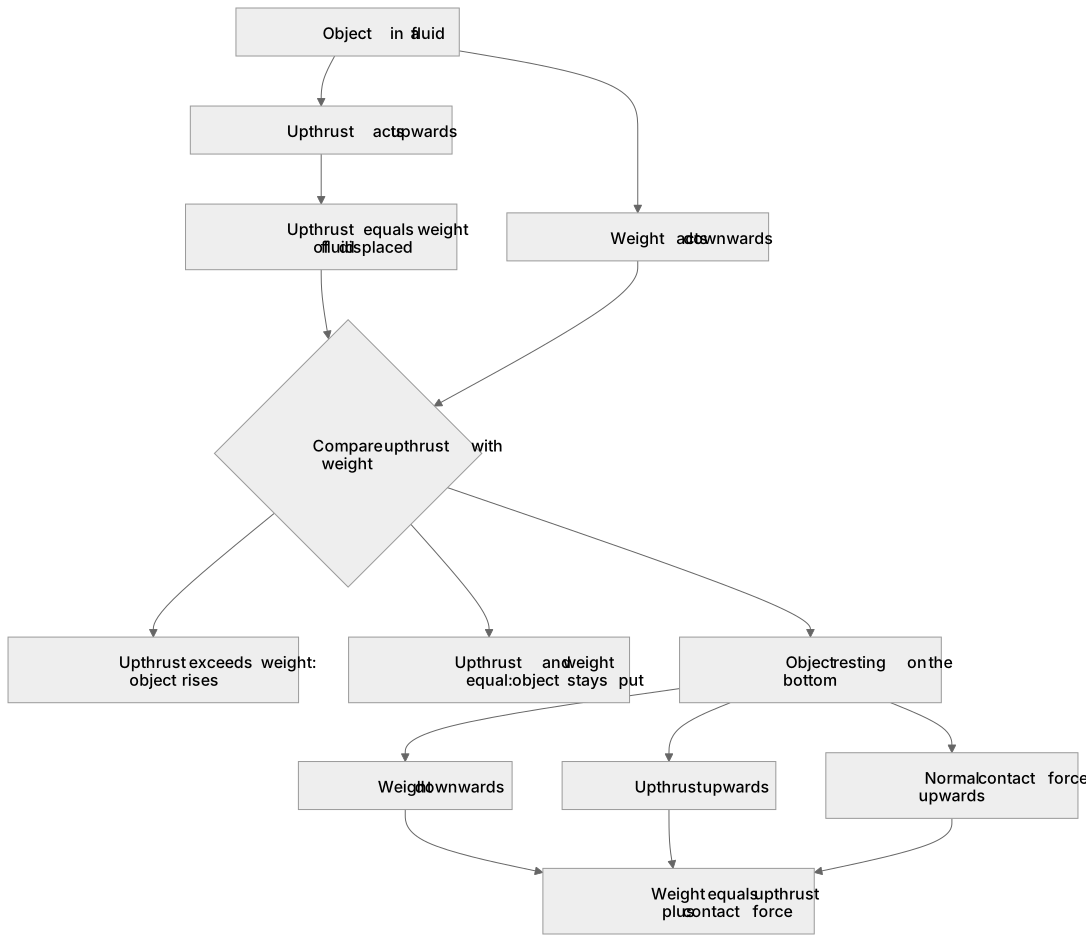
Label the diagram
Some boxes have lost their names. Pick the right name for each number.
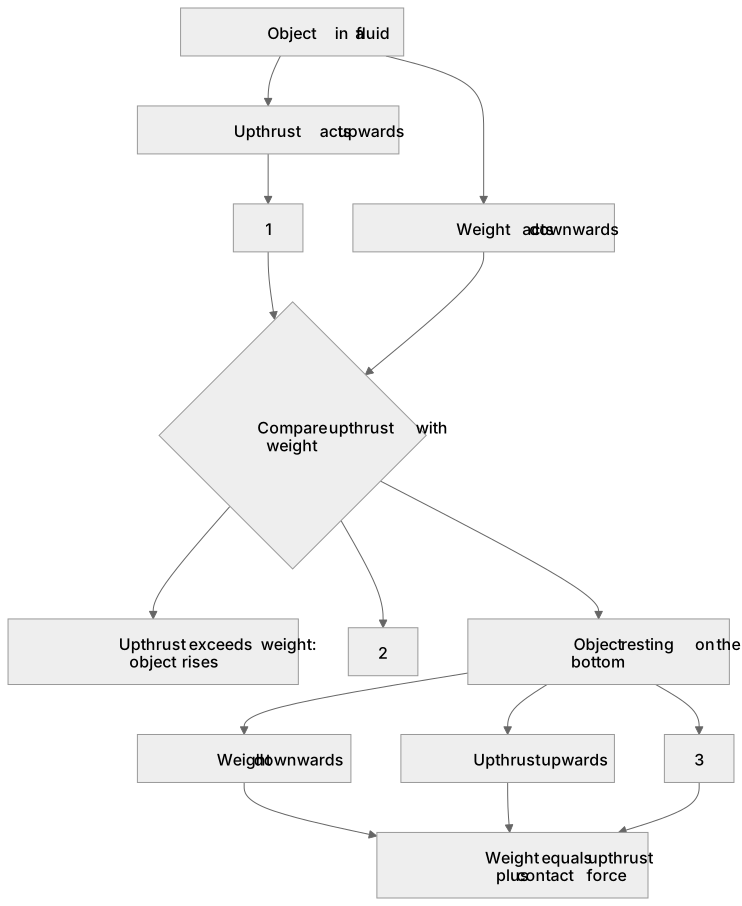
1Box 1
2Box 2
3Box 3
There is more to this lesson
The full lesson goes on to check your understanding and help you earn the marks. Create a free account to carry on, with your progress saved.
A week of Premium from your first lesson · Then the free plan continues · No card, no charge
Test your understanding of Pressure in a fluid 2 (HT only): This force is called the upthrust.
Active recall beats re-reading. Take an instant quiz now to test what you’ve learned and lock it into long-term memory.
A week of Premium from your first lesson · Then the free plan continues · No card, no charge