AQA · GCSE · Physics
Course version: 8463 · Version from Sept 2016
Ultraviolet waves can cause skin to age prematurely and increase the risk…
Full specification wording
Properties of electromagnetic waves 2: Ultraviolet waves can cause skin to age prematurely and increase the risk of skin cancer.
Ultraviolet (UV) radiation has a shorter wavelength and higher frequency than visible light, carrying more energy.
Checked against the AQA 8463 specification (opens in a new tab) on .
- Point 10 of 11
- 4 key terms
Study notes
From the checked teaching notes for this specification point.
The idea
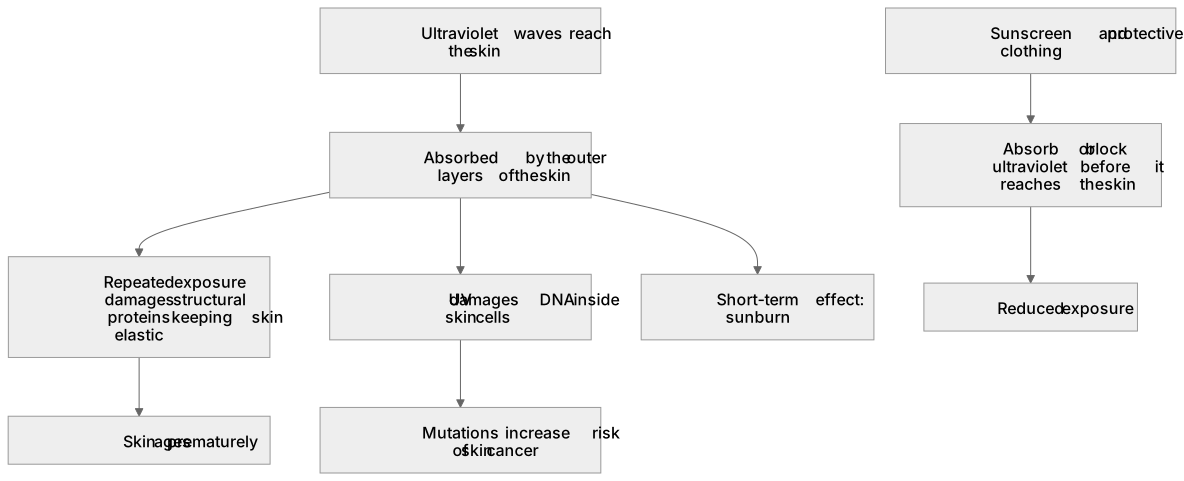
Ultraviolet (UV) radiation has a shorter wavelength and higher frequency than visible light, carrying more energy. When UV waves reach humans, they are absorbed by the outer layers of the skin. This absorption has severe consequences. For example, repeated exposure damages the structural proteins keeping skin elastic, causing the skin to age prematurely. Furthermore, UV radiation damages the DNA inside skin cells. This genetic damage can cause mutations that significantly increase the risk of developing skin cancer. While UV causes short-term effects like sunburn, the long-term risks are severe. Sunscreen and protective clothing absorb or block ultraviolet waves before they can reach and damage the skin, reducing exposure.
What earns the marks
- Stating that ultraviolet radiation is absorbed by the skin.
- Naming premature ageing of the skin as a long-term effect of UV exposure.
- Linking damage to DNA or genes in skin cells to an increased risk of skin cancer.
- Identifying that sunscreen or protective clothing can absorb or block ultraviolet to reduce exposure.
Common mistakes and how to put them right
Saying ultraviolet causes cancer because it is hot, corrected by distinguishing its effects from infrared radiation.
Claiming sunscreen reflects all the ultraviolet so that no risk remains, corrected by noting it absorbs UV but some risk may persist.
Describing sunburn as the only effect, corrected by including the longer-term risks of premature ageing and skin cancer.
Exam tips
- When asked about the risks of UV, give both a short-term effect, such as sunburn, and a long-term one, such as skin cancer.
- Remember to specify that ultraviolet is absorbed by the skin, leading to potential DNA damage, rather than just saying it hits the body.
Try the lesson
The start of the Properties of electromagnetic waves 2: Ultraviolet waves can cause skin to age prematurely and increase the risk of skin cancer. lesson, made from checked teaching notes for this specification point.
Have a go first
Which of the following describes the hazardous effects of ultraviolet waves on the human body?
Listen
Ultraviolet (UV) radiation has a shorter wavelength and higher frequency than visible light, carrying more energy. When UV waves reach humans, they are absorbed by the outer layers of the skin. This absorption has severe consequences. For example, repeated exposure damages the structural proteins keeping skin elastic, causing the skin to age prematurely. Furthermore, UV radiation damages the DNA inside skin cells. This genetic damage can cause mutations that significantly increase the risk of developing skin cancer. While UV causes short-term effects like sunburn, the long-term risks are severe. Sunscreen and protective clothing absorb or block ultraviolet waves before they can reach and damage the skin, reducing exposure. A strong answer earns marks for these points. stating that ultraviolet radiation is absorbed by the skin. naming premature ageing of the skin as a long-term effect of UV exposure. linking damage to DNA or genes in skin cells to an increased risk of skin cancer. identifying that sunscreen or protective clothing can absorb or block ultraviolet to reduce exposure. Exam tip: When asked about the risks of UV, give both a short-term effect, such as sunburn, and a long-term one, such as skin cancer.
See it
Key words
Say what each word means before you turn the card.
ultraviolet absorption
Try answering aloud or in your head before turning the card.
premature ageing
Try answering aloud or in your head before turning the card.
DNA damage
Try answering aloud or in your head before turning the card.
skin cancer risk
Try answering aloud or in your head before turning the card.
See every definition
- ultraviolet absorption
- When ultraviolet waves reach humans, they are absorbed by the outer layers of the skin.
- premature ageing
- Repeated exposure damages the structural proteins keeping skin elastic, causing the skin to age prematurely.
- DNA damage
- Ultraviolet radiation damages the DNA inside skin cells, and this genetic damage can cause mutations.
- skin cancer risk
- Mutations caused by genetic damage significantly increase the risk of developing skin cancer.
Label the diagram
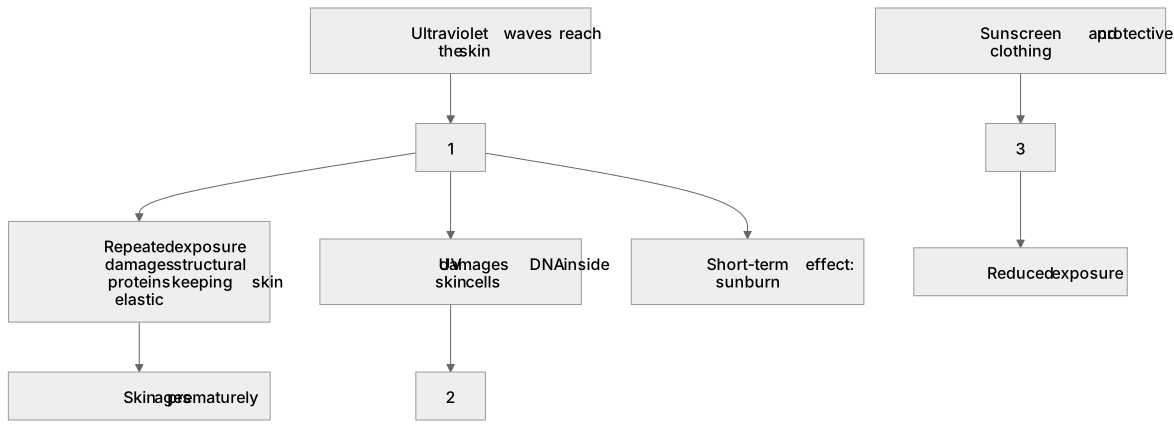
Some boxes have lost their names. Pick the right name for each number.
1Box 1
2Box 2
3Box 3
There is more to this lesson
The full lesson goes on to check your understanding and help you earn the marks. Create a free account to carry on, with your progress saved.
A week of Premium from your first lesson · Then the free plan continues · No card, no charge
Test your understanding of Properties of electromagnetic waves 2: Ultraviolet waves can cause skin to age prematurely and increase the risk of skin cancer.
Active recall beats re-reading. Take an instant quiz now to test what you’ve learned and lock it into long-term memory.
A week of Premium from your first lesson · Then the free plan continues · No card, no charge