OCR · GCSE · Physics
Course version: J249 · Version from Sept 2018
Explain ways of reducing unwanted energy transfer (to include: lubrication…
Full specification wording
Power and efficiency: explain ways of reducing unwanted energy transfer (to include: lubrication and thermal insulation)
Unwanted energy transfer happens whenever energy moves from a useful store into the surroundings, usually by heating.
Checked against the OCR J249 specification (opens in a new tab) on .
- Point 7 of 8
- 3 key terms
Study notes
From the checked teaching notes for this specification point.
The idea
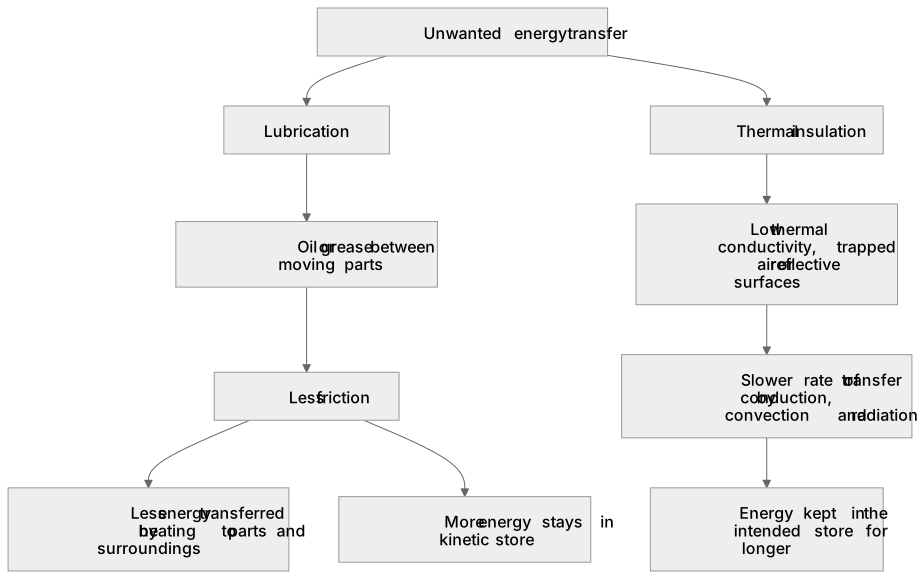
Unwanted energy transfer happens whenever energy moves from a useful store into the surroundings, usually by heating. Lubrication reduces unwanted transfer where surfaces rub: oil or grease between moving parts reduces friction, so less energy is transferred by heating to the parts and surroundings and more stays in the kinetic store of the moving object. Thermal insulation reduces unwanted transfer by conduction, convection and radiation from a warm object such as a house. Materials with low thermal conductivity, trapped air and reflective surfaces slow the rate at which energy passes to the cooler surroundings. In both cases the method works by reducing the rate of transfer, not by creating energy, and the total energy is conserved.
What earns the marks
- Identifies lubrication as a way of reducing friction between moving surfaces and so reducing energy transferred by heating to the surroundings.
- Identifies thermal insulation as a way of reducing the rate of energy transfer by conduction, convection or radiation from a warm object to cooler surroundings.
- Explains that a lubricant such as oil or grease lowers friction, so less energy is dissipated and more remains in the kinetic store of the moving parts.
- Explains that insulation works by using a material of low thermal conductivity, trapped air or a reflective surface to slow energy transfer to the surroundings.
- States that reducing unwanted transfer does not destroy energy, because total energy is conserved and the energy is simply kept in the intended store for longer.
Common mistakes and how to put them right
Claims that lubrication adds energy to the moving parts.
Put it right: Explain instead that it reduces friction so less energy is dissipated by heating.
Claims that insulation creates energy or warms the object.
Put it right: Explain instead that it slows the rate of energy transfer to the cooler surroundings.
Treats lubrication and insulation as interchangeable.
Put it right: Distinguish friction between moving surfaces from heat transfer through a building's fabric.
Exam tips
- Link each method to the specific transfer route it reduces: friction for lubrication, conduction, convection or radiation for insulation.
- Use the phrase 'reduces the rate of energy transfer' rather than 'stops energy transfer', because insulation slows rather than halts it.
- Check that the chosen option keeps energy conserved and does not claim energy is created or destroyed.
Try the lesson
The start of the Power and efficiency: explain ways of reducing unwanted energy transfer (to include: lubrication and thermal insulation) lesson, made from checked teaching notes for this specification point.
Have a go first
A bicycle chain squeaks and becomes warm as the rider pedals. Adding oil between the moving metal parts reduces this warming. Why does the oil reduce the unwanted energy transfer?
Listen
Unwanted energy transfer happens whenever energy moves from a useful store into the surroundings, usually by heating. Lubrication reduces unwanted transfer where surfaces rub: oil or grease between moving parts reduces friction, so less energy is transferred by heating to the parts and surroundings and more stays in the kinetic store of the moving object. Thermal insulation reduces unwanted transfer by conduction, convection and radiation from a warm object such as a house. Materials with low thermal conductivity, trapped air and reflective surfaces slow the rate at which energy passes to the cooler surroundings. In both cases the method works by reducing the rate of transfer, not by creating energy, and the total energy is conserved. A strong answer earns marks for these points. Identifies lubrication as a way of reducing friction between moving surfaces and so reducing energy transferred by heating to the surroundings. Identifies thermal insulation as a way of reducing the rate of energy transfer by conduction, convection or radiation from a warm object to cooler surroundings. Explains that a lubricant such as oil or grease lowers friction, so less energy is dissipated and more remains in the kinetic store of the moving parts. Explains that insulation works by using a material of low thermal conductivity, trapped air or a reflective surface to slow energy transfer to the surroundings. Exam tip: Link each method to the specific transfer route it reduces: friction for lubrication, conduction, convection or radiation for insulation.
See it
Key words
Say what each word means before you turn the card.
Lubrication
Try answering aloud or in your head before turning the card.
Thermal insulation
Try answering aloud or in your head before turning the card.
Conservation of energy
Try answering aloud or in your head before turning the card.
See every definition
- Lubrication
- Oil or grease between moving parts reduces friction, so less energy is transferred by heating to the parts and surroundings.
- Thermal insulation
- Reduces unwanted transfer by conduction, convection and radiation from a warm object such as a house to the cooler surroundings.
- Conservation of energy
- Reducing unwanted transfer does not destroy energy, because the total energy is conserved and is kept in the intended store for longer.
Label the diagram
Some boxes have lost their names. Pick the right name for each number.
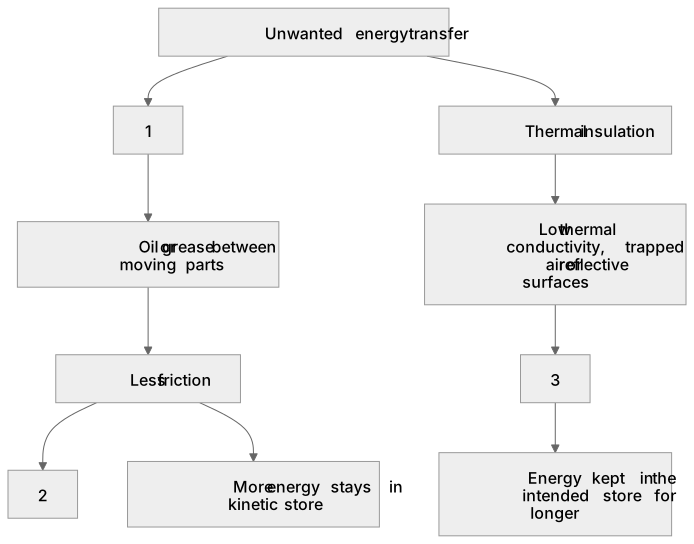
1Box 1
2Box 2
3Box 3
There is more to this lesson
The full lesson goes on to check your understanding and help you earn the marks. Create a free account to carry on, with your progress saved.
A week of Premium from your first lesson · Then the free plan continues · No card, no charge
Test your understanding of Power and efficiency: explain ways of reducing unwanted energy transfer (to include: lubrication and thermal insulation)
Active recall beats re-reading. Take an instant quiz now to test what you’ve learned and lock it into long-term memory.
A week of Premium from your first lesson · Then the free plan continues · No card, no charge