OCR · GCSE · Physics
Course version: J249 · Version from Sept 2018
Recall the differences between contamination and irradiation effects and…
Full specification wording
Uses and hazards: recall the differences between contamination and irradiation effects and compare the hazards associated with these two
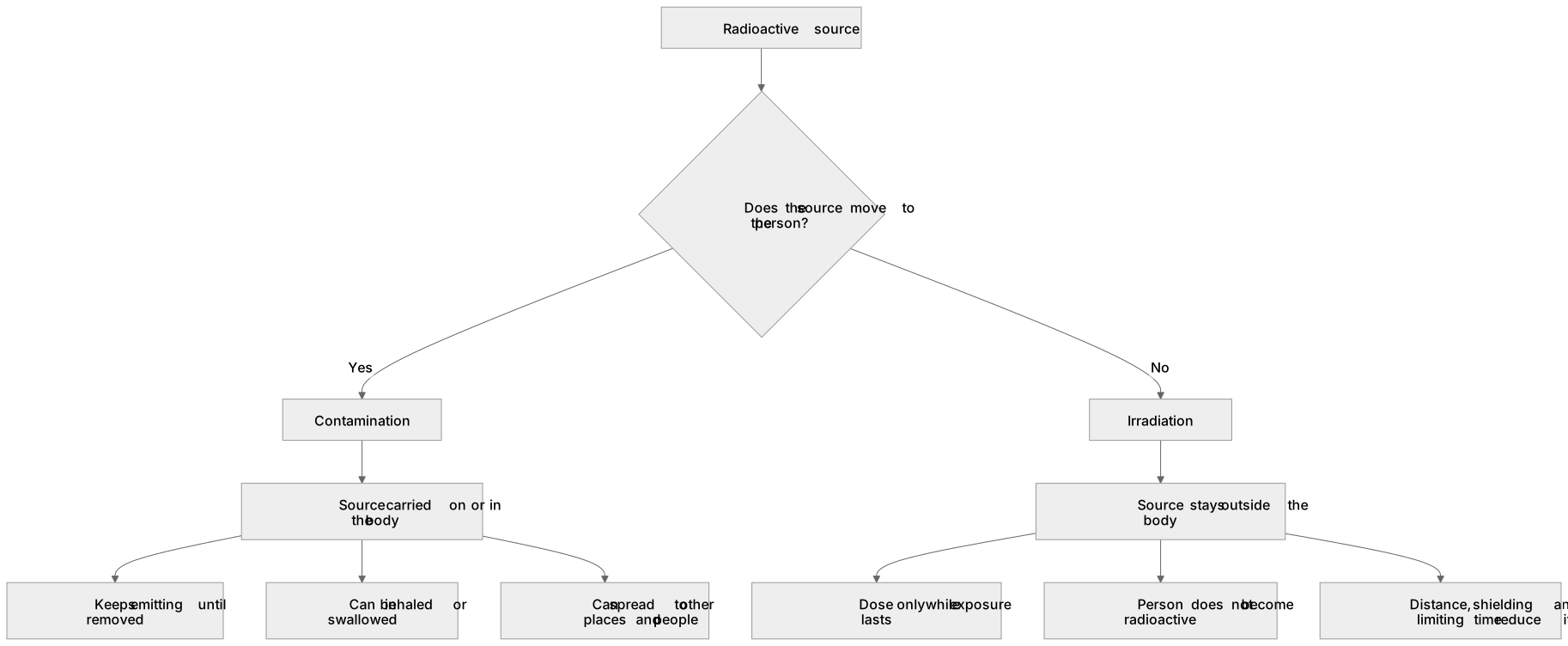
Contamination means radioactive material gets onto or into an object, a surface or a person, so the source itself is transferred and keeps emitting inside or on the body.
Checked against the OCR J249 specification (opens in a new tab) on .
- Point 1 of 5
- 4 key terms
Study notes
From the checked teaching notes for this specification point.
The idea
Contamination means radioactive material gets onto or into an object, a surface or a person, so the source itself is transferred and keeps emitting inside or on the body. Irradiation means exposure to radiation passing through from a source that stays outside the body; the person does not become radioactive. A spilled dust that settles on skin contaminates it, whereas standing near a sealed source in a beam is irradiation. Hazards differ: contamination can be inhaled or swallowed and continue delivering dose until removed, and it can spread, so protective clothing, gloves, containment and careful disposal matter. Irradiation delivers dose only while exposure lasts, so distance, shielding and limiting time reduce it. Compare both by asking whether the source moves with the person and whether the hazard persists after leaving the area.
What earns the marks
- States that contamination transfers radioactive material onto or into an object or person, so the source is carried with them.
- States that irradiation is exposure to radiation from a source that remains outside the body, so the person does not become radioactive.
- Explains that contamination can be taken into the body by inhalation or ingestion and continues to deliver dose until removed.
- Explains that irradiation delivers dose only during exposure, so increasing distance, adding shielding or reducing time lowers the hazard.
- Compares the two hazards by noting that contamination can spread to other places and people whereas irradiation does not transfer the source.
Common mistakes and how to put them right
Claims that an irradiated person becomes radioactive.
Put it right by stating that irradiation leaves no radioactive material on the person.
Treats contamination and irradiation as the same hazard.
Put it right: Distinguish them by whether the radioactive material itself is transferred.
Assumes a contaminated object stops being a hazard once removed from the source.
Put it right: Note that the transferred material keeps emitting until it is removed or decays.
Exam tips
- Decide first whether the radioactive material itself moves to the person; if it does, the situation is contamination.
- Use the words 'source stays outside the body' when describing irradiation to keep the distinction sharp.
- When comparing hazards, mention both persistence of dose and spread to other people or surfaces.
Try the lesson
The start of the Uses and hazards: recall the differences between contamination and irradiation effects and compare the hazards associated with these two lesson, made from checked teaching notes for this specification point.
Have a go first
Which statement describes contamination rather than irradiation?
Listen
Contamination means radioactive material gets onto or into an object, a surface or a person, so the source itself is transferred and keeps emitting inside or on the body. Irradiation means exposure to radiation passing through from a source that stays outside the body; the person does not become radioactive. A spilled dust that settles on skin contaminates it, whereas standing near a sealed source in a beam is irradiation. Hazards differ: contamination can be inhaled or swallowed and continue delivering dose until removed, and it can spread, so protective clothing, gloves, containment and careful disposal matter. Irradiation delivers dose only while exposure lasts, so distance, shielding and limiting time reduce it. Compare both by asking whether the source moves with the person and whether the hazard persists after leaving the area. A strong answer earns marks for these points. States that contamination transfers radioactive material onto or into an object or person, so the source is carried with them. States that irradiation is exposure to radiation from a source that remains outside the body, so the person does not become radioactive. Explains that contamination can be taken into the body by inhalation or ingestion and continues to deliver dose until removed. Explains that irradiation delivers dose only during exposure, so increasing distance, adding shielding or reducing time lowers the hazard. A common slip: Claims that an irradiated person becomes radioactive. Instead, stating that irradiation leaves no radioactive material on the person. Exam tip: Decide first whether the radioactive material itself moves to the person; if it does, the situation is contamination.
See it
Key words
Say what each word means before you turn the card.
Contamination
Try answering aloud or in your head before turning the card.
Irradiation
Try answering aloud or in your head before turning the card.
Internal dose
Try answering aloud or in your head before turning the card.
Irradiation hazard
Try answering aloud or in your head before turning the card.
See every definition
- Contamination
- Radioactive material gets onto or into an object, a surface or a person, so the source itself is transferred and keeps emitting.
- Irradiation
- Exposure to radiation passing through from a source that stays outside the body, so the person does not become radioactive.
- Internal dose
- Dose from contamination that can be inhaled or swallowed and continues delivering dose until removed.
- Irradiation hazard
- Dose delivered only while exposure lasts, so distance, shielding and limiting time reduce it.
Label the diagram
Some boxes have lost their names. Pick the right name for each number.
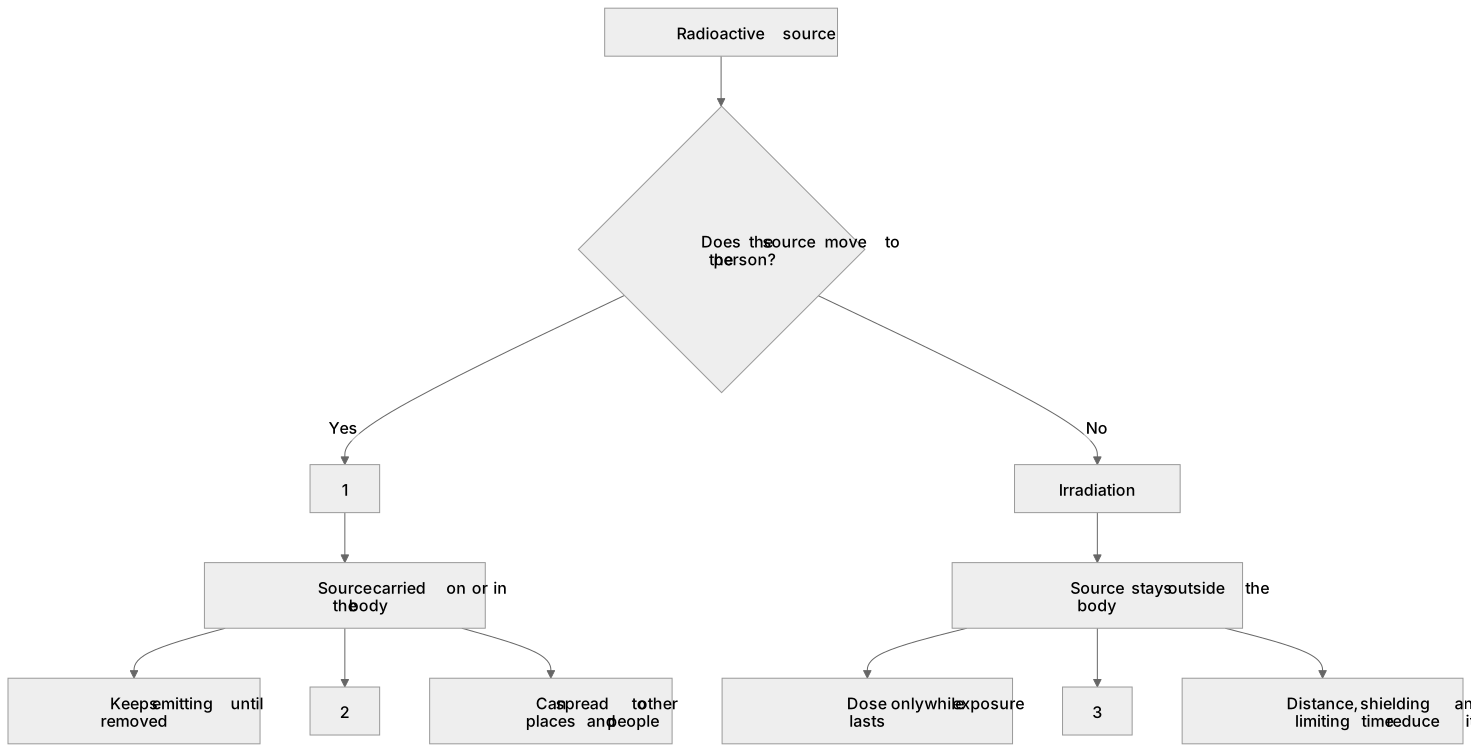
1Box 1
2Box 2
3Box 3
There is more to this lesson
The full lesson goes on to check your understanding and help you earn the marks. Create a free account to carry on, with your progress saved.
A week of Premium from your first lesson · Then the free plan continues · No card, no charge
Test your understanding of Uses and hazards: recall the differences between contamination and irradiation effects and compare the hazards associated with these two
Active recall beats re-reading. Take an instant quiz now to test what you’ve learned and lock it into long-term memory.
A week of Premium from your first lesson · Then the free plan continues · No card, no charge