AQA · A-Level · Psychology
Course version: 7182-2025 · Exams from 2027
Biological explanations for obesity, including genetic and neural.
Full specification wording
Eating behaviour: Biological explanations for obesity, including genetic and neural.
Biological explanations for obesity focus on genetic inheritance and neural mechanisms.
Checked against the AQA 7182-2025 specification (opens in a new tab) on .
- Point 5 of 6
- 4 key terms
Study notes
From the checked teaching notes for this specification point.
The idea
Biological explanations for obesity focus on genetic inheritance and neural mechanisms. Genetic theories propose that obesity is polygenic, with research highlighting the FTO gene, which increases the likelihood of overeating by altering energy homeostasis. Evolutionary concepts like the 'thrifty gene' suggest ancestors who stored fat survived famines, making these genes maladaptive today. Neural explanations emphasise the hypothalamus and neurotransmitters. A deficiency in dopamine D₂ receptors means individuals experience less reward from eating, leading to overeating to compensate. Additionally, dysfunction in serotonin pathways, which normally signal satiety, can prevent the feeling of fullness, contributing to weight gain.
What earns the marks
- Identify the role of the FTO gene in predisposing individuals to obesity through impaired energy balance.
- Explain the evolutionary 'thrifty gene' hypothesis as a genetic explanation for fat storage.
- Describe how a reduction in dopamine D₂ receptors leads to compensatory overeating to achieve reward.
- Explain the role of serotonin in signalling satiety and how deficits lead to a lack of fullness and subsequent weight gain.
- Evaluate biological explanations using twin and adoption studies to establish concordance rates for body mass index.
Common mistakes and how to put them right
Stating that a single gene causes obesity.
Put it right: Explain that obesity is polygenic, meaning multiple genes interact with environmental factors to influence weight.
Confusing the roles of dopamine and serotonin.
Put it right: Specify that dopamine is linked to the reward pathway and pleasure from eating, whereas serotonin is linked to satiety and feeling full.
Writing the dopamine receptor index on the baseline.
Put it right: Write the dopamine receptor subtype using a subscript, such as D₂ receptors, to denote the receptor subtype correctly.
Exam tips
- Use twin studies, such as those by Stunkard, to provide supporting evidence for the genetic basis of obesity.
- When evaluating, introduce the diathesis-stress model to explain how genetic vulnerability requires an environmental trigger.
- Clearly distinguish between neural mechanisms, such as neurotransmitters, and genetic inheritance to ensure focused answers.
Try the lesson
The start of the Eating behaviour: Biological explanations for obesity, including genetic and neural. lesson, made from checked teaching notes for this specification point.
Have a go first
Which neural mechanism is most commonly associated with the development of obesity due to a reduced reward response to food?
Listen
Biological explanations for obesity focus on genetic inheritance and neural mechanisms. Genetic theories propose that obesity is polygenic, with research highlighting the FTO gene, which increases the likelihood of overeating by altering energy homeostasis. Evolutionary concepts like the 'thrifty gene' suggest ancestors who stored fat survived famines, making these genes maladaptive today. Neural explanations emphasise the hypothalamus and neurotransmitters. A deficiency in dopamine D₂ receptors means individuals experience less reward from eating, leading to overeating to compensate. Additionally, dysfunction in serotonin pathways, which normally signal satiety, can prevent the feeling of fullness, contributing to weight gain. A strong answer earns marks for these points. Identify the role of the FTO gene in predisposing individuals to obesity through impaired energy balance. Explain the evolutionary 'thrifty gene' hypothesis as a genetic explanation for fat storage. Describe how a reduction in dopamine D₂ receptors leads to compensatory overeating to achieve reward. Explain the role of serotonin in signalling satiety and how deficits lead to a lack of fullness and subsequent weight gain. A common slip: Stating that a single gene causes obesity. Instead, Explain that obesity is polygenic, meaning multiple genes interact with environmental factors to influence weight. Exam tip: Use twin studies, such as those by Stunkard, to provide supporting evidence for the genetic basis of obesity.
See it

Key words
Say what each word means before you turn the card.
FTO gene
Try answering aloud or in your head before turning the card.
Thrifty gene
Try answering aloud or in your head before turning the card.
Dopamine D₂ receptors
Try answering aloud or in your head before turning the card.
Serotonin pathways
Try answering aloud or in your head before turning the card.
See every definition
- FTO gene
- A gene highlighted by genetic theories that increases the likelihood of overeating by altering energy homeostasis.
- Thrifty gene
- An evolutionary concept suggesting ancestors who stored fat survived famines, making these genes maladaptive today.
- Dopamine D₂ receptors
- A deficiency in these receptors means individuals experience less reward from eating, leading to overeating to compensate.
- Serotonin pathways
- Pathways that normally signal satiety, so dysfunction can prevent the feeling of fullness, contributing to weight gain.
Label the diagram
Some boxes have lost their names. Pick the right name for each number.
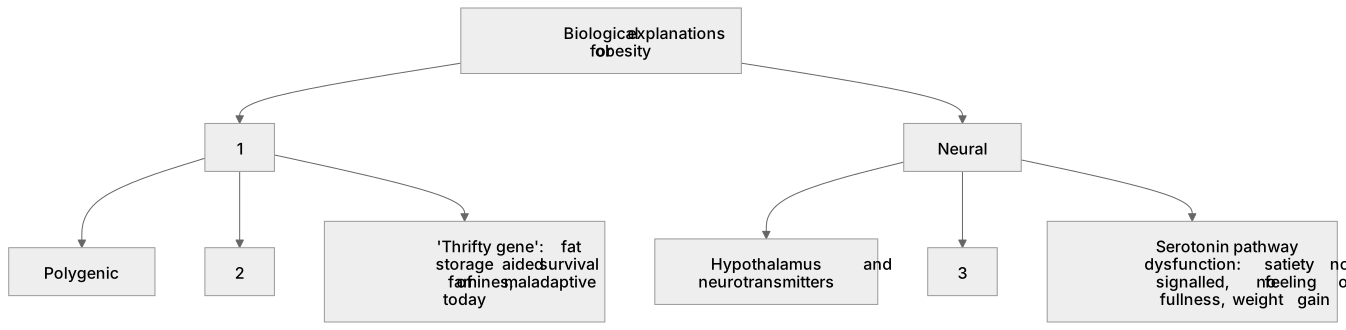
1Box 1
2Box 2
3Box 3
There is more to this lesson
The full lesson goes on to check your understanding and help you earn the marks. Create a free account to carry on, with your progress saved.
A week of Premium from your first lesson · Then the free plan continues · No card, no charge
Test your understanding of Eating behaviour: Biological explanations for obesity, including genetic and neural.
Active recall beats re-reading. Take an instant quiz now to test what you’ve learned and lock it into long-term memory.
A week of Premium from your first lesson · Then the free plan continues · No card, no charge