AQA · A-Level · Psychology
Course version: 7182-2025 · Exams from 2027
Biological explanations of offending behaviour: genetics and neural…
Full specification wording
Forensic Psychology: Biological explanations of offending behaviour: genetics and neural explanations.
Biological explanations propose that offending behaviour stems from physiological anomalies rather than environmental factors.
Checked against the AQA 7182-2025 specification (opens in a new tab) on .
- Point 2 of 4
Study notes
From the checked teaching notes for this specification point.
The idea
Biological explanations propose that offending behaviour stems from physiological anomalies rather than environmental factors. Genetic explanations focus on heritability, often using twin and adoption studies to identify concordance rates for criminality. Research highlights candidate genes like MAOA (the 'warrior gene'), which regulates neurotransmitters like serotonin, and CDH13, linked to substance abuse and ADHD. Neural explanations examine brain structure and function, particularly the prefrontal cortex, which regulates emotional behaviour and impulse control. Reduced activity here is associated with antisocial personality disorder. Additionally, differences in mirror neurons may explain variations in empathy among offenders, suggesting a neurological deficit in processing others' emotions.
What earns the marks
- Explain genetic heritability of offending using evidence from twin studies (comparing MZ and DZ concordance rates) and adoption studies.
- Identify specific candidate genes implicated in offending, such as the MAOA gene and its role in regulating serotonin and dopamine.
- Describe neural explanations, focusing on reduced functioning or structural abnormalities in the prefrontal cortex and its link to poor impulse control.
- Discuss the role of mirror neurons in empathy deficits, particularly in individuals with antisocial personality disorder.
Common mistakes and how to put them right
Stating that genes directly cause crime.
Put it right: Genes create a vulnerability or predisposition (diathesis) to offending, which is often triggered by environmental stressors.
Confusing the roles of neurotransmitters.
Put it right: Ensure you specify that low levels of serotonin (not high) are typically linked to increased aggression and impulsivity.
Treating biological explanations as entirely deterministic.
Put it right: Evaluate these explanations by discussing biological determinism and the implications for the legal system's concept of free will.
Exam tips
- Always link biological factors back to offending behaviour explicitly, explaining how a genetic or neural difference translates into a criminal act (e.g., via impulsivity).
- Use the diathesis-stress model as an effective evaluation point to demonstrate that biological factors interact with environmental influences.
- Reference specific studies, such as Raine's brain imaging research on murderers, to provide concrete evidence for neural explanations.
Try the lesson
The start of the Forensic Psychology: Biological explanations of offending behaviour: genetics and neural explanations. lesson, made from checked teaching notes for this specification point.
Have a go first
Which of the following structural brain abnormalities is most commonly associated with antisocial personality disorder (APD) in the context of neural explanations for offending behaviour?
Listen
Biological explanations propose that offending behaviour stems from physiological anomalies rather than environmental factors. Genetic explanations focus on heritability, often using twin and adoption studies to identify concordance rates for criminality. Research highlights candidate genes like MAOA (the 'warrior gene'), which regulates neurotransmitters like serotonin, and CDH13, linked to substance abuse and ADHD. Neural explanations examine brain structure and function, particularly the prefrontal cortex, which regulates emotional behaviour and impulse control. Reduced activity here is associated with antisocial personality disorder. Additionally, differences in mirror neurons may explain variations in empathy among offenders, suggesting a neurological deficit in processing others' emotions. A strong answer earns marks for these points. Explain genetic heritability of offending using evidence from twin studies (comparing MZ and DZ concordance rates) and adoption studies. Identify specific candidate genes implicated in offending, such as the MAOA gene and its role in regulating serotonin and dopamine. Describe neural explanations, focusing on reduced functioning or structural abnormalities in the prefrontal cortex and its link to poor impulse control. Discuss the role of mirror neurons in empathy deficits, particularly in individuals with antisocial personality disorder. A common slip: Stating that genes directly cause crime. Instead, genes create a vulnerability or predisposition (diathesis) to offending, which is often triggered by environmental stressors. Exam tip: Always link biological factors back to offending behaviour explicitly, explaining how a genetic or neural difference translates into a criminal act (e.g., via impulsivity).
See it
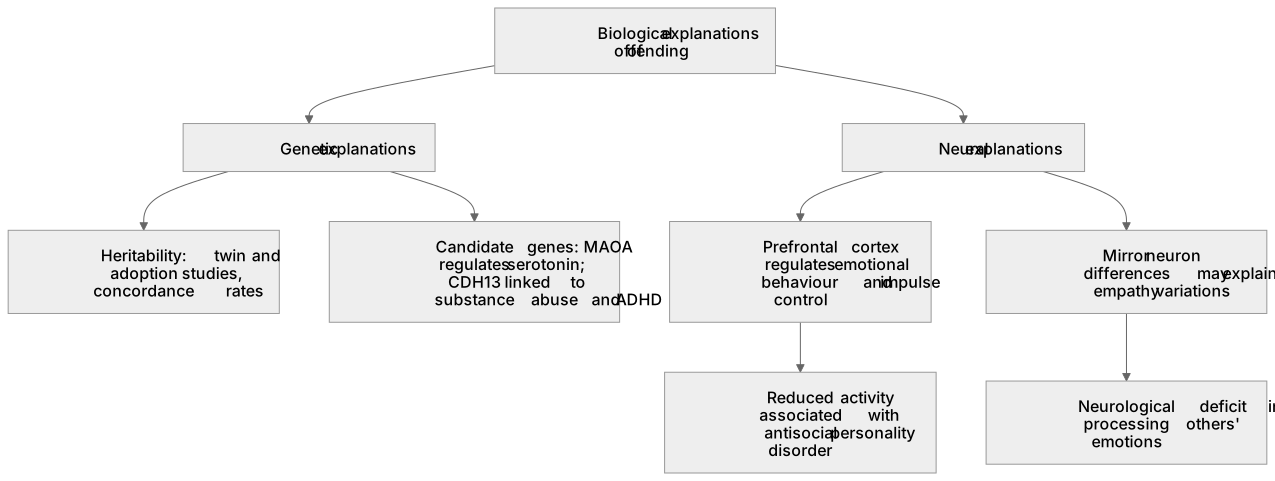
Label the diagram
Some boxes have lost their names. Pick the right name for each number.
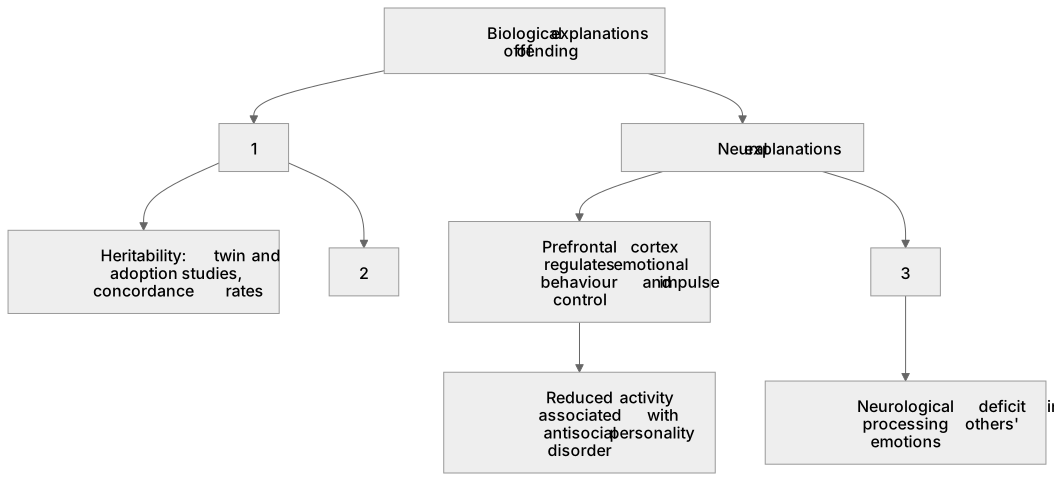
1Box 1
2Box 2
3Box 3
There is more to this lesson
The full lesson goes on to check your understanding and help you earn the marks. Create a free account to carry on, with your progress saved.
A week of Premium from your first lesson · Then the free plan continues · No card, no charge
Test your understanding of Forensic Psychology: Biological explanations of offending behaviour: genetics and neural explanations.
Active recall beats re-reading. Take an instant quiz now to test what you’ve learned and lock it into long-term memory.
A week of Premium from your first lesson · Then the free plan continues · No card, no charge