AQA · A-Level · Psychology
Course version: 7182-2025 · Exams from 2027
The role of chromosomes and hormones (testosterone, oestrogen and…
Full specification wording
Gender: The role of chromosomes and hormones (testosterone, oestrogen and oxytocin) in biological sex. Diversity in sex development, including androgen insensitivity syndrome, Klinefelter’s syndrome and Turner syndrome.
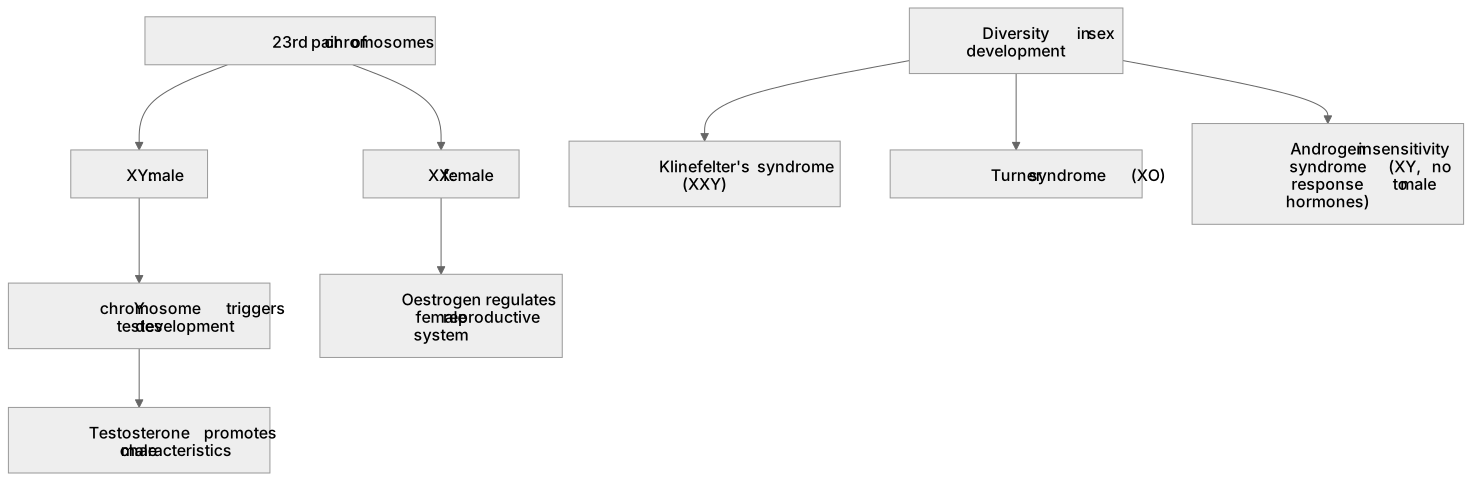
Biological sex is initially determined by the 23rd pair of chromosomes: XX for females and XY for males.
Checked against the AQA 7182-2025 specification (opens in a new tab) on .
- Point 1 of 6
- 2 key terms
Study notes
From the checked teaching notes for this specification point.
The idea
Biological sex is initially determined by the 23rd pair of chromosomes: XX for females and XY for males. The Y chromosome triggers testes development. Hormones then direct sexual differentiation. Testosterone promotes male characteristics. Oestrogen regulates the female reproductive system. Oxytocin facilitates childbirth, lactation, and bonding. Diversity in sex development occurs when chromosomal or hormonal patterns vary. Klinefelter's syndrome (XXY) affects biological males, causing physical traits like reduced body hair and psychological traits like poor language skills. Turner syndrome (XO) affects females, leading to short stature and high reading ability. Androgen insensitivity syndrome (AIS) occurs when XY individuals do not respond to male hormones, resulting in female physical development.
What earns the marks
- Identify the typical chromosomal patterns for biological sex (XX for females, XY for males) and the role of the SRY gene.
- Explain the specific roles of testosterone, oestrogen, and oxytocin in physical development and behaviour.
- Describe the atypical chromosomal patterns and associated physical and psychological characteristics of Klinefelter's (XXY) and Turner (XO) syndromes.
- Explain androgen insensitivity syndrome (AIS) as a hormonal variation where an XY individual's cells do not respond to androgens.
- Evaluate the biological approach to sex development by discussing the interactionist approach or the role of environmental factors.
Common mistakes and how to put them right
Confusing the chromosomal patterns of Klinefelter's and Turner syndromes.
Put it right: Klinefelter's is XXY and affects males, whereas Turner syndrome is XO and affects females.
Stating that oxytocin is exclusively a female hormone.
Put it right: Clarify that while oxytocin is crucial for childbirth and lactation, it is present in both sexes and promotes bonding and reduces cortisol in males too.
Describing AIS as a chromosomal abnormality.
Put it right: State that AIS is a hormonal condition where the individual has a typical XY chromosomal pattern but their body cannot process androgens.
Exam tips
- When discussing atypical sex chromosome patterns, explicitly separate the physical characteristics from the psychological characteristics to structure your answer clearly.
- Use the case of David Reimer or similar studies to evaluate the extent to which chromosomes and hormones determine gender identity.
- Ensure you can accurately define androgen insensitivity syndrome, as it is a specific addition to the diversity in sex development topic.
Try the lesson
The start of the Gender: The role of chromosomes and hormones (testosterone, oestrogen and oxytocin) in biological sex. Diversity in sex development, including androgen insensitivity syndrome, Klinefelter’s syndrome and Turner syndrome. lesson, made from checked teaching notes for this specification point.
Have a go first
Which of the following chromosomal patterns is the primary cause of Klinefelter's syndrome in biological males?
Listen
Biological sex is initially determined by the 23rd pair of chromosomes: XX for females and XY for males. The Y chromosome triggers testes development. Hormones then direct sexual differentiation. Testosterone promotes male characteristics. Oestrogen regulates the female reproductive system. Oxytocin facilitates childbirth, lactation, and bonding. Diversity in sex development occurs when chromosomal or hormonal patterns vary. Klinefelter's syndrome (XXY) affects biological males, causing physical traits like reduced body hair and psychological traits like poor language skills. Turner syndrome (XO) affects females, leading to short stature and high reading ability. Androgen insensitivity syndrome (AIS) occurs when XY individuals do not respond to male hormones, resulting in female physical development. A strong answer earns marks for these points. Identify the typical chromosomal patterns for biological sex (XX for females, XY for males) and the role of the SRY gene. Explain the specific roles of testosterone, oestrogen, and oxytocin in physical development and behaviour. Describe the atypical chromosomal patterns and associated physical and psychological characteristics of Klinefelter's (XXY) and Turner (XO) syndromes. Explain androgen insensitivity syndrome (AIS) as a hormonal variation where an XY individual's cells do not respond to androgens. A common slip: Confusing the chromosomal patterns of Klinefelter's and Turner syndromes. Instead, Klinefelter's is XXY and affects males, whereas Turner syndrome is XO and affects females. Exam tip: When discussing atypical sex chromosome patterns, explicitly separate the physical characteristics from the psychological characteristics to structure your answer clearly.
See it
Key words
Say what each word means before you turn the card.
Atypical development
Try answering aloud or in your head before turning the card.
Hormonal influence
Try answering aloud or in your head before turning the card.
See every definition
- Atypical development
- Diversity in sex development occurs when chromosomal or hormonal patterns vary, as in Klinefelter's syndrome, Turner syndrome and androgen insensitivity syndrome.
- Hormonal influence
- Hormones direct sexual differentiation, with testosterone promoting male characteristics, oestrogen regulating the female reproductive system and oxytocin facilitating childbirth, lactation and bonding.
Label the diagram
Some boxes have lost their names. Pick the right name for each number.
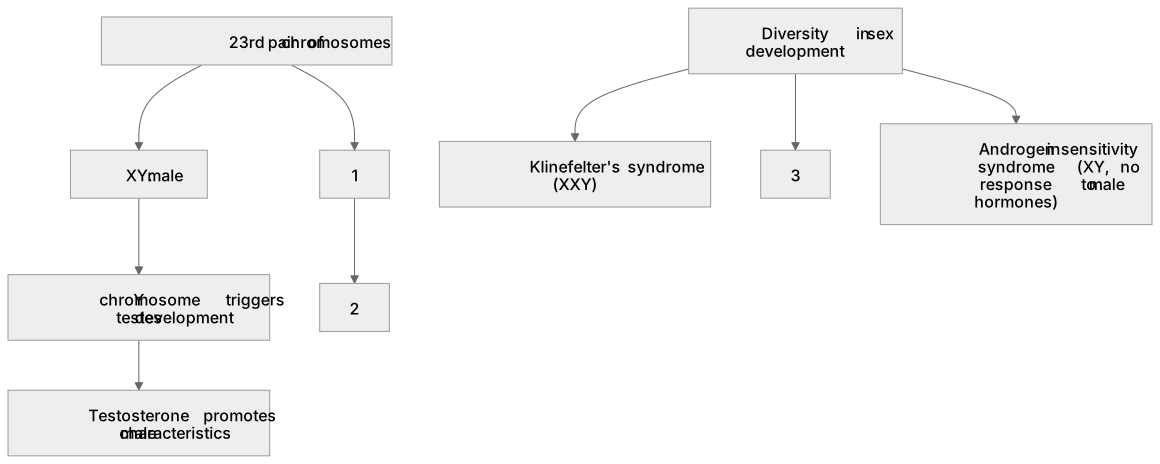
1Box 1
2Box 2
3Box 3
There is more to this lesson
The full lesson goes on to check your understanding and help you earn the marks. Create a free account to carry on, with your progress saved.
A week of Premium from your first lesson · Then the free plan continues · No card, no charge
Test your understanding of Gender: The role of chromosomes and hormones (testosterone, oestrogen and oxytocin) in biological sex. Diversity in sex development, including androgen insensitivity syndrome, Klinefelter’s syndrome and Turner syndrome.
Active recall beats re-reading. Take an instant quiz now to test what you’ve learned and lock it into long-term memory.
A week of Premium from your first lesson · Then the free plan continues · No card, no charge