OCR · A-Level · Psychology
Hancock et al. (2011) - Language of Psychopaths
This study provides a fascinating glimpse into the minds of psychopathic offenders, revealing how their language choices reflect a detached, instrumental, and primal worldview. For an A-Level student, mastering this study is key to demonstrating an understanding of how modern analytical techniques can be applied to the complex area of individual differences.
- 5 min read
- 3 worked examples
- 5 practice questions
- 6 key terms
Study Notes

Overview
Hancock et al. (2011) is a contemporary study from the Individual Differences area of the OCR specification. It investigates the linguistic characteristics of psychopathic homicide offenders to determine if their language differs from non-psychopathic offenders. Using sophisticated computerised analysis tools, the researchers analysed the crime narratives of 14 psychopathic and 38 non-psychopathic male homicide offenders in Canada. Examiners expect candidates to have a detailed understanding of the quasi-experimental methodology, the specific linguistic findings (related to instrumentality, emotional detachment, and basic needs), and the study's evaluative points, particularly concerning its objectivity and generalisability. Credit is awarded for linking the findings to theoretical frameworks like Maslow's Hierarchy of Needs and for precise recall of the analytical tools used, Wmatrix and DAL.

Key Concepts & Methodology
The Quasi-Experimental Design
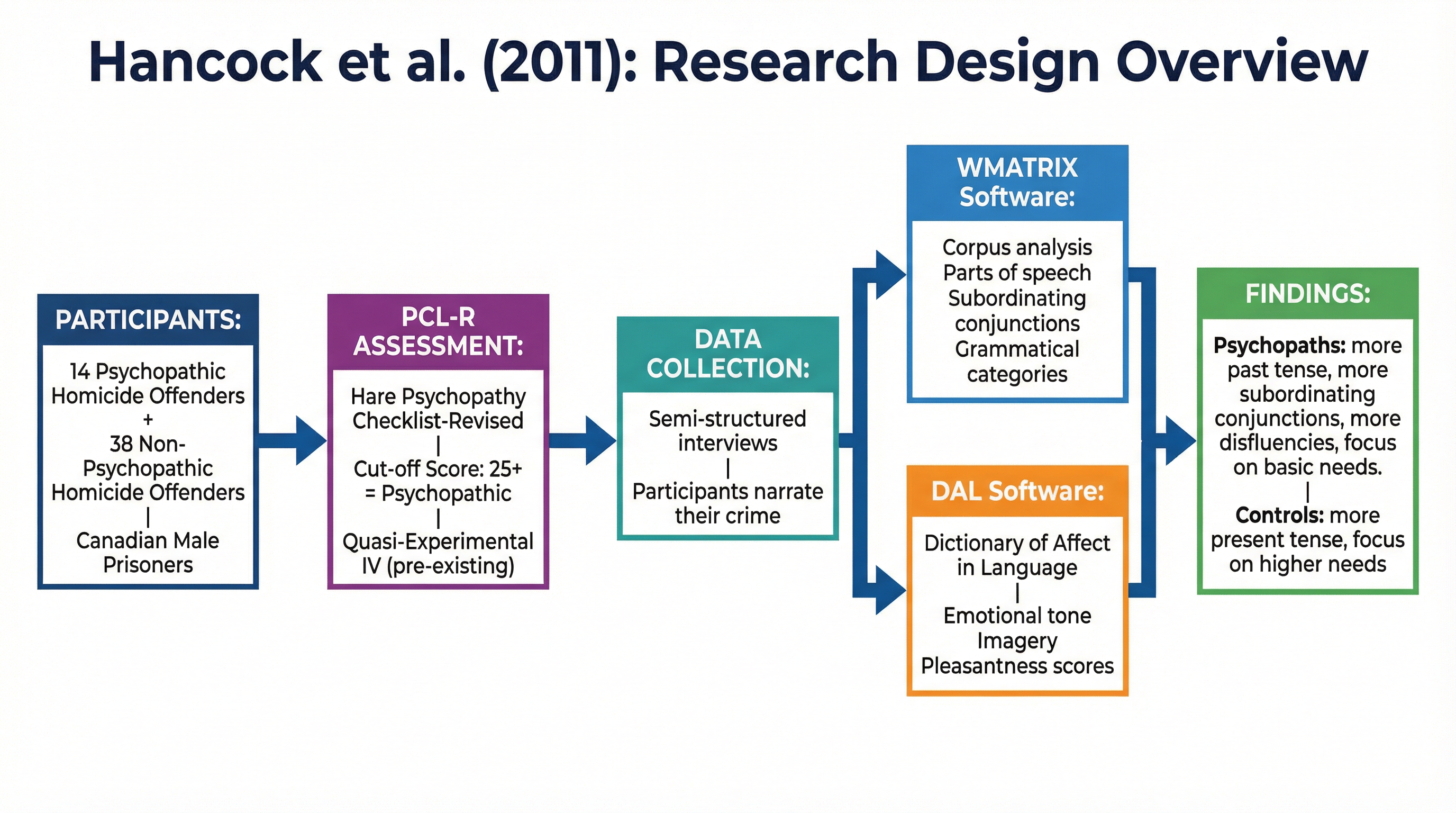
What happened: The study compared two naturally occurring groups: psychopathic offenders and non-psychopathic offenders. The independent variable (IV) was the psychopathy status of the participant, which was determined using the PCL-R assessment. This IV was not manipulated by the researchers, making it a quasi-experiment.
Why it matters: This design choice has high ecological validity as it studies real-world groups, but it means cause-and-effect conclusions cannot be definitively drawn. Examiners expect candidates to identify the design correctly and explain its implications for the study's validity.
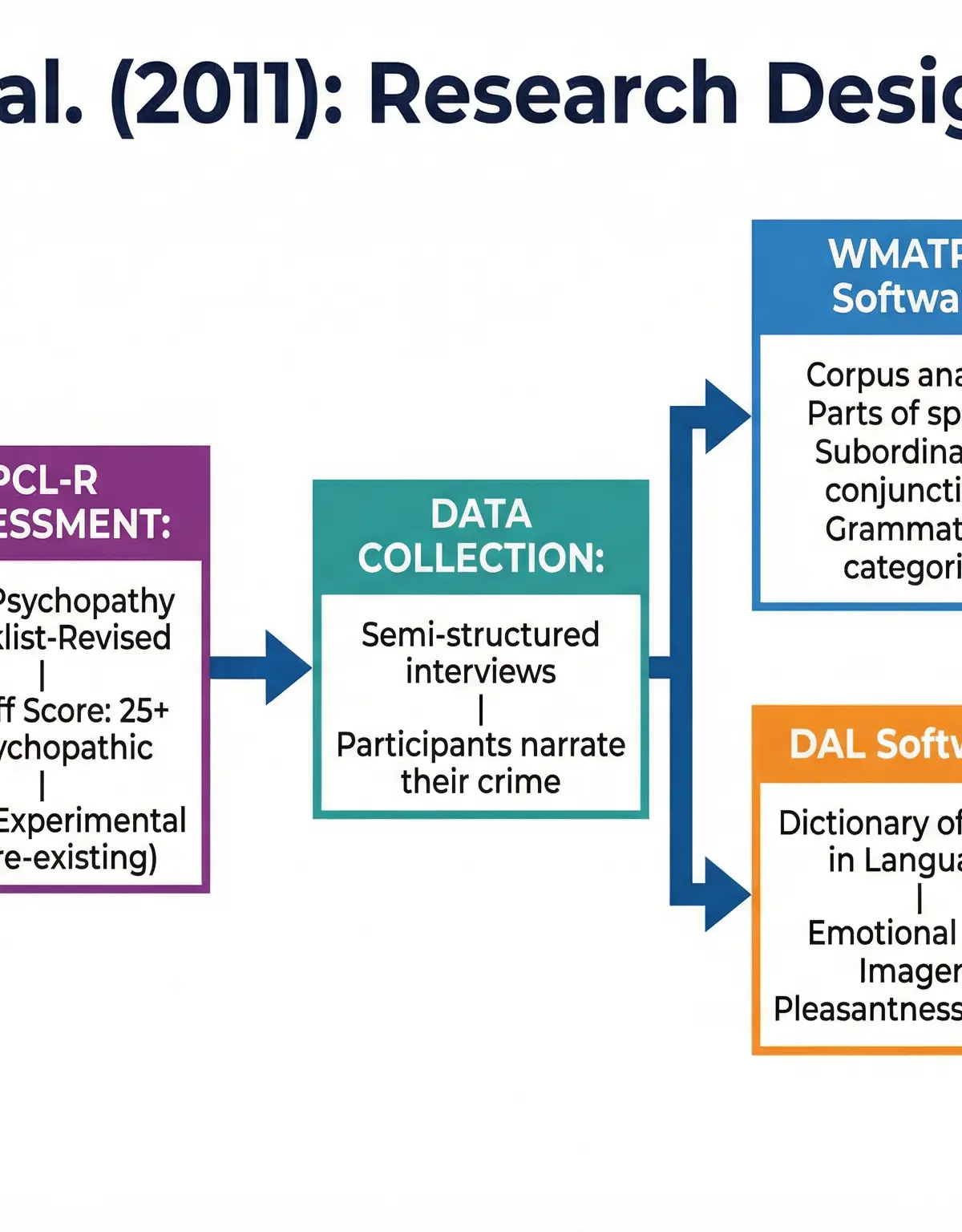
Specific Knowledge: Participants were 52 male homicide offenders from Canadian prisons. The PCL-R cut-off score was 25 (not the usual 30). The two groups were 14 psychopaths and 38 non-psychopaths.
Linguistic Analysis Tools
What happened: Hancock et al. used two computer programs to analyse the transcribed interviews.
- Wmatrix: This tool performed corpus analysis, tagging parts of speech and comparing word frequencies between the two groups. It identified patterns in grammatical structures, such as the use of subordinating conjunctions.
- DAL (Dictionary of Affect in Language): This software analysed the emotional properties of the language, including the pleasantness, imagery, and intensity of the words used.
Why it matters: The use of computerised analysis is a major strength, as it reduces researcher bias and increases the objectivity and reliability of the findings. Candidates must be able to distinguish between the functions of Wmatrix and DAL.
Core Findings: Language as a Window into the Psyche
Instrumental Language: Psychopaths used more subordinating conjunctions (e.g., 'because', 'since', 'so that'). This suggests they view their crimes as a logical means to an end, a rational way to achieve a goal, rather than an uncontrolled, emotional act.
Emotional Detachment: The narratives of psychopaths were characterised by more past-tense verbs and fewer present-tense verbs. This creates psychological distance from the crime, framing it as a detached and remote event. They also produced more speech disfluencies ('ums' and 'ahs'), suggesting a greater cognitive load is required to frame the event in this detached manner.
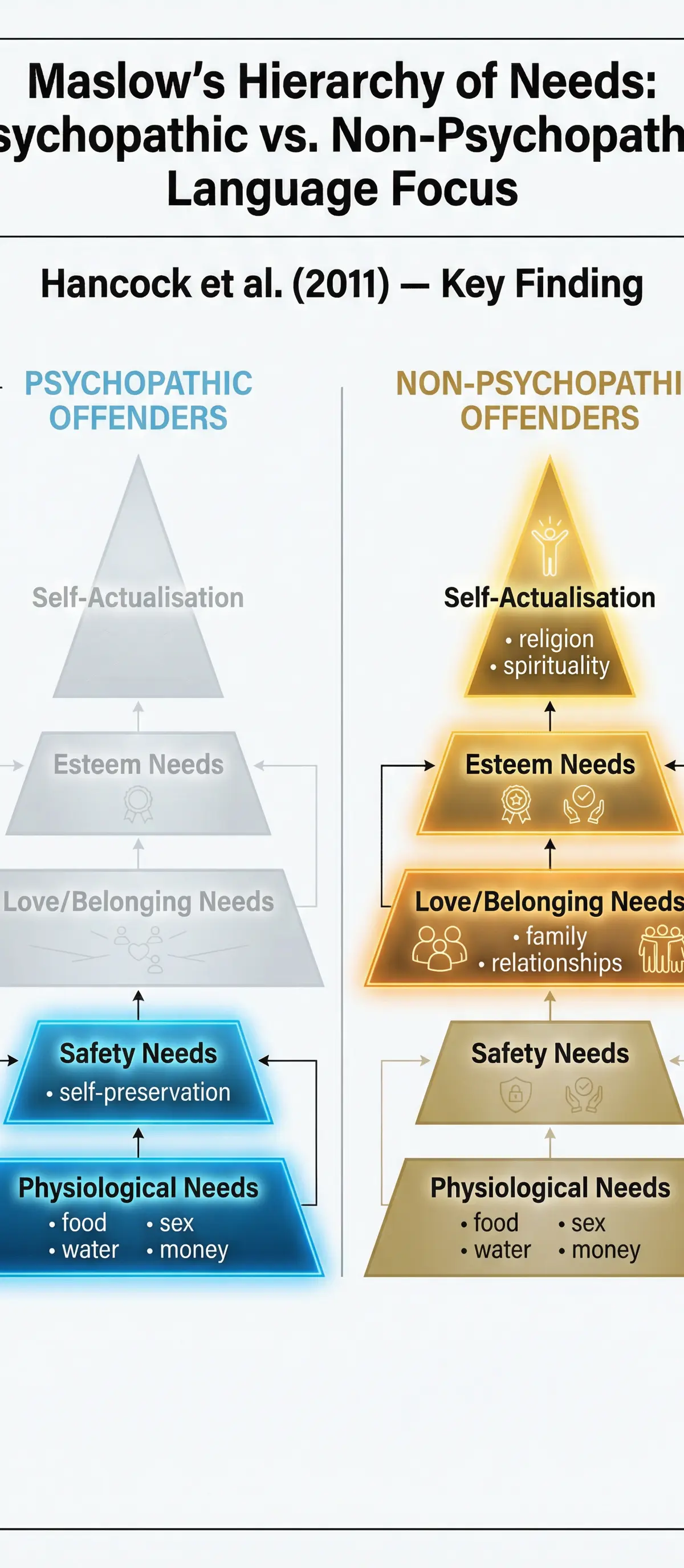
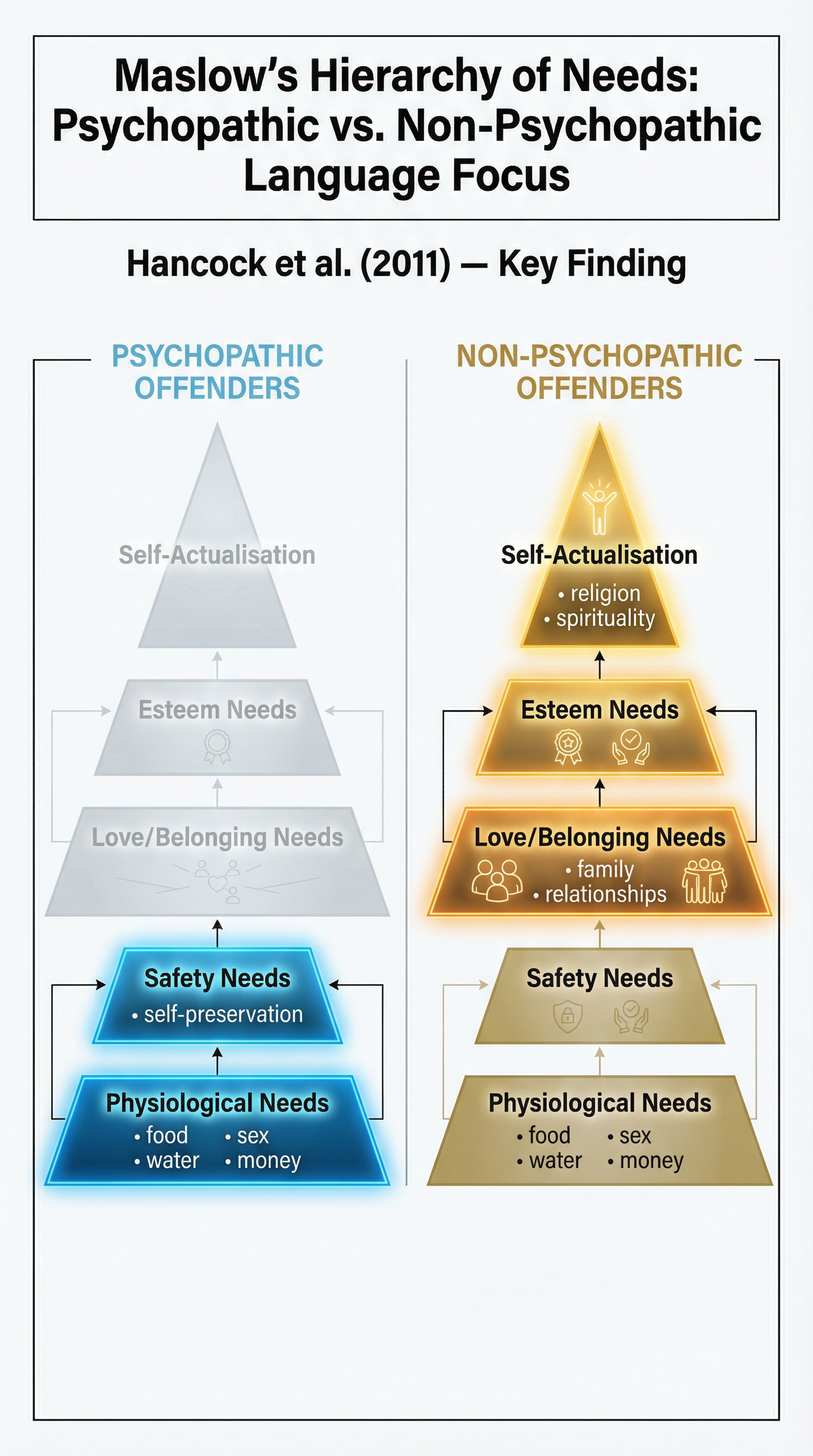
Focus on Basic Needs: Psychopaths' language focused significantly more on basic physiological needs: food, drink, money, and sex. In contrast, the control group's language made more references to higher-level needs like family, social relationships, and religion. This is a direct link to Maslow's Hierarchy of Needs.
Key Individuals
Hancock, Woodworth, and Porter
Role: The researchers who designed and conducted the study.
Key Actions: They secured access to a prison population, administered the PCL-R to classify participants, conducted the semi-structured interviews, and pioneered the use of Wmatrix and DAL for this type of analysis.
Impact: Their work provided novel, objective evidence for the distinct cognitive and emotional world of the psychopath, demonstrating that their inner world is reflected in their linguistic patterns. It is a key contemporary study for understanding individual differences.
Visual Resources
2 diagrams and illustrations
Interactive Diagrams
1 interactive diagram to visualise key concepts
Conceptual Flow Outline
Flowchart of the procedural steps in Hancock et al. (2011).
Worked Examples
3 worked examples — open one to explore the question and available guidance.
Practice Questions
Test your understanding — click to reveal model answers
To what extent is the study by Hancock et al. (2011) a useful contribution to our understanding of psychopathy? (15 marks)
Hint: Balance the study's methodological innovations and ecologically valid data against its limitations regarding generalisability and the subjectivity of the PCL-R.
Outline two findings from the study by Hancock et al. (2011). (4 marks)
Hint: Be specific. State the finding and briefly say what it suggests.
Explain one strength and one weakness of the methodology used in Hancock et al. (2011). (6 marks)
Hint: Think about objectivity vs. subjectivity, and ecological validity vs. generalisability.
Describe how Hancock et al. (2011) used computerised analysis to study the language of psychopaths. (4 marks)
Hint: Name the two tools and state what each one did.
Explain the conclusion of the study by Hancock et al. (2011). (8 marks)
Hint: Synthesise the findings to form an overall conclusion about the psychopathic worldview.