Pearson Edexcel · GCSE · Psychology
Course version: 1PS0 · Version from Sept 2017
Understand the nature and nurture debate, including: a. the term ‘nature’…
Full specification wording
Issues and debates: 3.3.1 Understand the nature and nurture debate, including: a. the term ‘nature’ b. the term ‘nurture’ c. the use of content, theories, and research drawn from psychological problems to explain the nature and nurture debate
The nature and nurture debate explores the relative contributions of genetics and environment to behaviour.
Checked against the Pearson Edexcel 1PS0 specification (opens in a new tab) on .
- Point 3 of 5
- 3 key terms
Study notes
From the checked teaching notes for this specification point.
The idea
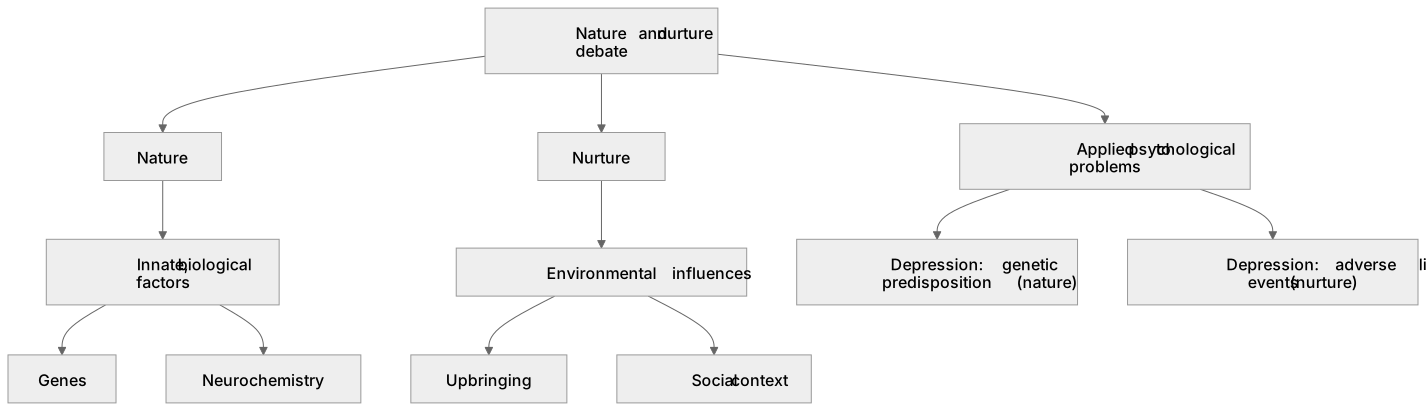
The nature and nurture debate explores the relative contributions of genetics and environment to behaviour. 'Nature' refers to innate, biological factors, such as genes and neurochemistry. 'Nurture' refers to environmental influences, including upbringing and social context. For example, explaining depression through a genetic predisposition illustrates the nature side, while explaining it through adverse life events illustrates the nurture side. Understanding how theories and research from psychological problems support either side, or an interactionist approach, is essential for evaluating this fundamental psychological debate.
What earns the marks
- Define 'nature' as the influence of innate, biological factors such as genetics and neurochemistry on behaviour.
- Define 'nurture' as the influence of environmental factors, learning, and experiences on behaviour.
- Apply the debate to psychological problems, using examples such as addiction or depression.
- Use specific theories and research studies from the topic of psychological problems to support arguments for both nature and nurture.
Common mistakes and how to put them right
Treating nature and nurture as mutually exclusive.
Put it right: Most psychological problems are best explained by an interaction between both nature and nurture, rather than one or the other.
Confusing biological and environmental factors.
Put it right: Ensure that genetic and neurochemical explanations are strictly categorised under nature, while learning and upbringing are categorised under nurture.
Failing to link the debate to psychological problems.
Put it right: Use specific examples of psychological problems, such as addiction or depression, to illustrate the debate.
Exam tips
- When defining nature and nurture, use clear examples from the topic of psychological problems to demonstrate understanding.
- Be prepared to evaluate a theory or study based on where it falls within the nature-nurture debate.
- Use the diathesis-stress model as a strong example of how nature and nurture interact to cause psychological problems.
Try the lesson
The start of the Issues and debates: 3.3.1 Understand the nature and nurture debate, including: a. the term ‘nature’ b. the term ‘nurture’ c. the use of content, theories, and research drawn from psychological problems to explain the nature and nurture debate lesson, made from checked teaching notes for this specification point.
Have a go first
Which of the following best defines the term 'nature' in the nature and nurture debate?
Listen
The nature and nurture debate explores the relative contributions of genetics and environment to behaviour. Nature' refers to innate, biological factors, such as genes and neurochemistry. Nurture' refers to environmental influences, including upbringing and social context. For example, explaining depression through a genetic predisposition illustrates the nature side, while explaining it through adverse life events illustrates the nurture side. Understanding how theories and research from psychological problems support either side, or an interactionist approach, is essential for evaluating this fundamental psychological debate. A strong answer earns marks for these points. Define 'nature' as the influence of innate, biological factors such as genetics and neurochemistry on behaviour. Define 'nurture' as the influence of environmental factors, learning, and experiences on behaviour. Apply the debate to psychological problems, using examples such as addiction or depression. Use specific theories and research studies from the topic of psychological problems to support arguments for both nature and nurture. A common slip: Treating nature and nurture as mutually exclusive. Instead, Most psychological problems are best explained by an interaction between both nature and nurture, rather than one or the other. Exam tip: When defining nature and nurture, use clear examples from the topic of psychological problems to demonstrate understanding.
See it
Key words
Say what each word means before you turn the card.
Nature
Try answering aloud or in your head before turning the card.
Nurture
Try answering aloud or in your head before turning the card.
Interactionist approach
Try answering aloud or in your head before turning the card.
See every definition
- Nature
- The influence of innate, biological factors such as genetics and neurochemistry on behaviour.
- Nurture
- The influence of environmental factors, learning, and experiences on behaviour.
- Interactionist approach
- The view that most psychological problems are best explained by an interaction between both nature and nurture, rather than one or the other.
Label the diagram
Some boxes have lost their names. Pick the right name for each number.
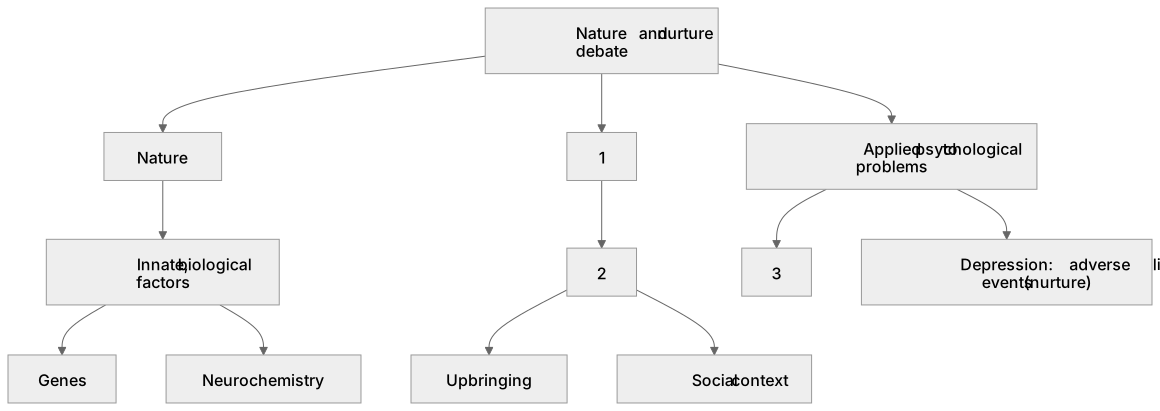
1Box 1
2Box 2
3Box 3
There is more to this lesson
The full lesson goes on to check your understanding and help you earn the marks. Create a free account to carry on, with your progress saved.
A week of Premium from your first lesson · Then the free plan continues · No card, no charge
Test your understanding of Issues and debates: 3.3.1 Understand the nature and nurture debate, including: a. the term ‘nature’ b. the term ‘nurture’ c. the use of content, theories, and research drawn from psychological problems to explain the nature and nurture debate
Active recall beats re-reading. Take an instant quiz now to test what you’ve learned and lock it into long-term memory.
A week of Premium from your first lesson · Then the free plan continues · No card, no charge