Pearson Edexcel · GCSE · Psychology
Course version: 1PS0 · Version from Sept 2017
Understand examples of non-verbal communication, including: a. facial…
Full specification wording
Language, thought and communication: 10.1.4 Understand examples of non-verbal communication, including: a. facial expressions b. eye contact c. body language, to include (i) postures (ii) gestures d. personal space, to include (i) proxemics (ii) cultural differences in non-verbal communication
Non-verbal communication conveys messages without words.
Checked against the Pearson Edexcel 1PS0 specification (opens in a new tab) on .
- Point 4 of 5
- 3 key terms
Study notes
From the checked teaching notes for this specification point.
The idea
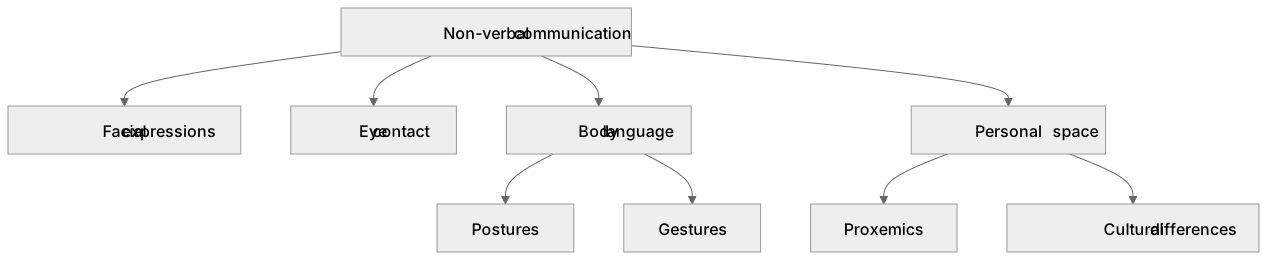
Non-verbal communication conveys messages without words. Facial expressions, like smiling, communicate emotions. Eye contact regulates conversation flow and signals interest. Body language includes postures (how the whole body is held, such as an open stance) and gestures (movements of hands or arms, like pointing). Personal space refers to the physical distance kept from others. Proxemics is the study of this space, which varies based on relationships. Cultural differences significantly impact non-verbal communication; acceptable personal space or the meaning of specific gestures varies widely between cultures, leading to misunderstandings if not recognised.
What earns the marks
- Identify facial expressions as a method of conveying emotion without words.
- Explain how eye contact can regulate turn-taking in conversations.
- Distinguish between postures (overall body position) and gestures (specific movements of body parts).
- Define proxemics as the study of how people use personal space.
- Describe how cultural differences influence the interpretation of gestures and the acceptable distance in personal space.
Common mistakes and how to put them right
Confusing postures and gestures.
Put it right: Posture refers to the position of the whole body, whereas gestures are specific movements, usually of the hands or arms.
Assuming personal space is the same globally.
Put it right: Personal space preferences are heavily influenced by cultural differences and vary significantly between countries.
Believing non-verbal communication only includes body language.
Put it right: Non-verbal communication also encompasses facial expressions, eye contact, and proxemics.
Exam tips
- Use specific examples, such as an open posture indicating friendliness, when explaining body language.
- When discussing proxemics, mention how the relationship between people dictates the distance they stand apart.
- Be prepared to compare how a specific gesture might mean something positive in one culture but be offensive in another.
Try the lesson
The start of the Language, thought and communication: 10.1.4 Understand examples of non-verbal communication, including: a. facial expressions b. eye contact c. body language, to include (i) postures (ii) gestures d. personal space, to include (i) proxemics (ii) cultural differences in non-verbal communication lesson, made from checked teaching notes for this specification point.
Have a go first
Which of the following best defines the term 'proxemics' in the context of non-verbal communication?
Listen
Non-verbal communication conveys messages without words. Facial expressions, like smiling, communicate emotions. Eye contact regulates conversation flow and signals interest. Body language includes postures (how the whole body is held, such as an open stance) and gestures (movements of hands or arms, like pointing). Personal space refers to the physical distance kept from others. Proxemics is the study of this space, which varies based on relationships. Cultural differences significantly impact non-verbal communication; acceptable personal space or the meaning of specific gestures varies widely between cultures, leading to misunderstandings if not recognised. A strong answer earns marks for these points. Identify facial expressions as a method of conveying emotion without words. Explain how eye contact can regulate turn-taking in conversations. Distinguish between postures (overall body position) and gestures (specific movements of body parts). Define proxemics as the study of how people use personal space. A common slip: Confusing postures and gestures. Instead, posture refers to the position of the whole body, whereas gestures are specific movements, usually of the hands or arms. Exam tip: Use specific examples, such as an open posture indicating friendliness, when explaining body language.
See it
Key words
Say what each word means before you turn the card.
Non-verbal communication
Try answering aloud or in your head before turning the card.
Proxemics
Try answering aloud or in your head before turning the card.
Cultural variations
Try answering aloud or in your head before turning the card.
See every definition
- Non-verbal communication
- Conveys messages without words, and encompasses facial expressions, eye contact, body language and proxemics.
- Proxemics
- The study of personal space, which is the physical distance kept from others and varies based on relationships.
- Cultural variations
- Cultural differences that significantly impact non-verbal communication, as acceptable personal space or the meaning of specific gestures varies widely between cultures.
Label the diagram
Some boxes have lost their names. Pick the right name for each number.
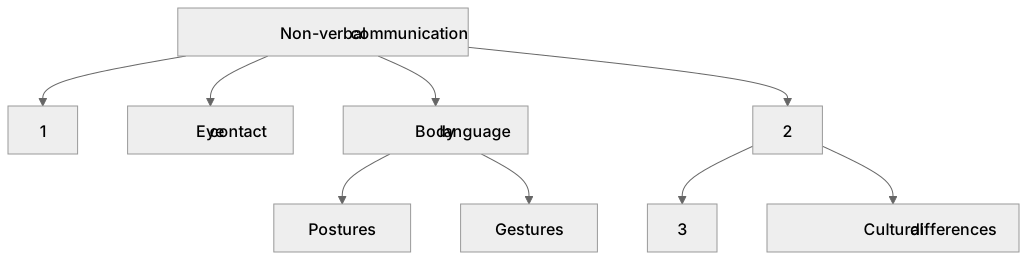
1Box 1
2Box 2
3Box 3
There is more to this lesson
The full lesson goes on to check your understanding and help you earn the marks. Create a free account to carry on, with your progress saved.
A week of Premium from your first lesson · Then the free plan continues · No card, no charge
Test your understanding of Language, thought and communication: 10.1.4 Understand examples of non-verbal communication, including: a. facial expressions b. eye contact c. body language, to include (i) postures (ii) gestures d. personal space, to include (i) proxemics (ii) cultural differences in non-verbal communication
Active recall beats re-reading. Take an instant quiz now to test what you’ve learned and lock it into long-term memory.
A week of Premium from your first lesson · Then the free plan continues · No card, no charge