Pearson Edexcel · GCSE · Psychology
Course version: 1PS0 · Version from Sept 2017
Understand retrograde and anterograde amnesia, including: a. the term…
Full specification wording
Memory: 2.1.3 Understand retrograde and anterograde amnesia, including: a. the term ‘retrograde amnesia’ b. the term ‘anterograde amnesia’ c. the symptoms of retrograde amnesia d. the symptoms of anterograde amnesia
Retrograde amnesia is the inability to recall memories formed before the onset of brain damage.
Checked against the Pearson Edexcel 1PS0 specification (opens in a new tab) on .
- Point 3 of 5
- 4 key terms
Study notes
From the checked teaching notes for this specification point.
The idea
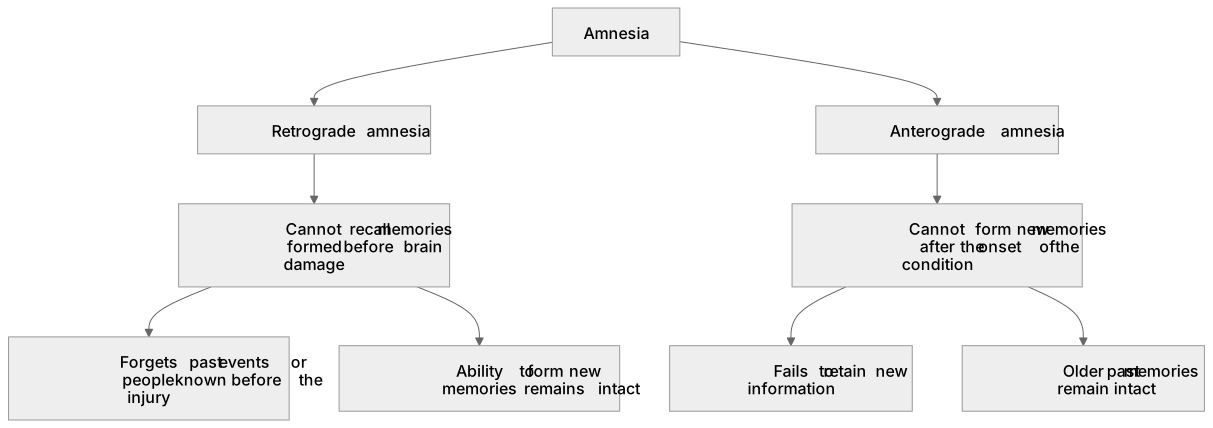
Retrograde amnesia is the inability to recall memories formed before the onset of brain damage. Symptoms include forgetting past events or people known prior to the injury, though the ability to form new memories remains intact. For example, a patient might forget their wedding day but easily remember a new doctor's name. Anterograde amnesia is the inability to form new memories after the onset of the condition. Symptoms involve a failure to retain new information, meaning the person cannot remember recent events or people they have just met, although their older past memories remain intact. A classic example is a patient who can recall their childhood perfectly but cannot remember a conversation they had just five minutes ago.
What earns the marks
- Define retrograde amnesia as the loss of memory for events occurring before brain damage.
- Identify symptoms of retrograde amnesia, such as forgetting personal history or past facts.
- Define anterograde amnesia as the inability to form new memories after brain damage.
- Identify symptoms of anterograde amnesia, such as failing to remember recent conversations or new faces.
Common mistakes and how to put them right
Confusing retrograde and anterograde amnesia.
Put it right: Retro means backwards (past memories lost) and antero relates to forward (future memories cannot be formed).
Believing amnesia affects all types of memory equally.
Put it right by noting that procedural memory often remains intact even if episodic memory is lost.
Assuming anterograde amnesia means forgetting the past.
Put it right by understanding it only affects the creation of new memories post-injury.
Exam tips
- Use the prefix retro (meaning past) to help you remember that retrograde amnesia affects past memories.
- When describing symptoms, use concrete examples like forgetting a childhood pet for retrograde or forgetting a meal just eaten for anterograde.
- Read scenario questions carefully to determine whether the person is struggling with old memories or forming new ones before identifying the type of amnesia.
Try the lesson
The start of the Memory: 2.1.3 Understand retrograde and anterograde amnesia, including: a. the term ‘retrograde amnesia’ b. the term ‘anterograde amnesia’ c. the symptoms of retrograde amnesia d. the symptoms of anterograde amnesia lesson, made from checked teaching notes for this specification point.
Have a go first
What is the correct definition of anterograde amnesia?
Listen
Retrograde amnesia is the inability to recall memories formed before the onset of brain damage. Symptoms include forgetting past events or people known prior to the injury, though the ability to form new memories remains intact. For example, a patient might forget their wedding day but easily remember a new doctor's name. Anterograde amnesia is the inability to form new memories after the onset of the condition. Symptoms involve a failure to retain new information, meaning the person cannot remember recent events or people they have just met, although their older past memories remain intact. A classic example is a patient who can recall their childhood perfectly but cannot remember a conversation they had just five minutes ago. A strong answer earns marks for these points. Define retrograde amnesia as the loss of memory for events occurring before brain damage. Identify symptoms of retrograde amnesia, such as forgetting personal history or past facts. Define anterograde amnesia as the inability to form new memories after brain damage. Identify symptoms of anterograde amnesia, such as failing to remember recent conversations or new faces. A common slip: Believing amnesia affects all types of memory equally. Instead, noting that procedural memory often remains intact even if episodic memory is lost. Exam tip: Use the prefix retro (meaning past) to help you remember that retrograde amnesia affects past memories.
See it
Key words
Say what each word means before you turn the card.
Retrograde amnesia
Try answering aloud or in your head before turning the card.
Anterograde amnesia
Try answering aloud or in your head before turning the card.
Symptoms of retrograde amnesia
Try answering aloud or in your head before turning the card.
Symptoms of anterograde amnesia
Try answering aloud or in your head before turning the card.
See every definition
- Retrograde amnesia
- The inability to recall memories formed before the onset of brain damage, such as forgetting past events or people known prior to the injury.
- Anterograde amnesia
- The inability to form new memories after the onset of the condition, meaning recent events or people just met cannot be remembered.
- Symptoms of retrograde amnesia
- Forgetting past events or people known prior to the injury, though the ability to form new memories remains intact.
- Symptoms of anterograde amnesia
- A failure to retain new information, so the person cannot remember recent events or people they have just met, although older past memories remain intact.
Label the diagram
Some boxes have lost their names. Pick the right name for each number.
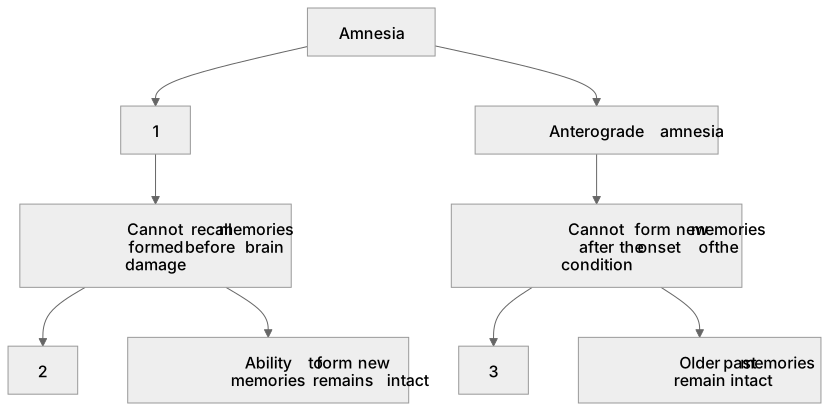
1Box 1
2Box 2
3Box 3
There is more to this lesson
The full lesson goes on to check your understanding and help you earn the marks. Create a free account to carry on, with your progress saved.
A week of Premium from your first lesson · Then the free plan continues · No card, no charge
Test your understanding of Memory: 2.1.3 Understand retrograde and anterograde amnesia, including: a. the term ‘retrograde amnesia’ b. the term ‘anterograde amnesia’ c. the symptoms of retrograde amnesia d. the symptoms of anterograde amnesia
Active recall beats re-reading. Take an instant quiz now to test what you’ve learned and lock it into long-term memory.
A week of Premium from your first lesson · Then the free plan continues · No card, no charge