AQA · GCSE · Religious Studies
Course version: 8062 · Version from Sept 2018
Samatha (concentration and tranquillity) including mindfulness of breathing
Full specification wording
Buddhism - 3.1.1.2 Practices: Samatha (concentration and tranquillity) including mindfulness of breathing
Samatha meditation is a foundational Buddhist practice aimed at developing deep concentration and profound tranquillity.
Checked against the AQA 8062 specification (opens in a new tab) on .
- Point 5 of 29
- 2 key terms
Study notes
From the checked teaching notes for this specification point.
The idea
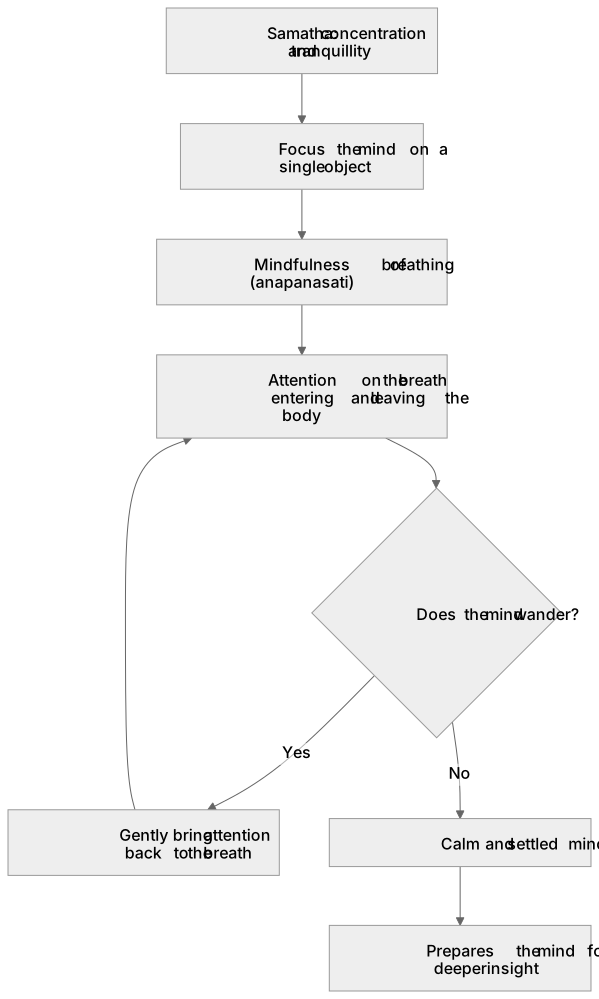
Samatha meditation is a foundational Buddhist practice aimed at developing deep concentration and profound tranquillity. By focusing the mind on a single object, practitioners train themselves to overcome distractions and achieve a state of calm. A primary method used is mindfulness of breathing (anapanasati), where the meditator focuses entirely on the physical sensation of the breath entering and leaving the body. If the mind wanders, they gently bring their attention back to the breath. This practice prepares the mind for deeper insight by settling turbulent thoughts, acting as a crucial stepping stone towards enlightenment and reducing suffering in daily life.
What earns the marks
- Samatha meditation focuses on developing single-pointed concentration and inner tranquillity.
- Mindfulness of breathing (anapanasati) involves paying close attention to the natural inhalation and exhalation process.
- The practice is essential for calming the mind, making it a necessary prerequisite for Vipassana (insight) meditation.
Common mistakes and how to put them right
Confusing Samatha with Vipassana.
Put it right by remembering Samatha is for calming and concentration, while Vipassana is for insight into the nature of reality.
Assuming mindfulness of breathing requires altering the breath.
Put it right by stating the meditator simply observes the natural breath without trying to change its rhythm.
Believing Samatha alone leads to enlightenment.
Put it right by explaining it prepares the mind for insight, which is necessary for full awakening.
Exam tips
- Use the term 'anapanasati' alongside 'mindfulness of breathing' to demonstrate precise subject knowledge.
- Explain how Samatha helps Buddhists overcome the Three Poisons by reducing immediate mental reactivity and fostering calm.
- Link the practice of Samatha to the Eightfold Path, specifically highlighting its connection to Right Concentration and Right Mindfulness.
Try the lesson
The start of the Buddhism - 3.1.1.2 Practices: Samatha (concentration and tranquillity) including mindfulness of breathing lesson, made from checked teaching notes for this specification point.
Have a go first
What is the primary focus of Samatha meditation in Buddhism?
Listen
Samatha meditation is a foundational Buddhist practice aimed at developing deep concentration and profound tranquillity. By focusing the mind on a single object, practitioners train themselves to overcome distractions and achieve a state of calm. A primary method used is mindfulness of breathing (anapanasati), where the meditator focuses entirely on the physical sensation of the breath entering and leaving the body. If the mind wanders, they gently bring their attention back to the breath. This practice prepares the mind for deeper insight by settling turbulent thoughts, acting as a crucial stepping stone towards enlightenment and reducing suffering in daily life. A strong answer earns marks for these points. Samatha meditation focuses on developing single-pointed concentration and inner tranquillity. Mindfulness of breathing (anapanasati) involves paying close attention to the natural inhalation and exhalation process. The practice is essential for calming the mind, making it a necessary prerequisite for Vipassana (insight) meditation. A common slip: Confusing Samatha with Vipassana. Instead, remembering Samatha is for calming and concentration, while Vipassana is for insight into the nature of reality. Exam tip: Use the term 'anapanasati' alongside 'mindfulness of breathing' to demonstrate precise subject knowledge.
See it
Key words
Say what each word means before you turn the card.
Enlightenment
Try answering aloud or in your head before turning the card.
The Eightfold Path
Try answering aloud or in your head before turning the card.
See every definition
- Enlightenment
- A goal towards which Samatha meditation acts as a crucial stepping stone by settling turbulent thoughts and preparing the mind for deeper insight.
- The Eightfold Path
- A path to which Samatha practice is linked, specifically through Right Concentration and Right Mindfulness.
There is more to this lesson
The full lesson goes on to check your understanding and help you earn the marks. Create a free account to carry on, with your progress saved.
A week of Premium from your first lesson · Then the free plan continues · No card, no charge
Test your understanding of Buddhism - 3.1.1.2 Practices: Samatha (concentration and tranquillity) including mindfulness of breathing
Active recall beats re-reading. Take an instant quiz now to test what you’ve learned and lock it into long-term memory.
A week of Premium from your first lesson · Then the free plan continues · No card, no charge