AQA · GCSE · Religious Studies
Course version: 8062 · Version from Sept 2018
Buddhism - 3.1.1.2 Practices: Vipassana (insight) including zazen
Vipassana, meaning insight, is a meditation practice designed to help Buddhists see the true nature of reality.
Checked against the AQA 8062 specification (opens in a new tab) on .
- Point 6 of 29
- 4 key terms
Study notes
From the checked teaching notes for this specification point.
The idea
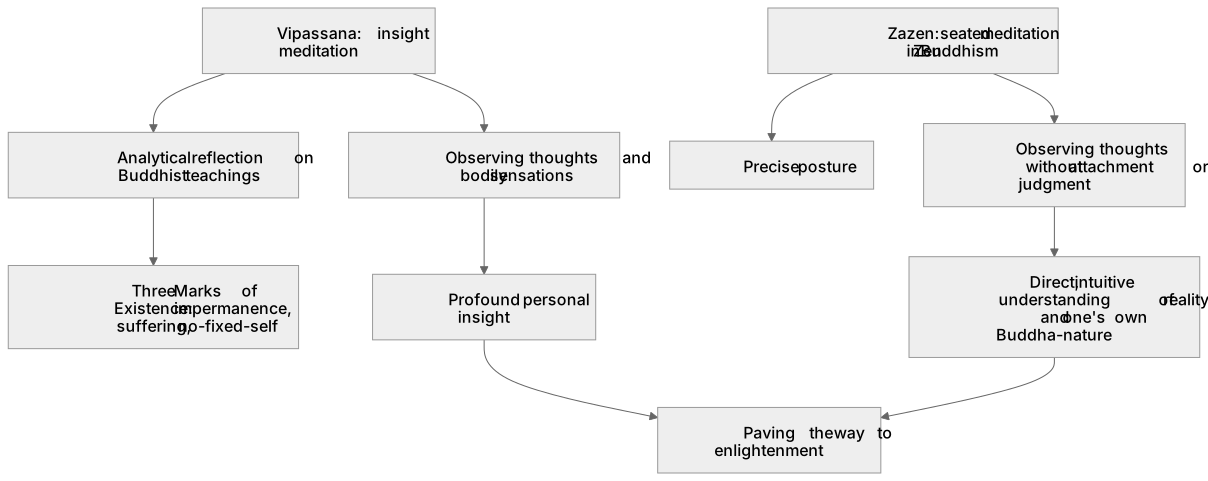
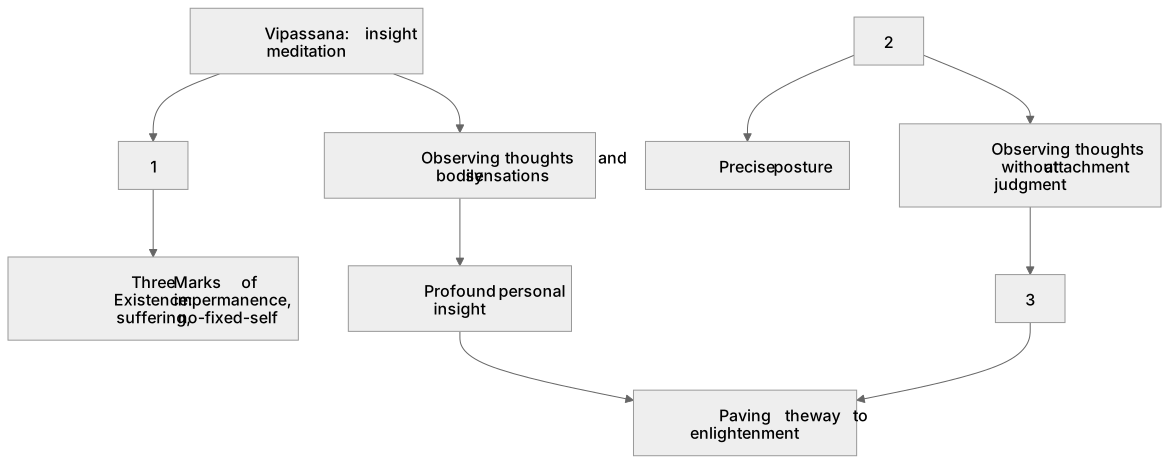
Vipassana, meaning insight, is a meditation practice designed to help Buddhists see the true nature of reality. Unlike Samatha, which calms the mind, Vipassana involves analytical reflection on Buddhist teachings, such as the Three Marks of Existence (impermanence, suffering, and no-fixed-self). Practitioners observe their thoughts and bodily sensations to gain profound personal insight. Zazen, a specific form of meditation in Zen Buddhism, translates to seated meditation. It involves sitting in a precise posture and observing thoughts without attachment or judgment, leading to a direct, intuitive understanding of reality and one's own Buddha-nature, ultimately paving the way to enlightenment.
What earns the marks
- Vipassana meditation aims to develop profound insight into the true nature of reality and existence.
- Zazen is a Zen Buddhist practice of seated meditation focusing on strict posture, breathing, and observing the mind.
Common mistakes and how to put them right
Treating Vipassana and Samatha as identical practices.
Put it right by distinguishing Vipassana as insight-focused and Samatha as concentration-focused.
Describing zazen merely as relaxation.
Put it right by explaining zazen is a rigorous discipline aimed at realising Buddha-nature and achieving direct insight.
Stating that Vipassana ignores the physical body.
Put it right by noting that observing physical sensations is a key method for understanding impermanence.
Exam tips
- Contrast Vipassana with Samatha to highlight how insight builds upon the foundation of a tranquil mind.
- Reference the Three Marks of Existence when explaining what a Vipassana meditator is trying to gain insight into.
- Mention the strict physical posture, such as the lotus position, when describing the Zen practice of zazen.
Try the lesson
The start of the Buddhism - 3.1.1.2 Practices: Vipassana (insight) including zazen lesson, made from checked teaching notes for this specification point.
Have a go first
What is the main goal of Vipassana meditation in Buddhist practice?
Listen
Vipassana, meaning insight, is a meditation practice designed to help Buddhists see the true nature of reality. Unlike Samatha, which calms the mind, Vipassana involves analytical reflection on Buddhist teachings, such as the Three Marks of Existence (impermanence, suffering, and no-fixed-self). Practitioners observe their thoughts and bodily sensations to gain profound personal insight. Zazen, a specific form of meditation in Zen Buddhism, translates to seated meditation. It involves sitting in a precise posture and observing thoughts without attachment or judgment, leading to a direct, intuitive understanding of reality and one's own Buddha-nature, ultimately paving the way to enlightenment. A strong answer earns marks for these points. Vipassana meditation aims to develop profound insight into the true nature of reality and existence. Zazen is a Zen Buddhist practice of seated meditation focusing on strict posture, breathing, and observing the mind. A common slip: Treating Vipassana and Samatha as identical practices. Instead, distinguishing Vipassana as insight-focused and Samatha as concentration-focused. Exam tip: Contrast Vipassana with Samatha to highlight how insight builds upon the foundation of a tranquil mind.
See it
Key words
Say what each word means before you turn the card.
Insight and wisdom
Try answering aloud or in your head before turning the card.
Zen Buddhism
Try answering aloud or in your head before turning the card.
The Three Marks of Existence
Try answering aloud or in your head before turning the card.
Enlightenment
Try answering aloud or in your head before turning the card.
See every definition
- Insight and wisdom
- Vipassana means insight and is a meditation practice designed to help Buddhists see the true nature of reality.
- Zen Buddhism
- A tradition in which zazen, a specific form of meditation translating to seated meditation, is practised.
- The Three Marks of Existence
- Impermanence, suffering and no-fixed-self, on which Vipassana involves analytical reflection.
- Enlightenment
- The goal ultimately paved the way to by zazen's direct, intuitive understanding of reality and one's own Buddha-nature.
Label the diagram
Some boxes have lost their names. Pick the right name for each number.
1Box 1
2Box 2
3Box 3
There is more to this lesson
The full lesson goes on to check your understanding and help you earn the marks. Create a free account to carry on, with your progress saved.
A week of Premium from your first lesson · Then the free plan continues · No card, no charge
Test your understanding of Buddhism - 3.1.1.2 Practices: Vipassana (insight) including zazen
Active recall beats re-reading. Take an instant quiz now to test what you’ve learned and lock it into long-term memory.
A week of Premium from your first lesson · Then the free plan continues · No card, no charge