AQA · GCSE · Religious Studies
Course version: 8062 · Version from Sept 2018
The study of religions: beliefs, teachings: Catholic Christianity
Full specification wording
Component 1: The study of religions: beliefs, teachings: Catholic Christianity
Studying Catholic Christianity involves exploring the distinct theological framework and magisterial teachings of the Catholic Church.
Checked against the AQA 8062 specification (opens in a new tab) on .
- Point 3 of 7
- 4 key terms
Study notes
From the checked teaching notes for this specification point.
The idea
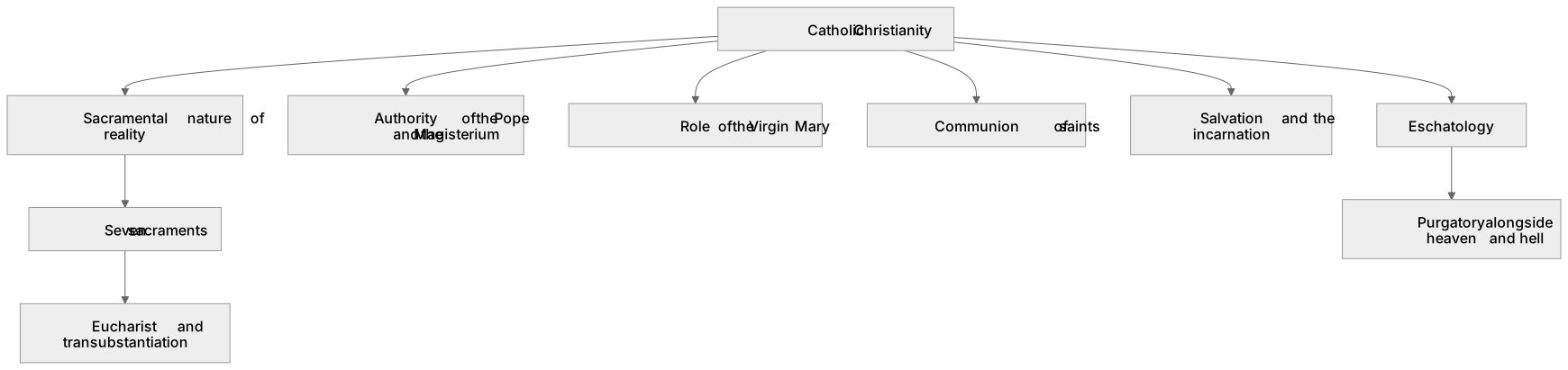
Studying Catholic Christianity involves exploring the distinct theological framework and magisterial teachings of the Catholic Church. Students examine the sacramental nature of reality, focusing on how grace is mediated through the seven sacraments, particularly the Eucharist and the doctrine of transubstantiation. The curriculum covers the authority of the Pope and the Magisterium, the role of the Virgin Mary, and the communion of saints. Furthermore, students analyse Catholic perspectives on salvation, the incarnation, and eschatology, including the specific concept of purgatory. For instance, understanding the Catholic view of apostolic succession is vital for explaining why the Church claims unique authority in interpreting scripture.
What earns the marks
- Accurate description of the Magisterium and its role in interpreting scripture and tradition.
- Explanation of the seven sacraments, with specific emphasis on the Eucharist and transubstantiation.
- Clear understanding of Catholic eschatology, including the distinct belief in purgatory alongside heaven and hell.
- Application of Catholic teachings on the incarnation and the Trinity, supported by references to the Nicene Creed.
Common mistakes and how to put them right
Claiming Catholics worship Mary or the saints.
Put it right: State that Catholics venerate or honour Mary and ask saints to intercede for them, but worship is reserved for God alone.
Confusing consubstantiation with transubstantiation.
Put it right: Specify that transubstantiation is the Catholic belief that the bread and wine actually become the body and blood of Christ.
Treating the Pope's authority as absolute in all matters.
Put it right: Clarify that papal infallibility applies only to specific, formal declarations on faith and morals (ex cathedra).
Exam tips
- Use specific Catholic terminology, such as 'Magisterium', 'transubstantiation', and 'sacrament', to demonstrate precise subject knowledge.
- When discussing sources of authority, always mention both Sacred Scripture and Sacred Tradition as the twin pillars of Catholic teaching.
- For 12-mark questions, contrast Catholic views with other Christian denominations (like Protestantism) to show a deep understanding of diverse Christian thought.
Try the lesson
The start of the Component 1: The study of religions: beliefs, teachings: Catholic Christianity lesson, made from checked teaching notes for this specification point.
Have a go first
In Catholic Christianity, what is the role of the Magisterium?
Listen
Studying Catholic Christianity involves exploring the distinct theological framework and magisterial teachings of the Catholic Church. Students examine the sacramental nature of reality, focusing on how grace is mediated through the seven sacraments, particularly the Eucharist and the doctrine of transubstantiation. The curriculum covers the authority of the Pope and the Magisterium, the role of the Virgin Mary, and the communion of saints. Furthermore, students analyse Catholic perspectives on salvation, the incarnation, and eschatology, including the specific concept of purgatory. For instance, understanding the Catholic view of apostolic succession is vital for explaining why the Church claims unique authority in interpreting scripture. A strong answer earns marks for these points. Accurate description of the Magisterium and its role in interpreting scripture and tradition. Explanation of the seven sacraments, with specific emphasis on the Eucharist and transubstantiation. Clear understanding of Catholic eschatology, including the distinct belief in purgatory alongside heaven and hell. Application of Catholic teachings on the incarnation and the Trinity, supported by references to the Nicene Creed. A common slip: Claiming Catholics worship Mary or the saints. Instead, state that Catholics venerate or honour Mary and ask saints to intercede for them, but worship is reserved for God alone. Exam tip: Use specific Catholic terminology, such as 'Magisterium', 'transubstantiation', and 'sacrament', to demonstrate precise subject knowledge.
See it
Key words
Say what each word means before you turn the card.
Magisterium
Try answering aloud or in your head before turning the card.
Sacraments
Try answering aloud or in your head before turning the card.
Transubstantiation
Try answering aloud or in your head before turning the card.
Purgatory
Try answering aloud or in your head before turning the card.
See every definition
- Magisterium
- The teaching authority of the Catholic Church, whose role includes interpreting scripture and tradition.
- Sacraments
- The seven sacraments through which grace is mediated, with particular emphasis on the Eucharist.
- Transubstantiation
- The Catholic belief that the bread and wine actually become the body and blood of Christ.
- Purgatory
- A distinct belief in Catholic eschatology, held alongside heaven and hell.
Label the diagram
Some boxes have lost their names. Pick the right name for each number.
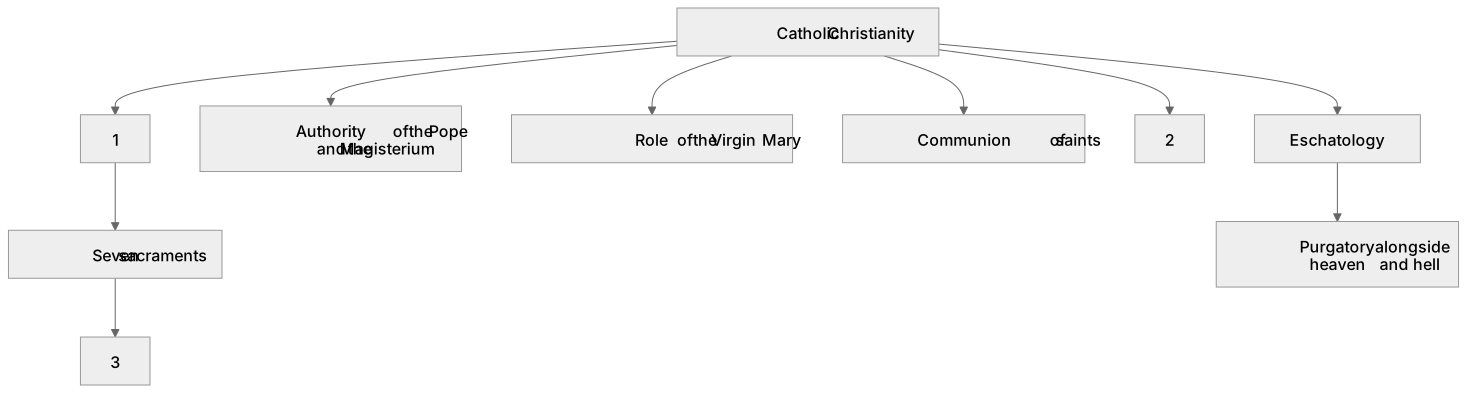
1Box 1
2Box 2
3Box 3
There is more to this lesson
The full lesson goes on to check your understanding and help you earn the marks. Create a free account to carry on, with your progress saved.
A week of Premium from your first lesson · Then the free plan continues · No card, no charge
Test your understanding of Component 1: The study of religions: beliefs, teachings: Catholic Christianity
Active recall beats re-reading. Take an instant quiz now to test what you’ve learned and lock it into long-term memory.
A week of Premium from your first lesson · Then the free plan continues · No card, no charge