AQA · GCSE · Religious Studies
Crime and Punishment
This study guide for AQA GCSE Religious Studies delves into the complex and highly-debated topic of Crime and Punishment. It explores the moral and ethical questions surrounding justice, retribution, and forgiveness through the lens of Christian and Islamic teachings, providing candidates with the essential knowledge and skills to excel in their exams."
- 5 min read
- 3 worked examples
- 5 practice questions
Study Notes
Overview
This guide covers AQA GCSE Religious Studies, Theme E: Crime and Punishment. This topic requires candidates to critically analyse the relationship between state law and religious morality. Examiners expect a clear understanding of the three primary aims of punishment—Retribution, Deterrence, and Reformation—and the ability to evaluate them from religious perspectives. A key focus is the treatment of criminals and the contentious debate surrounding capital punishment, supported by specific teachings from Christianity and Islam. Marks are awarded for precise citation of sacred texts, distinguishing between 'crime' and 'sin', and analysing divergent views within a religion (e.g., literalist vs. liberal Christian views). This guide will equip you with the detailed knowledge, key quotes, and exam technique needed to tackle 4, 5, and 12-mark questions with confidence.

Key Concepts & Religious Teachings
The Aims of Punishment
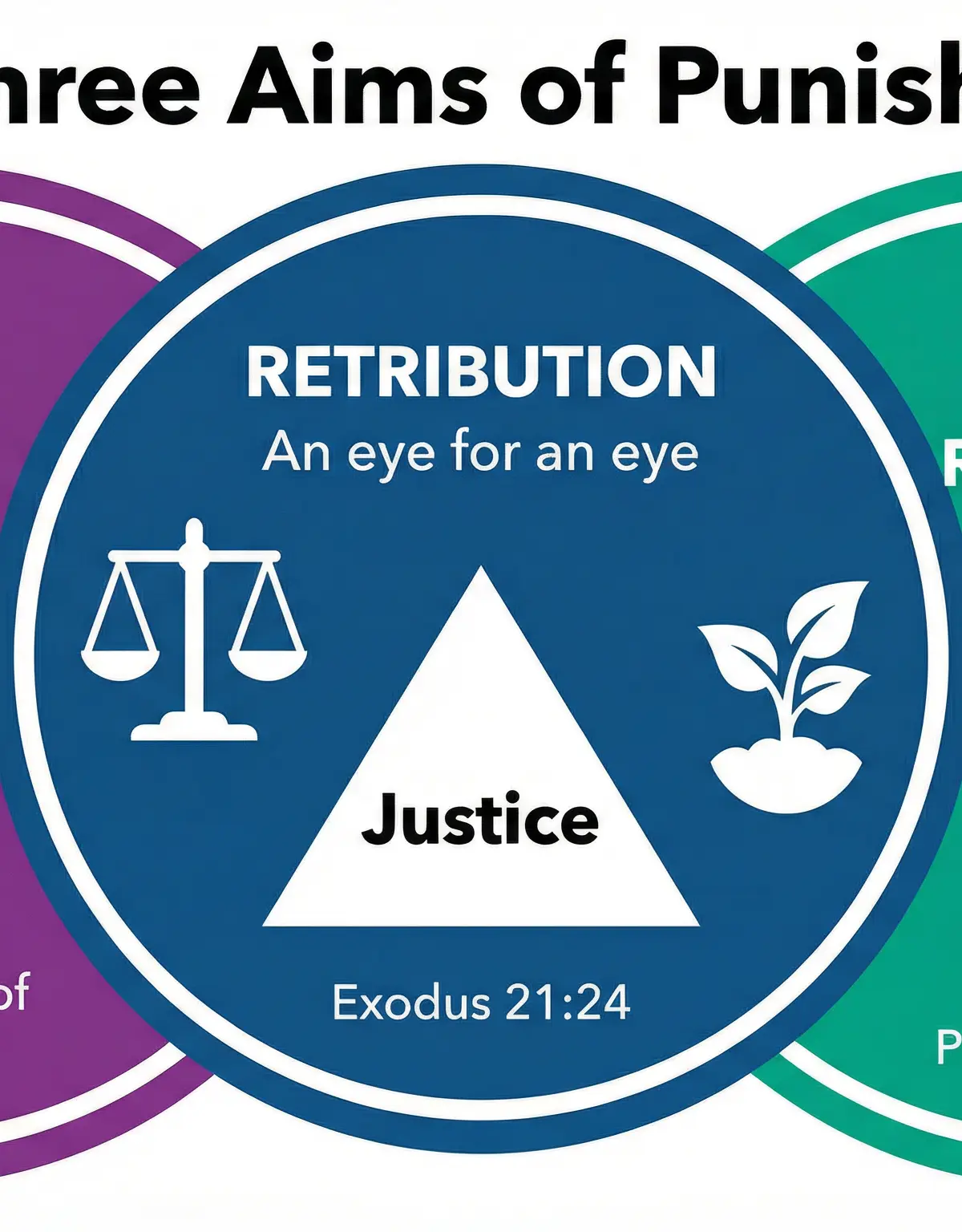
Retribution: This is the idea that a punishment should be proportionate to the crime committed. It is not personal revenge, but a formal act of justice. The most famous expression of this is the principle of lex talionis, or "an eye for an eye, a tooth for a tooth", found in the Old Testament (Exodus 21:24). While this may seem harsh, it establishes the principle of proportionality. Some Muslims also support this through the concept of Qisas (just retaliation).
Deterrence: The aim here is to prevent future crimes. Specific deterrence focuses on the individual offender, aiming to stop them from reoffending. General deterrence aims to send a message to society as a whole. Many religious believers support this as it protects the community, aligning with teachings like 'Love thy neighbour' (Mark 12:31).
Reformation: This is the aim of rehabilitating the offender, helping them to change their ways and become a law-abiding member of society. This is strongly emphasised in Christianity, which teaches that humans can be forgiven and can change. The Parable of the Prodigal Son (Luke 15) is a key text, showing a father who joyfully welcomes back his repentant son. Charities like the Prison Fellowship are inspired by this aim.
Religious Attitudes to Justice and Forgiveness
Christianity: There is a significant tension between justice and mercy. The Old Testament provides a basis for retributive justice, but the teachings of Jesus in the New Testament focus heavily on forgiveness and compassion. Jesus famously says, "If anyone slaps you on the right cheek, turn to them the other cheek also" (Matthew 5:39). This has led to a strong emphasis on reformation and restorative justice within many Christian denominations. However, the need for justice to protect society is also recognised.
Islam: Justice (Adl) is a core principle in Islam. The Qur'an states, "O you who have believed, be persistently standing firm in justice, witnesses for Allah" (Surah 4:135). While Qisas allows for retribution, forgiveness is considered a greater virtue. The Qur'an teaches, "...whoever pardons and makes reconciliation – his reward is with Allah" (Surah 42:40). This creates a framework where justice is the foundation, but mercy and forgiveness are encouraged.
The Death Penalty (Capital Punishment)
This is a major area of debate and a common topic for 12-mark evaluation questions.
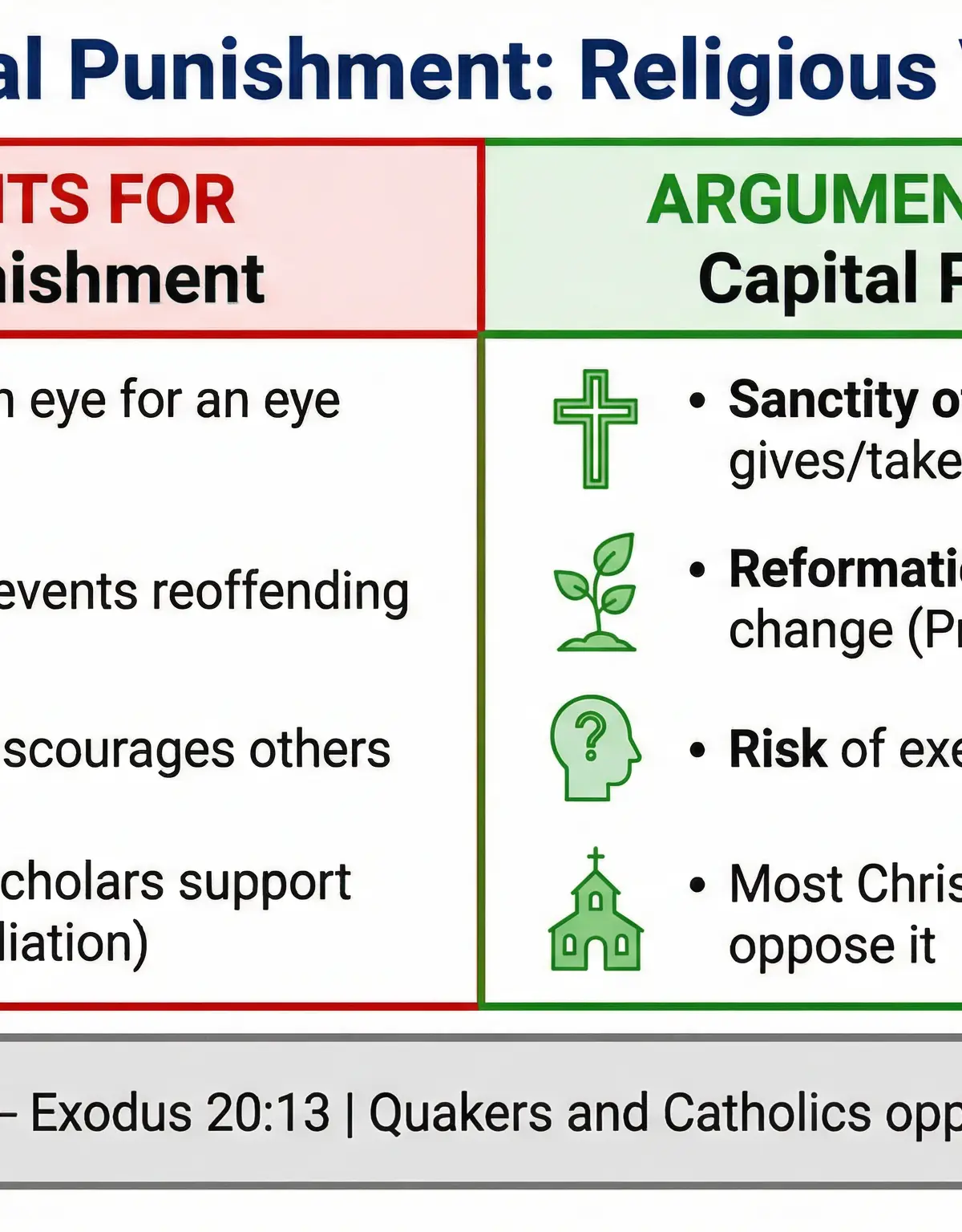
Arguments FOR Capital Punishment:
- Retribution: For the most serious crimes, such as murder, some argue that death is the only proportionate punishment ("a life for a life").
- Deterrence: The death penalty may deter others from committing similar crimes, although evidence for this is highly contested.
- Protection: It provides ultimate protection for society as the executed criminal cannot harm anyone again.
- Religious Support: Some literalist Christians and some Islamic scholars support it, citing texts like Exodus 21 and the principle of Qisas.
Arguments AGAINST Capital Punishment:
- Sanctity of Life: A core belief in many religions that life is sacred and a gift from God, which only God has the right to take. The commandment "You shall not murder" (Exodus 20:13) is central here.
- Possibility of Error: There is always a risk of executing an innocent person, an irreversible injustice.
- Reformation: It denies the possibility of an offender repenting and changing their life.
- Religious Opposition: Most Christian denominations, including the Catholic Church, the Church of England, and the Quakers, are strongly opposed to the death penalty in all circumstances."
Worked Examples
3 worked examples — open one to explore the question and available guidance.
Practice Questions
Test your understanding — click to reveal model answers
Explain two reasons why some religious people are against the death penalty. (4 marks)
Hint: Think about core religious beliefs about life and the possibility of change.
Explain two contrasting religious beliefs about how criminals should be treated. (5 marks)
Hint: Contrast a belief focused on strict justice with one focused on compassion and reform.
'Forgiveness is more important than justice.' Evaluate this statement. (12 marks)",
"marks": 12
Explain two aims of punishment. (4 marks)
Hint: Think RDR: Retribution, Deterrence, Reformation. Pick two and explain them.
Explain two different Christian responses to the death penalty. (5 marks)
Hint: Contrast a literalist Old Testament view with a liberal New Testament view.