AQA · GCSE · Religious Studies
Forgiveness
This study guide explores the concept of forgiveness within AQA GCSE Religious Studies, focusing on Christian and Islamic perspectives. It is a critical topic for Theme E (Religion, Crime and Punishment) and requires candidates to analyse complex theological ideas and apply them to real-world scenarios, making it a rich area for earning marks.
- 5 min read
- 3 worked examples
- 5 practice questions
- 6 key terms
Study Notes
Overview
Forgiveness is a central theme in both Christianity and Islam, representing a core spiritual imperative. For the AQA GCSE exam, candidates are expected to move beyond a simple definition and explore the theological depth of forgiveness, its relationship with justice, and its application in the real world. This guide will break down the key teachings from both religions, providing specific Sources of Wisdom and Authority that are essential for high-level responses. We will distinguish between forgiveness and reconciliation, analyse the concept of restorative justice, and examine case studies that test the limits of forgiveness. Examiners are looking for a nuanced understanding that acknowledges the complexities and tensions within this topic, such as whether forgiveness is always possible and how it coexists with legal punishment. This is not just about what forgiveness is, but why it matters to believers and society.

Key Concepts: Christian Teachings
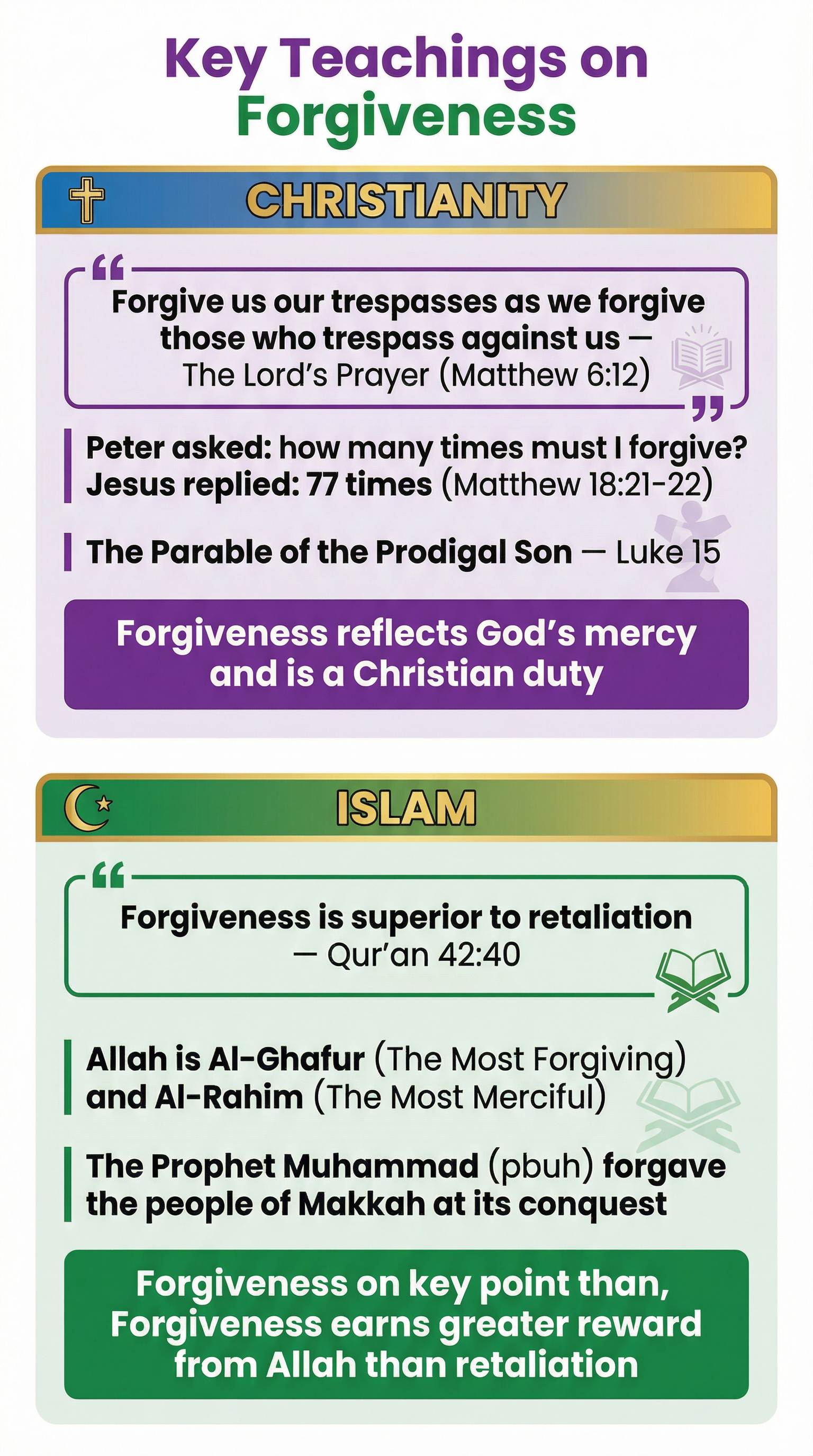
Christianity presents forgiveness not as an option, but as a divine command rooted in God's own nature. The core belief is that since God has offered humanity ultimate forgiveness for their sins through the sacrifice of Jesus, believers are expected to offer forgiveness to others.
Key Sources of Wisdom & Authority:
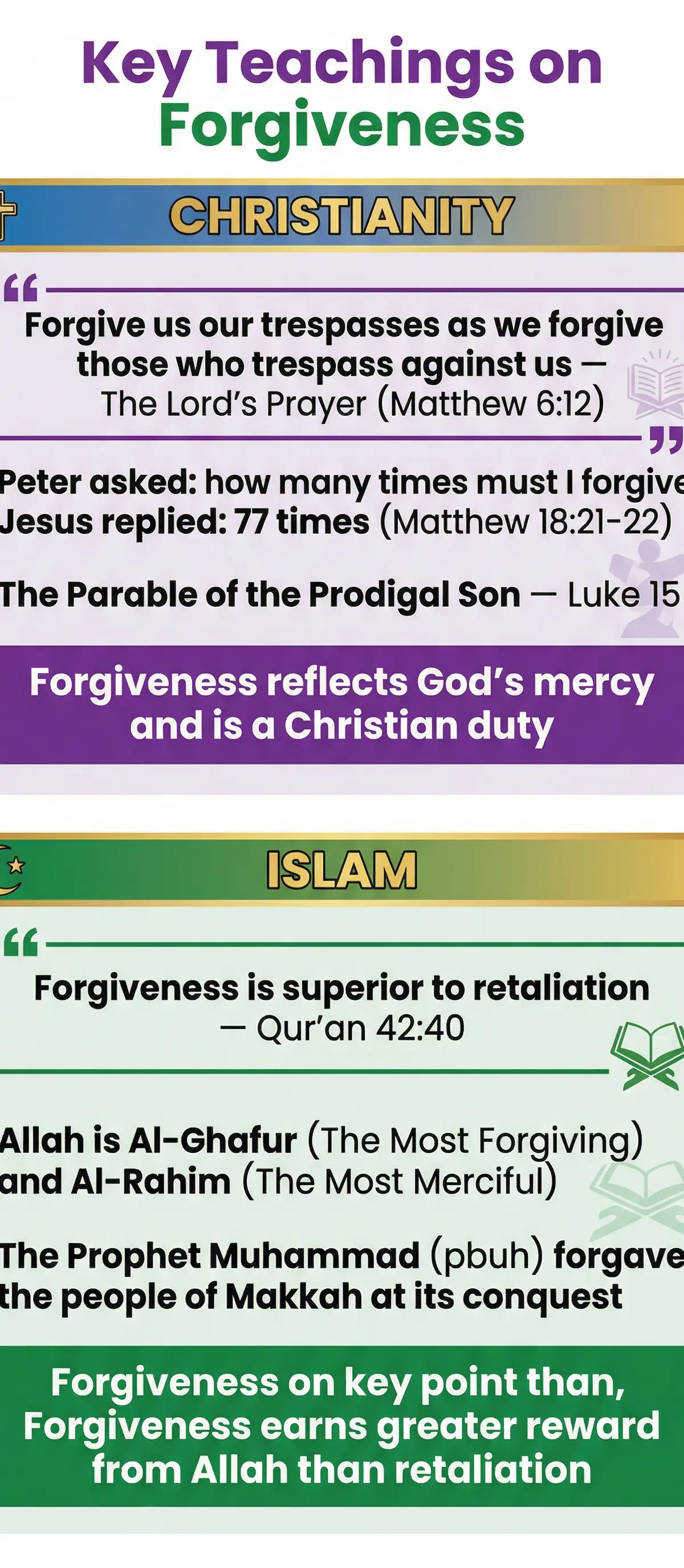
- The Lord's Prayer (Matthew 6:12): Jesus instructs his followers to pray, "Forgive us our trespasses, as we forgive those who trespass against us." This directly links receiving divine forgiveness with the act of giving it. Examiners credit accurate citation of this prayer.
- The Parable of the Unforgiving Servant (Matthew 18:21-35): In this parable, a servant forgiven a huge debt by his king then refuses to forgive a fellow servant a much smaller debt. The king, angered, rescinds his forgiveness. The moral is clear: Christians must forgive as they have been forgiven by God. This passage also contains the famous exchange where Peter asks if he should forgive seven times, and Jesus replies, "not seven times, but seventy-seven times," signifying limitless forgiveness.
- Jesus on the Cross (Luke 23:34): While being crucified, Jesus says, "Father, forgive them, for they do not know what they are doing." This is the ultimate example of forgiveness, offered in a moment of extreme suffering and injustice.
Key Concepts: Islamic Teachings
In Islam, forgiveness is a highly prized virtue, reflecting the nature of Allah himself. While justice and retaliation (Qisas) are permitted, the Qur'an repeatedly emphasizes that forgiveness is the superior path and brings a greater reward from God.
Key Sources of Wisdom & Authority:
- Allah's Nature: Two of Allah's 99 names are Al-Ghafur (The Most Forgiving) and Al-Rahim (The Most Merciful). Muslims believe they should strive to emulate these divine attributes.
- Qur'an 42:40: "The repayment of a bad action is one equivalent to it. But if someone pardons and puts things right, his reward is with Allah." This verse is crucial as it establishes that while justice is an option, forgiveness is a higher, more spiritually rewarding choice.
- The Example of the Prophet Muhammad (pbuh): At the Conquest of Makkah, the Prophet Muhammad forgave the Quraysh tribe, who had persecuted him and his followers for years. This act of magnanimity is considered a supreme example of Islamic forgiveness in practice.
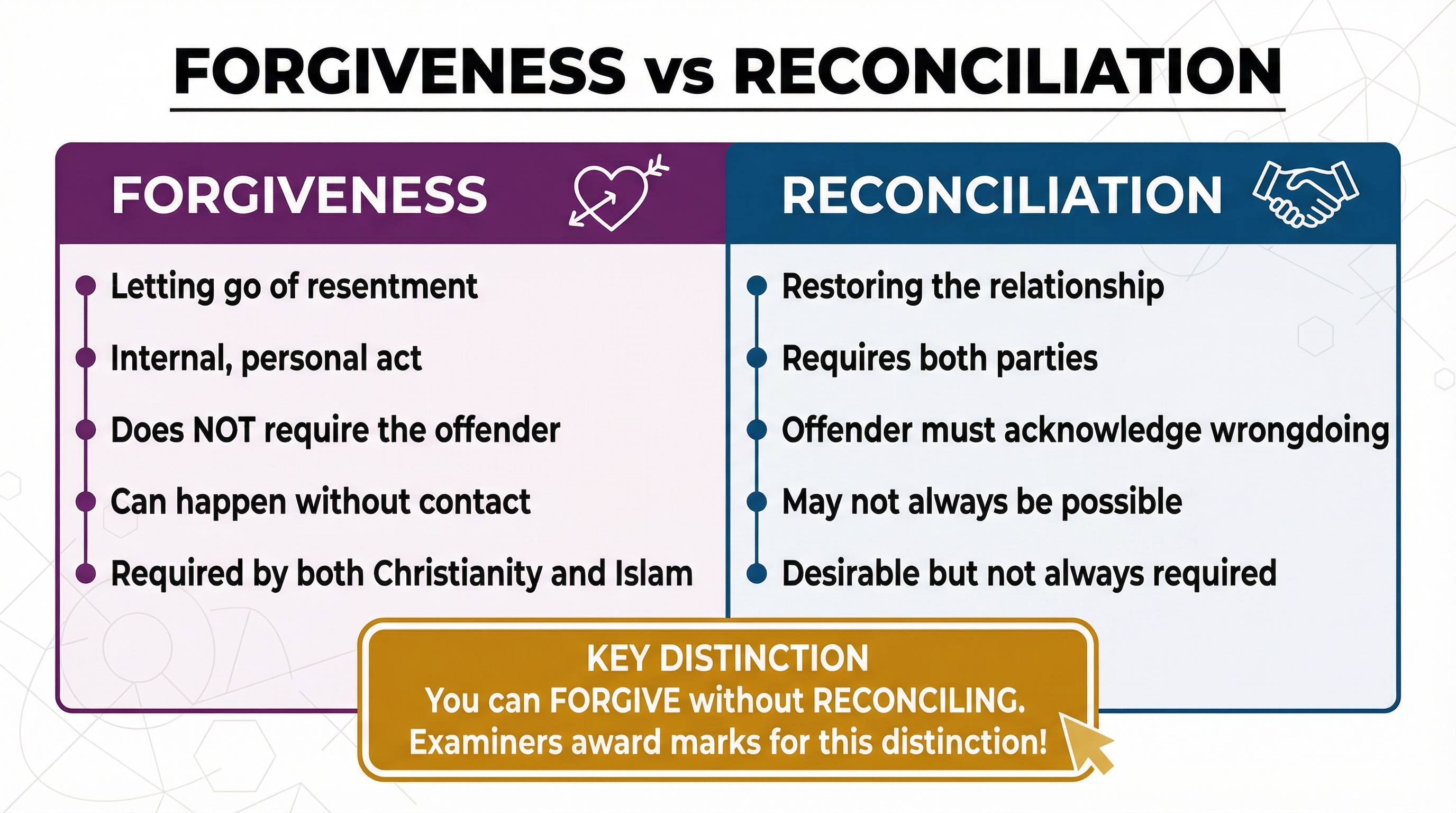
Forgiveness vs. Reconciliation
Examiners frequently reward candidates who can clearly distinguish between these two concepts. Marks are often lost by using the terms interchangeably.
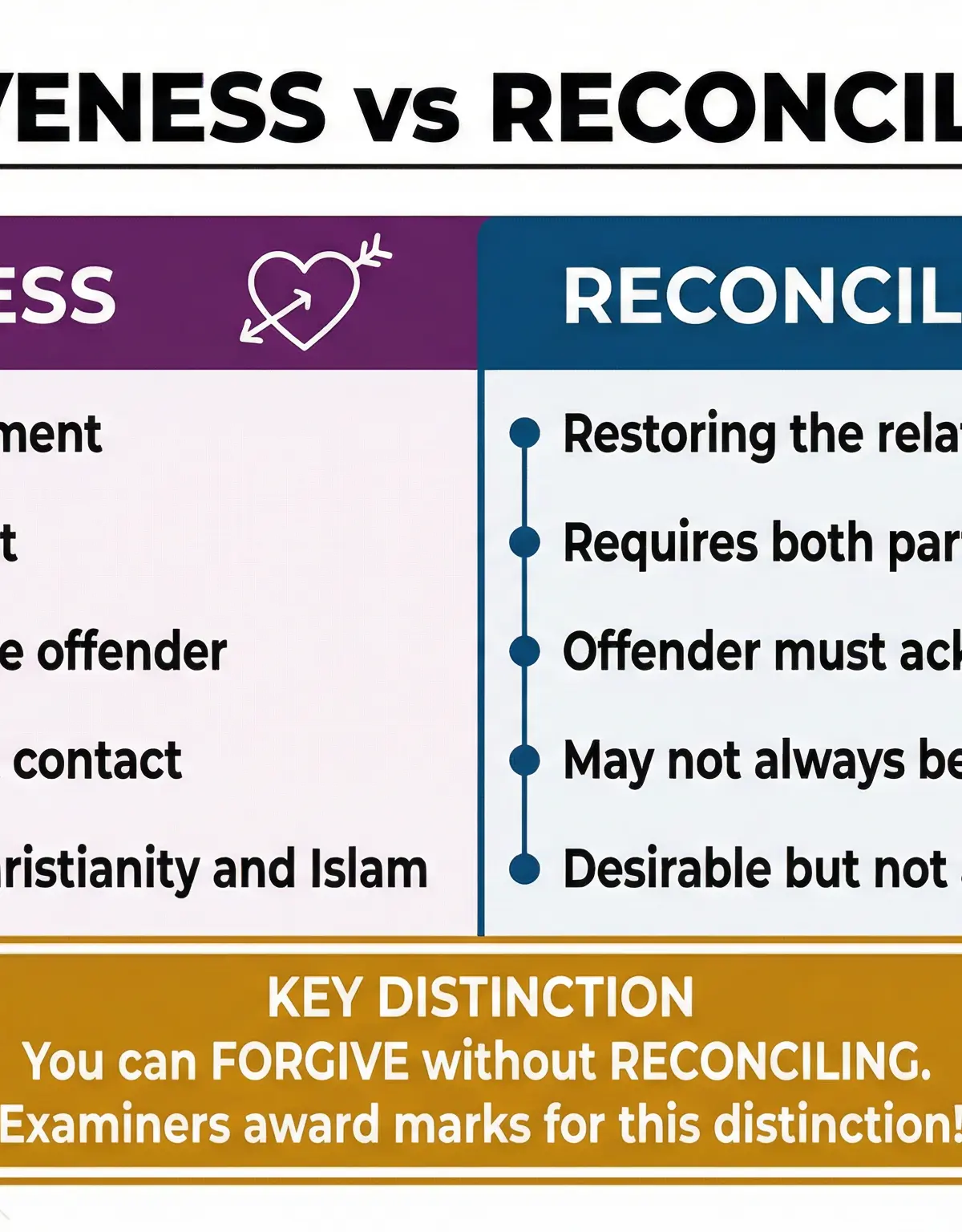
- Forgiveness: An internal, personal act of letting go of resentment and anger. It can be done without any contact with the offender.
- Reconciliation: The restoration of a relationship. It is an interpersonal process that requires both parties to be willing to rebuild trust.
Key point: A person can forgive someone who has wronged them but choose not to reconcile, perhaps because it would be unsafe or unwise to do so. The case of Gee Walker forgiving her son's murderers is a prime example: she forgave them but did not seek to restore a relationship with them.
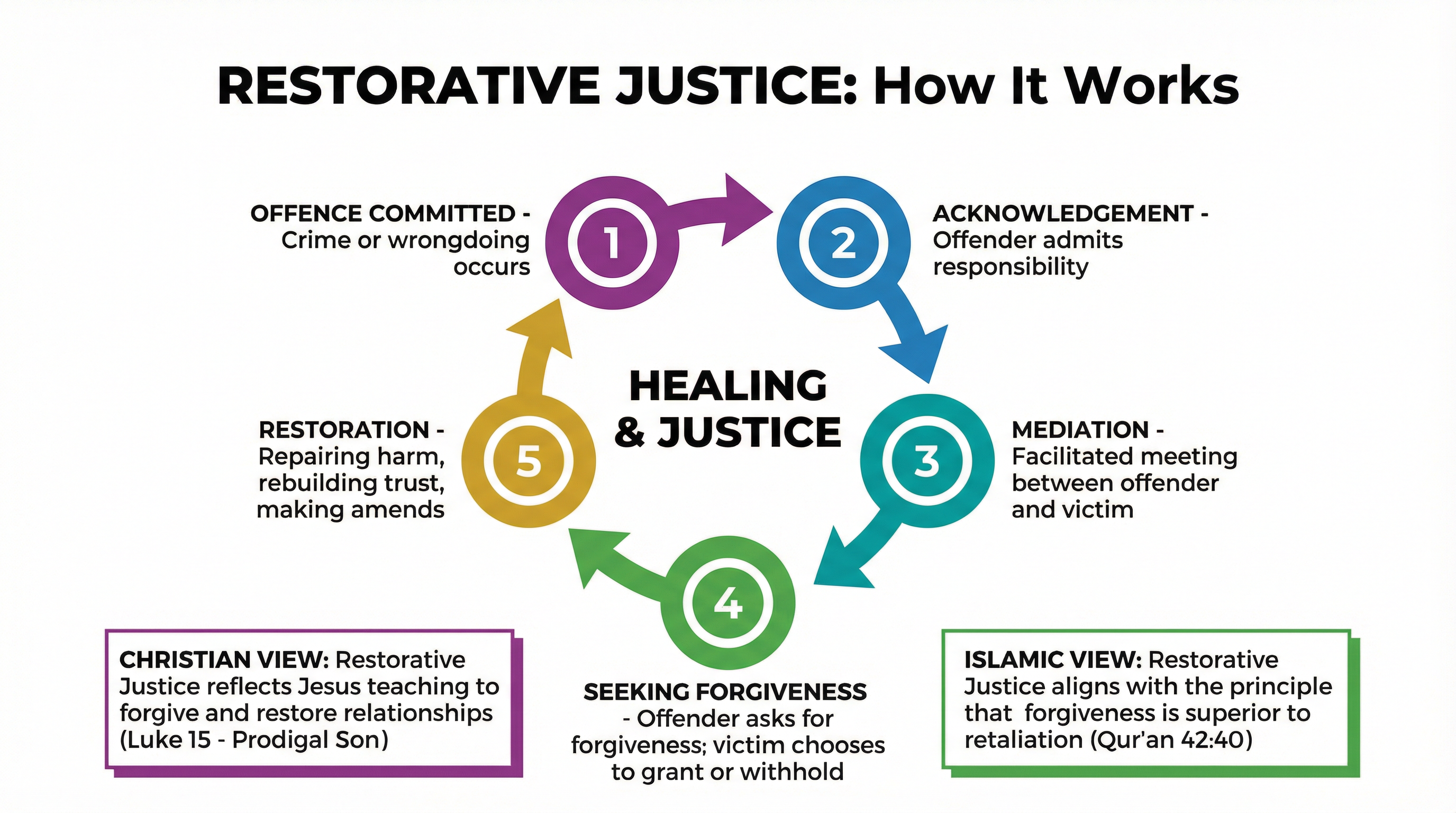
Restorative Justice
This is a system of criminal justice that focuses on the rehabilitation of offenders through reconciliation with victims and the community at large. It provides an opportunity for the offender to understand the harm they have caused and for the victim to have their voice heard.
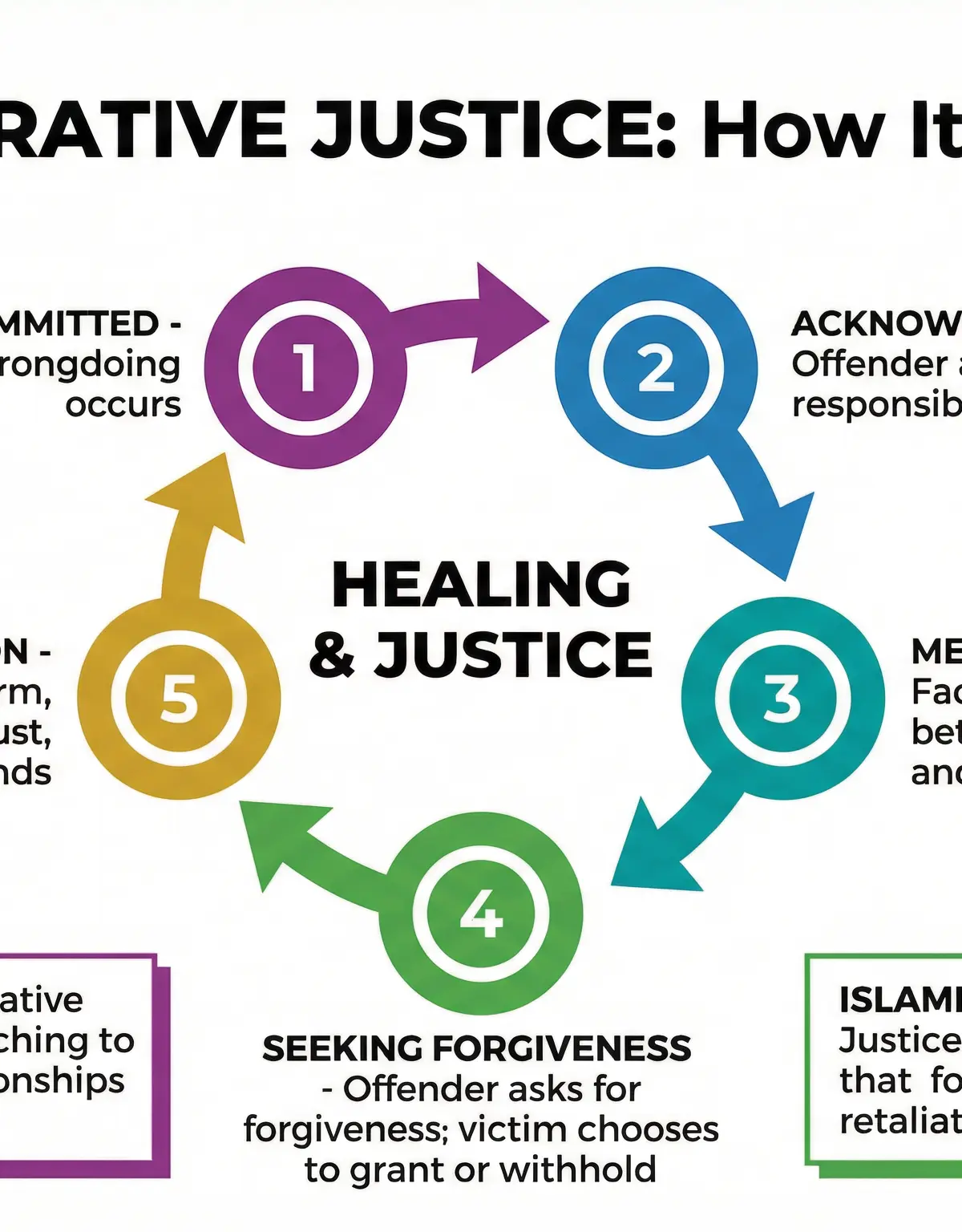
Both Christianity and Islam can be seen to support the principles of restorative justice:
- Christianity: It aligns with the teachings of forgiveness and restoring relationships, as seen in the Parable of the Prodigal Son, where the father welcomes his repentant son back into the family.
- Islam: It aligns with the principle that forgiveness and making amends is superior to retaliation. It offers a practical way to enact the message of Qur'an 42:40.
Visual Resources
3 diagrams and illustrations
Interactive Diagrams
1 interactive diagram to visualise key concepts
Conceptual Flow Outline
Flowchart showing the paths of forgiveness and retaliation.
Worked Examples
3 worked examples — open one to explore the question and available guidance.
Practice Questions
Test your understanding — click to reveal model answers
Explain two religious beliefs about why people should forgive. (5 marks)
Hint: Think about the motivation for forgiveness in Christianity and Islam. Link it to God's nature or a key teaching.
'It is impossible to forgive some actions.' Evaluate this statement. (12 marks)
Hint: Use the FARM structure. Consider extreme examples like murder. Contrast absolute religious teachings with human psychology.
Explain two contrasting religious beliefs about forgiveness. (4 marks)
Hint: Contrast a Christian view with an Islamic view, or contrast two different Christian views (e.g. limitless forgiveness vs. righteous anger).
Explain two ways restorative justice is used. (4 marks)
Hint: Think about the process. What happens? Who is involved?
Explain two reasons why a religious person might forgive a criminal. (4 marks)
Hint: Connect the act of forgiving to a core religious teaching or belief.