AQA · GCSE · Religious Studies
Course version: 8062 · Version from Sept 2018
Key Beliefs: the Buddha’s ascetic life
Following his renunciation, Siddhartha spent six years living an ascetic life to overcome suffering.
Checked against the AQA 8062 specification (opens in a new tab) on .
- Point 18 of 24
- 4 key terms
Study notes
From the checked teaching notes for this specification point.
The idea
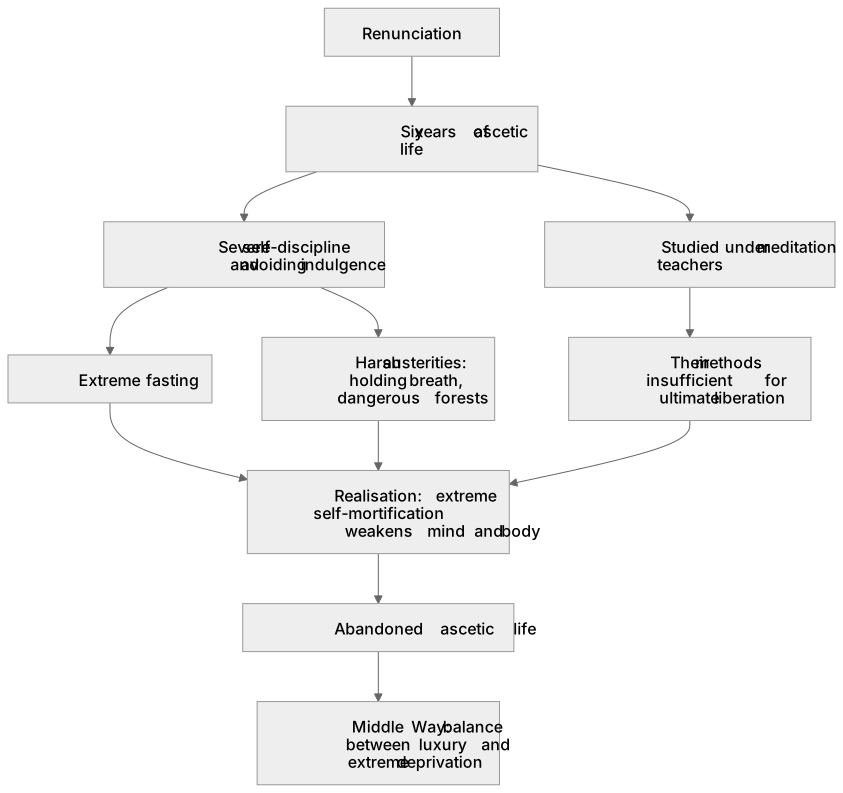
Following his renunciation, Siddhartha spent six years living an ascetic life to overcome suffering. Asceticism involves severe self-discipline and avoiding indulgence. Siddhartha practised extreme fasting, surviving on a single grain of rice a day, and subjected his body to harsh austerities like holding his breath and living in dangerous forests. He studied under renowned meditation teachers but found their methods insufficient for achieving ultimate liberation. Eventually, Siddhartha realised that extreme self-mortification only weakened his mind and body without bringing him closer to enlightenment. This realisation led him to abandon the ascetic life in favour of the Middle Way, a balanced approach between luxury and extreme deprivation.
What earns the marks
- Define asceticism as the practice of severe self-discipline and abstention from all forms of indulgence.
- Provide specific examples of Siddhartha's ascetic practices, such as extreme fasting and breath control.
- Explain the duration and purpose of this period: six years spent seeking the solution to human suffering.
- Describe the outcome of the ascetic life, specifically Siddhartha's realisation that extreme deprivation weakens the mind and leads to the discovery of the Middle Way.
Common mistakes and how to put them right
Claiming that Siddhartha achieved enlightenment while practising asceticism.
Put it right: Clarify that asceticism failed to bring him enlightenment, which he only achieved after abandoning these extreme practices for the Middle Way.
Confusing asceticism with meditation.
Put it right: Distinguish between the physical austerities of asceticism (like fasting) and the mental focus of meditation, noting he practised both but rejected extreme physical deprivation.
Stating that Buddhists today are required to live as extreme ascetics.
Put it right: Explain that Buddhists follow the Middle Way, avoiding the extremes of both luxury and severe asceticism.
Exam tips
- Use the story of Siddhartha's asceticism to explain the origins and importance of the Middle Way in Buddhist practice.
- Include specific details, such as fasting until he could feel his spine through his stomach, to demonstrate strong subject knowledge.
- Contrast his ascetic life with his earlier life of luxury in the palace to highlight the two extremes he experienced before finding balance.
Try the lesson
The start of the Key Beliefs: the Buddha’s ascetic life lesson, made from checked teaching notes for this specification point.
Have a go first
Which practice was a key feature of Siddhartha Gautama's ascetic life before he attained enlightenment?
Listen
Following his renunciation, Siddhartha spent six years living an ascetic life to overcome suffering. Asceticism involves severe self-discipline and avoiding indulgence. Siddhartha practised extreme fasting, surviving on a single grain of rice a day, and subjected his body to harsh austerities like holding his breath and living in dangerous forests. He studied under renowned meditation teachers but found their methods insufficient for achieving ultimate liberation. Eventually, Siddhartha realised that extreme self-mortification only weakened his mind and body without bringing him closer to enlightenment. This realisation led him to abandon the ascetic life in favour of the Middle Way, a balanced approach between luxury and extreme deprivation. A strong answer earns marks for these points. Define asceticism as the practice of severe self-discipline and abstention from all forms of indulgence. Provide specific examples of Siddhartha's ascetic practices, such as extreme fasting and breath control. Explain the duration and purpose of this period: six years spent seeking the solution to human suffering. Describe the outcome of the ascetic life, specifically Siddhartha's realisation that extreme deprivation weakens the mind and leads to the discovery of the Middle Way. A common slip: Claiming that Siddhartha achieved enlightenment while practising asceticism. Instead, Clarify that asceticism failed to bring him enlightenment, which he only achieved after abandoning these extreme practices for the Middle Way. Exam tip: Use the story of Siddhartha's asceticism to explain the origins and importance of the Middle Way in Buddhist practice.
See it
Key words
Say what each word means before you turn the card.
Asceticism
Try answering aloud or in your head before turning the card.
The Middle Way
Try answering aloud or in your head before turning the card.
Enlightenment
Try answering aloud or in your head before turning the card.
Renunciation
Try answering aloud or in your head before turning the card.
See every definition
- Asceticism
- The practice of severe self-discipline and avoiding indulgence, which Siddhartha followed for six years to overcome suffering.
- The Middle Way
- A balanced approach between luxury and extreme deprivation, which Siddhartha adopted after abandoning the ascetic life.
- Enlightenment
- Ultimate liberation, which Siddhartha realised extreme self-mortification did not bring him closer to.
- Renunciation
- The step after which Siddhartha spent six years living an ascetic life to overcome suffering.
Label the diagram
Some boxes have lost their names. Pick the right name for each number.
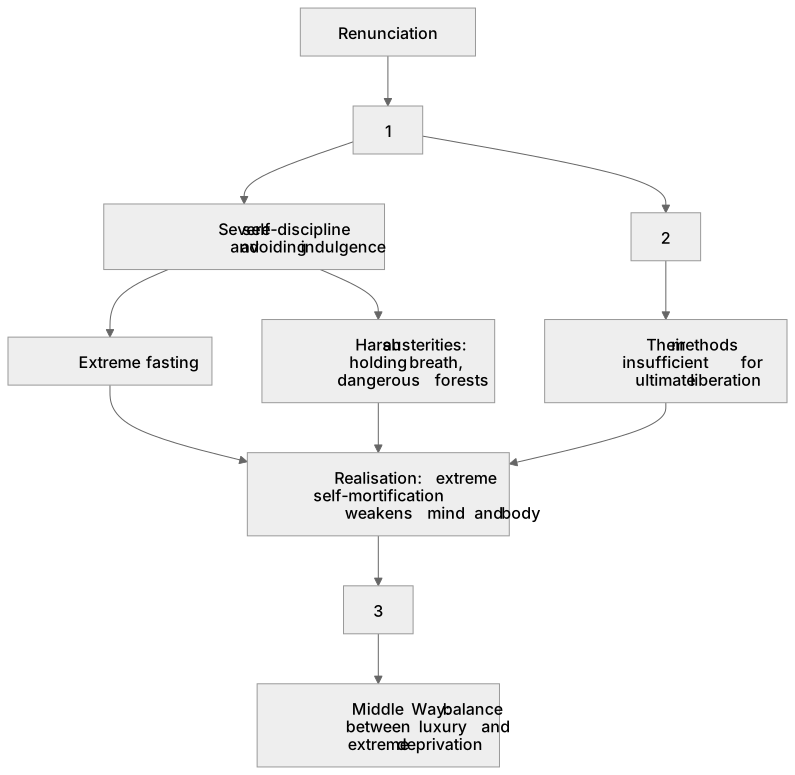
1Box 1
2Box 2
3Box 3
There is more to this lesson
The full lesson goes on to check your understanding and help you earn the marks. Create a free account to carry on, with your progress saved.
A week of Premium from your first lesson · Then the free plan continues · No card, no charge
Test your understanding of Key Beliefs: the Buddha’s ascetic life
Active recall beats re-reading. Take an instant quiz now to test what you’ve learned and lock it into long-term memory.
A week of Premium from your first lesson · Then the free plan continues · No card, no charge