OCR · GCSE · Religious Studies
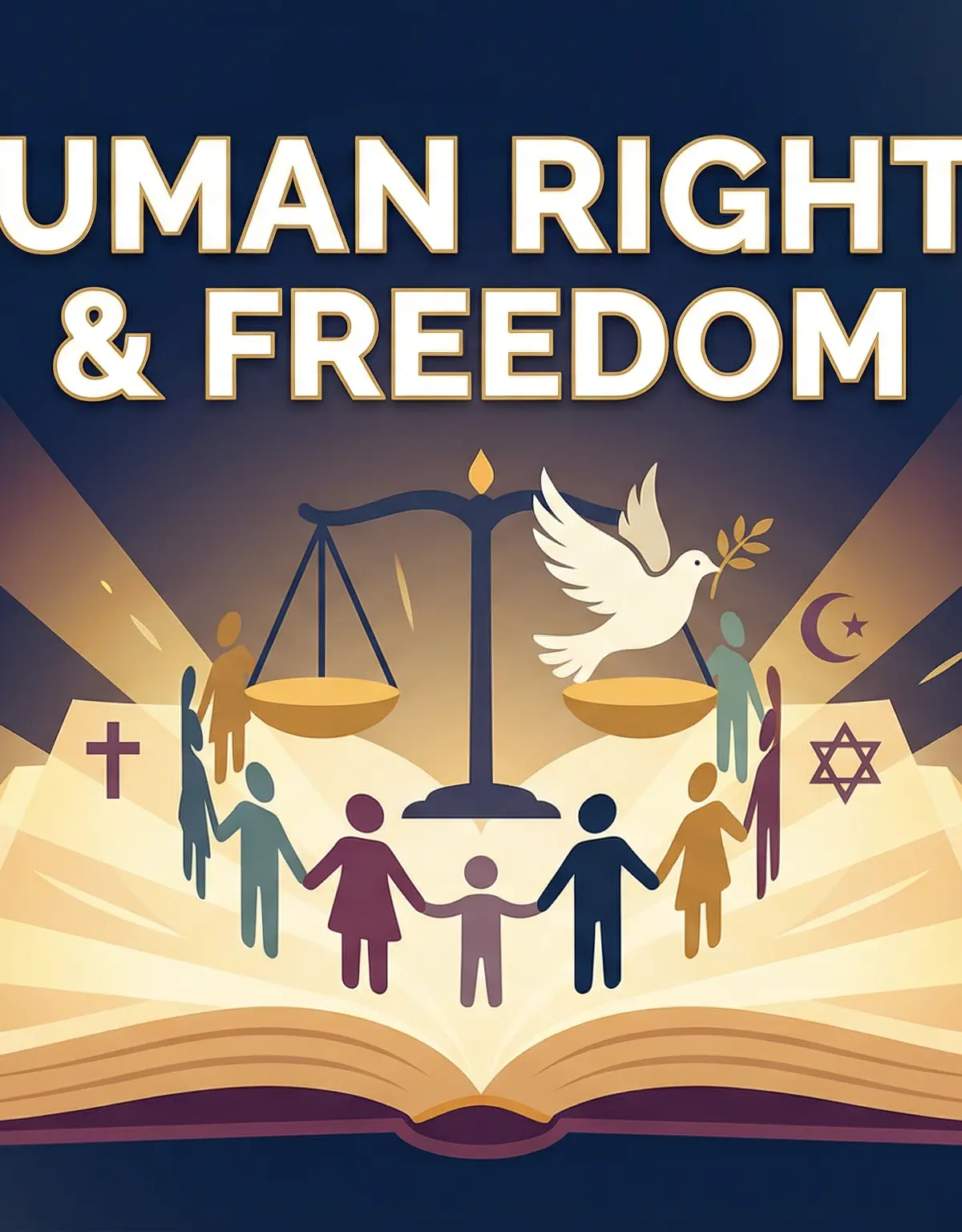
Human Rights and Freedom
This study guide explores the critical dialogue between religious conviction and secular law in the arena of human rights. It unpacks how ancient theological concepts like 'Imago Dei' and 'Ummah' directly inform modern debates on justice, equality, and freedom, providing candidates with the precise knowledge needed to excel in the OCR GCSE exam.
- 6 min read
- 3 worked examples
- 5 practice questions
- 6 key terms
Study Notes
Overview
This topic examines the foundations of human rights and freedoms, contrasting religious and non-religious perspectives. For the OCR GCSE Religious Studies (J625) exam, candidates must move beyond generalisations and analyse the specific theological principles that compel believers to act. The core of this topic is the tension and harmony between divine commands and secular standards like the Universal Declaration of Human Rights (UDHR). Examiners expect candidates to dissect how beliefs about creation, community, and justice influence attitudes towards censorship, religious expression, and social activism. A high-level response will not only describe these beliefs but evaluate their real-world impact, using named individuals and sacred texts as evidence. You will need to compare the Christian perspective with that of another religion (Islam is used here) and secular viewpoints.
Key Concepts & Developments
The Secular Framework: The Universal Declaration of Human Rights (UDHR)
Date(s): 1948
What happened: In the aftermath of the horrors of World War II, the newly formed United Nations adopted the UDHR. It established for the first time a universal standard for the fundamental rights and freedoms to which all human beings are entitled.
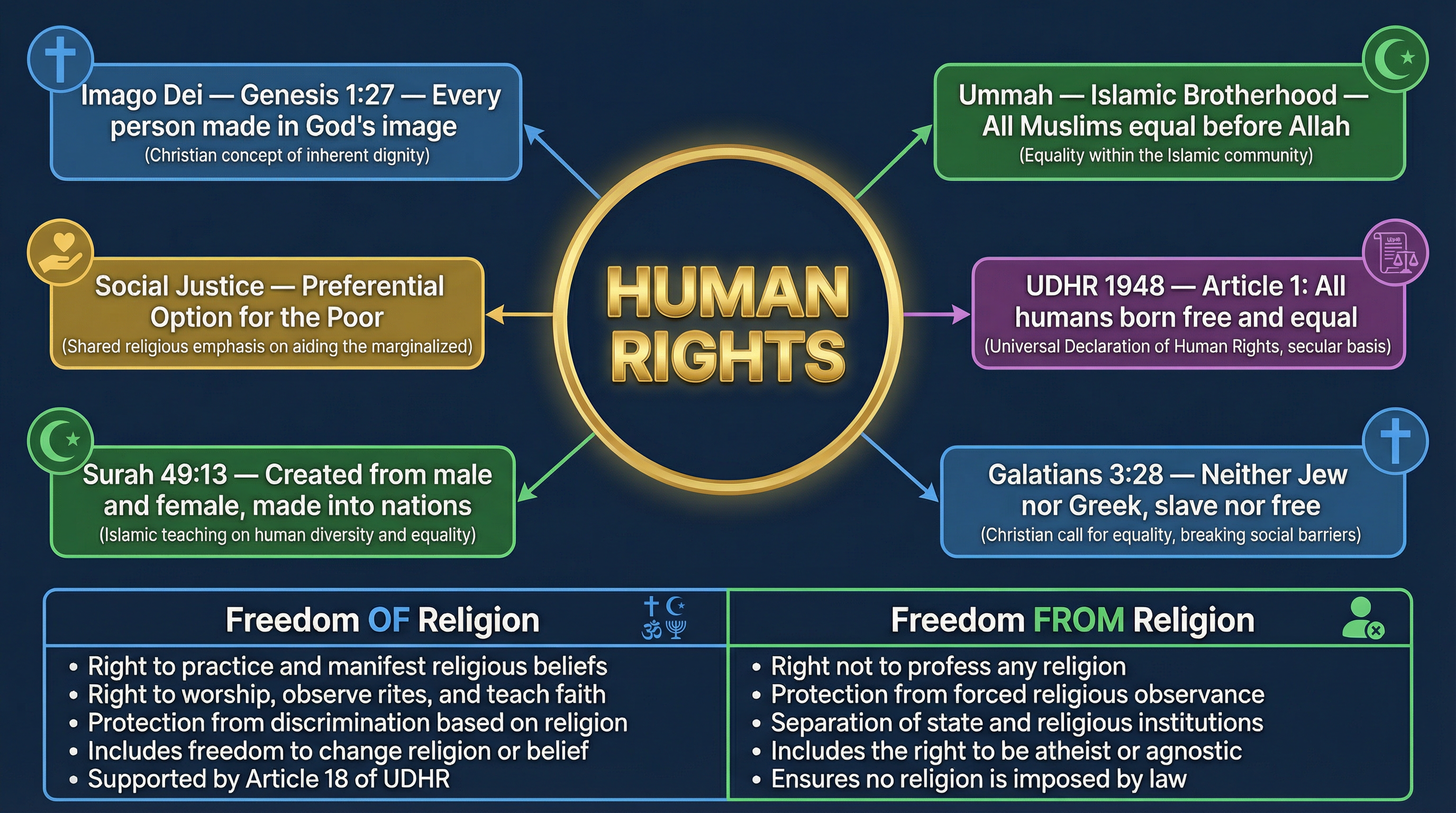
Why it matters: The UDHR is the foundational secular document for this topic. Article 1 states, "All human beings are born free and equal in dignity and rights." It provides a non-religious benchmark against which religious claims about rights can be measured. Candidates must know its origin and key articles (especially Article 1 for equality and Article 18 for religious freedom).
Specific Knowledge: UN General Assembly, Paris, 1948. Key articles: Article 1 (Equality), Article 18 (Freedom of Thought, Conscience, and Religion), Article 19 (Freedom of Expression).
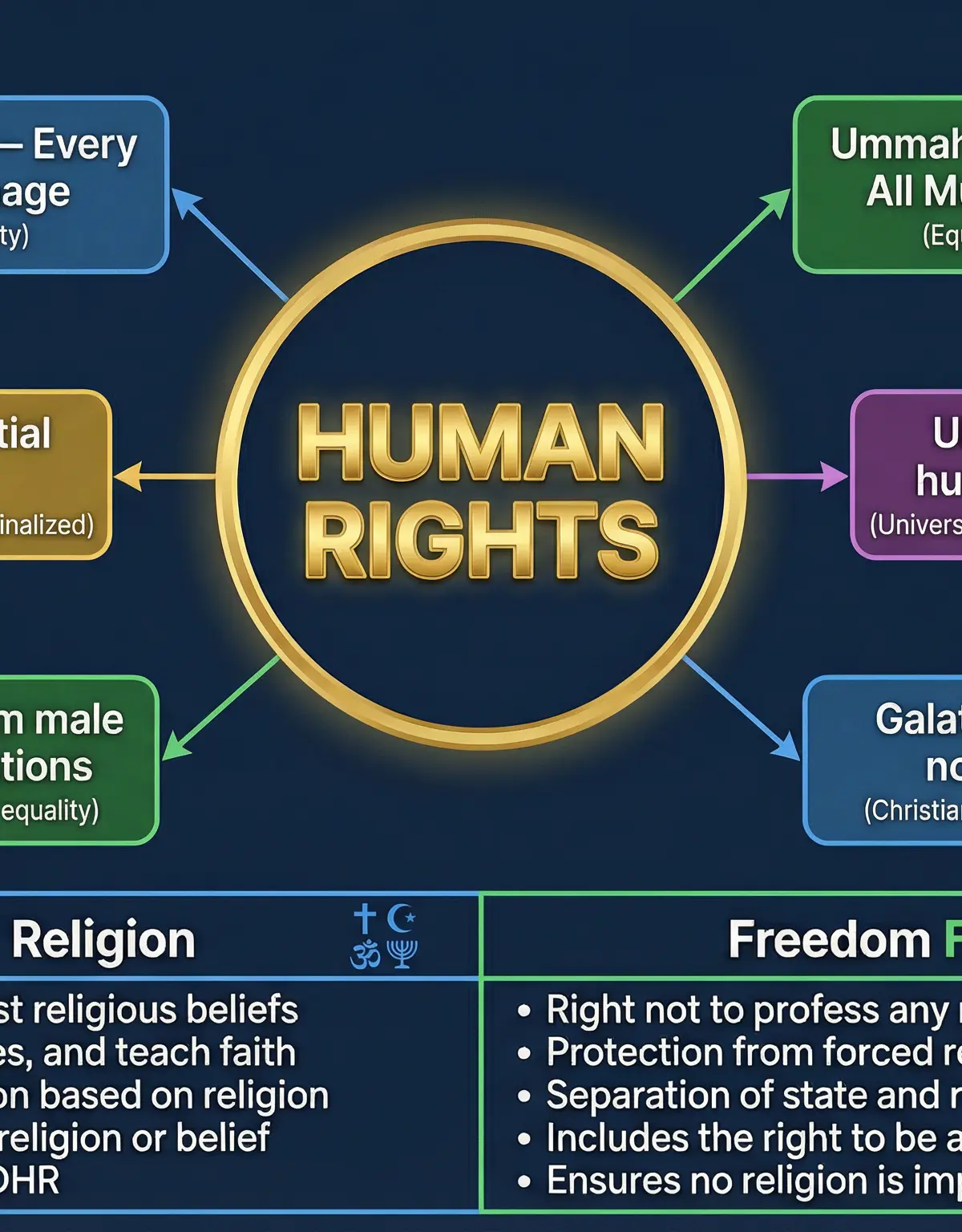
Christian Foundations: Imago Dei
What happened: This is a core theological concept, not a single event. It originates from the book of Genesis in the Bible.
Why it matters: The belief that all humans are made in the 'Image of God' (Imago Dei) is the cornerstone of Christian thinking on human rights. It means every person has intrinsic worth and dignity, not because of their talents or status, but because they reflect their creator. This belief directly challenges any form of discrimination or injustice.
Specific Knowledge: Genesis 1:27: "So God created mankind in his own image, in the image of God he created them; male and female he created them." Another key verse is Galatians 3:28: "There is neither Jew nor Gentile, neither slave nor free, nor is there male and female, for you are all one in Christ Jesus."
Islamic Foundations: Ummah and Khalifah
What happened: These are foundational concepts in Islamic theology.
Why it matters: The concept of Ummah refers to the worldwide community of Muslims, united by faith. It teaches that within this community, there is absolute equality before Allah, regardless of race or social standing. Khalifah (stewardship) teaches that humans are Allah's representatives on Earth, with a duty to uphold justice and protect the vulnerable. Together, they provide a strong basis for social justice and human rights within Islam.
Specific Knowledge: Qur'an 49:13: "O mankind, indeed We have created you from male and female and made you peoples and tribes that you may know one another." Prophet Muhammad's Farewell Sermon (632 CE) is also a key source, declaring all mankind equal.
Key Individuals

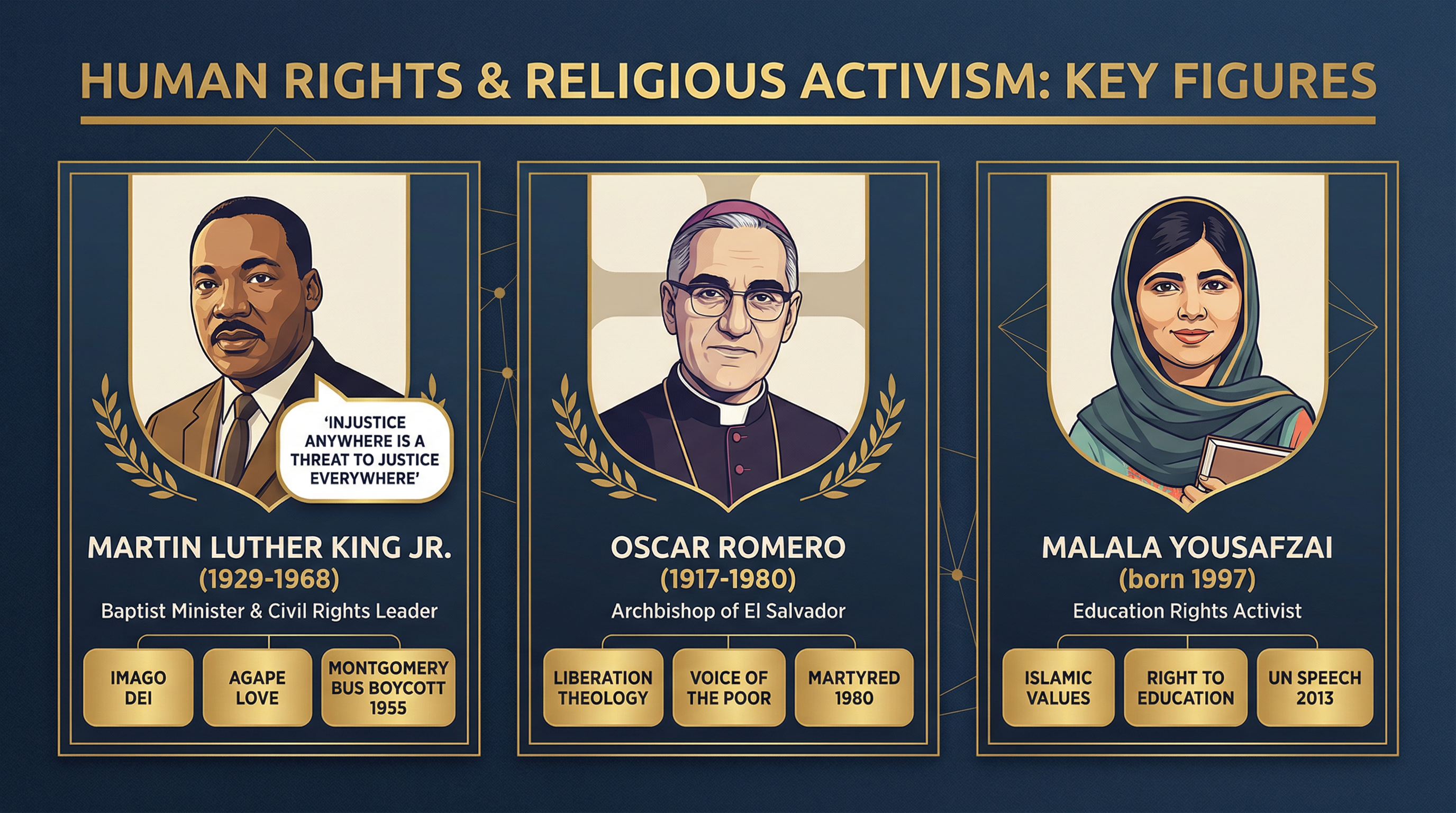
Martin Luther King Jr.
Role: Baptist Minister and American Civil Rights Leader
Key Actions: Led the Montgomery Bus Boycott (1955), delivered the "I Have a Dream" speech (1963), advocated for non-violent protest (Agape love).
Impact: King's activism was fundamentally theological. He argued that racial segregation was a sin because it defaced the Imago Dei. He successfully campaigned for the Civil Rights Act of 1964, demonstrating how religious conviction can lead to profound social and legal change. Examiners want analysis of his theology, not just a biography.
Oscar Romero
Role: Archbishop of San Salvador
Key Actions: Spoke out against poverty, social injustice, and government-led torture and assassinations in El Salvador. He used his weekly radio sermons to list the disappeared and murdered.
Impact: Romero is a prime example of Liberation Theology in action – the idea that the Church must have a "preferential option for the poor." He was martyred for his faith in 1980 while celebrating Mass. His life shows the ultimate cost of standing up for the rights of the oppressed, motivated by Christian teachings on justice.
Second-Order Concepts
Causation
The modern human rights movement was directly caused by the trauma of the Holocaust and WWII. The desire to say "never again" led to the creation of the UDHR. For religious activism, the cause is often a perceived conflict between state laws (e.g., segregation) and divine laws (e.g., Imago Dei).
Consequence
The UDHR created a global language for discussing rights. A key consequence of religious activism (like MLK's) was the dismantling of unjust laws and a shift in social attitudes. However, a negative consequence can be increased social tension when religious groups challenge state authority.
Change & Continuity
Change: The 20th century saw a major change in codifying rights into international law. The role of religious figures has changed from supporting the status quo to often challenging it.
Continuity: The core theological principles (Imago Dei, Ummah) have remained constant for centuries, providing a continuous source of motivation for believers.
Significance
This topic is significant because it shows religion as a dynamic, living force that shapes law and society. It demonstrates that sacred texts written thousands of years ago are still used to justify radical calls for justice and equality today.
Visual Resources
2 diagrams and illustrations
Interactive Diagrams
1 interactive diagram to visualise key concepts
Diagram could not be rendered
A timeline showing the development of rights and key events in religious activism.
Worked Examples
3 worked examples — open one to explore the question and available guidance.
Practice Questions
Test your understanding — click to reveal model answers
Explain two contrasting religious beliefs about freedom of religious expression.
Hint: Think about absolute freedom versus responsibility. One view might prioritize the right to express faith publicly, while another might emphasize the need to avoid causing offence.
Explain how the work of Martin Luther King Jr. was influenced by his Christian faith.
Hint: Go beyond just saying he was a Christian. Use specific theological terms like Imago Dei and Agape and link them to his specific actions.
Explain two ways religious believers can work for social justice.
Hint: Think of one peaceful, legal method and one more direct action.
"For religious believers, sacred texts are more important than the law of the land." Evaluate this statement.
Hint: Use the FARM structure. Argue for (divine law is supreme), against (duty to obey the state), and show religious divergence (liberal vs. fundamentalist views).
Explain the difference between freedom OF religion and freedom FROM religion.
Hint: Define each term clearly and show the tension between them.