OCR · GCSE · Religious Studies
Pilgrimage
This guide provides an exam-focused deep dive into Pilgrimage for OCR GCSE Religious Studies (J625). It unpacks the core beliefs, practices, and key sites like Lourdes, Iona, Jerusalem, and Mecca, equipping candidates with the precise knowledge and evaluation skills needed to achieve top marks.
- 6 min read
- 3 worked examples
- 5 practice questions
- 6 key terms
Study Notes
Overview
Pilgrimage is a physical journey to a place of spiritual significance, but for your exam, it represents a profound intersection of faith, ritual, and identity. For OCR candidates, this topic demands a precise understanding of why believers undertake these journeys and what they do when they get there. Examiners expect you to analyze the theological motivations behind pilgrimage, contrasting the Christian emphasis on spiritual enrichment with the Islamic obligation of Hajj. You must be able to describe the specific activities at key sites—such as bathing at Lourdes or performing Tawaf in Mecca—and link these physical actions to their spiritual outcomes. High-level responses will move beyond simple descriptions to evaluate the necessity and meaning of pilgrimage in the modern world, using specific Sources of Wisdom and Authority (SOWA) to support every point. This guide will equip you with the detailed knowledge and analytical frameworks required to deconstruct any question on this topic and construct a top-level answer.
Key Pilgrimage Sites & Practices
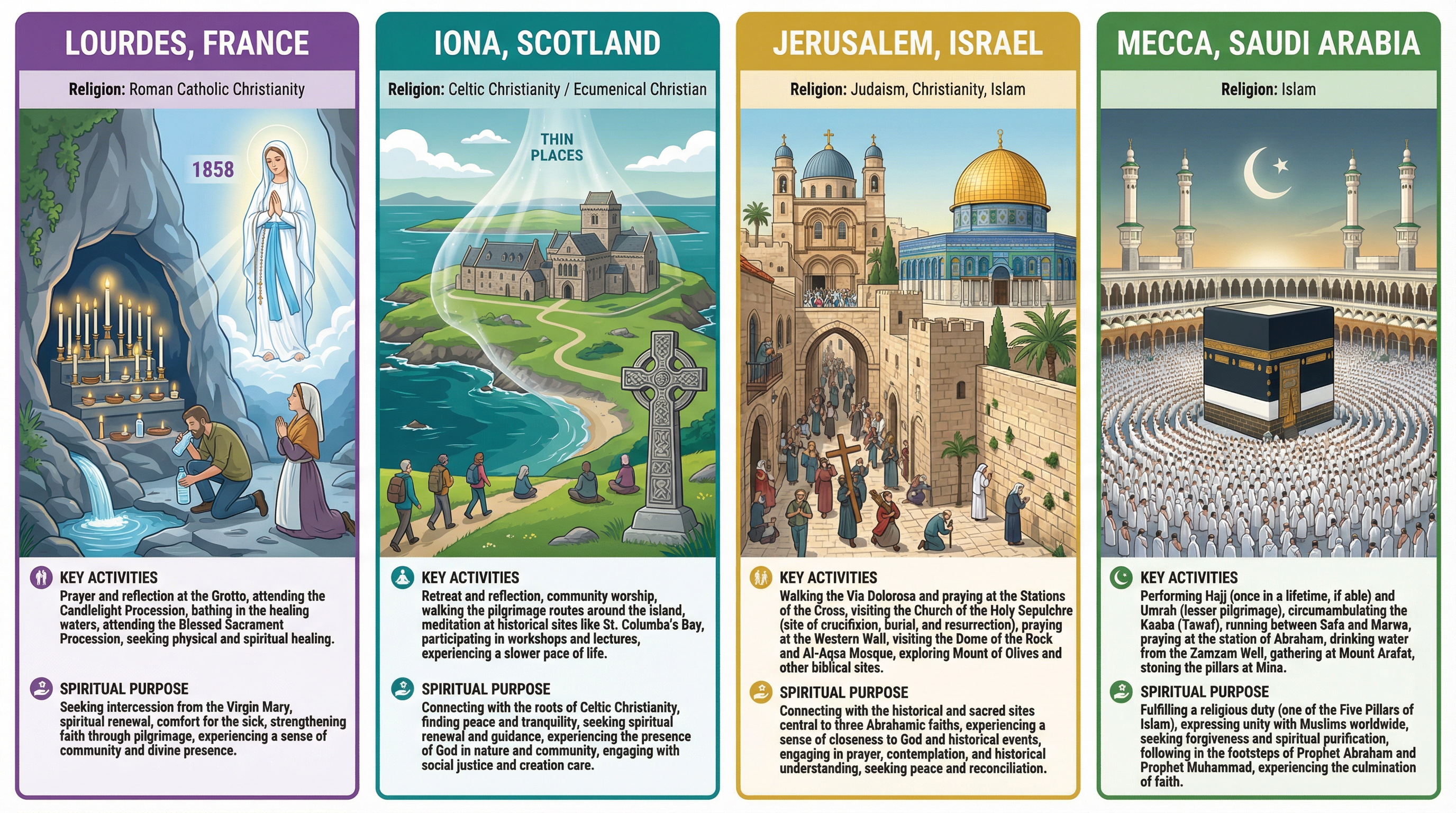
Lourdes (Roman Catholic Christianity)
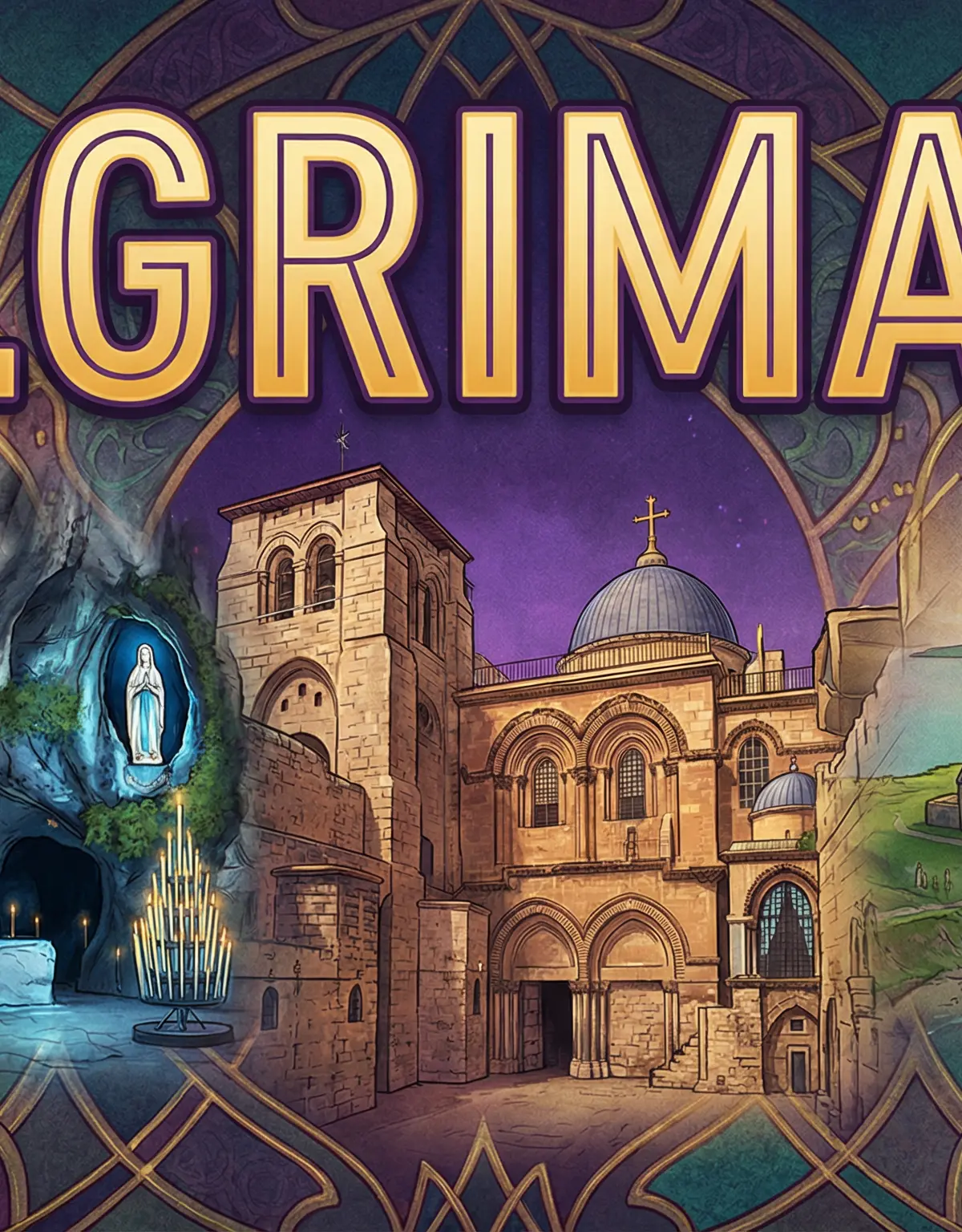
What happened: In 1858, a young girl named Bernadette Soubirous reported 18 apparitions of the Virgin Mary in the Grotto of Massabielle. A spring of water emerged, which became associated with miraculous healings.
Why it matters: Lourdes is a primary example of a site of Marian apparition and healing. For the exam, it illustrates the role of intercession (praying to Mary to intervene with God), the belief in miracles, and the physical expression of faith through seeking healing. Candidates should contrast its purpose with Iona.
Specific Knowledge: Key activities include bathing in the spring water, attending the nightly Candlelight Procession, and participating in the Blessed Sacrament Procession. The focus is on both physical and spiritual healing.
Iona (Ecumenical Christianity)
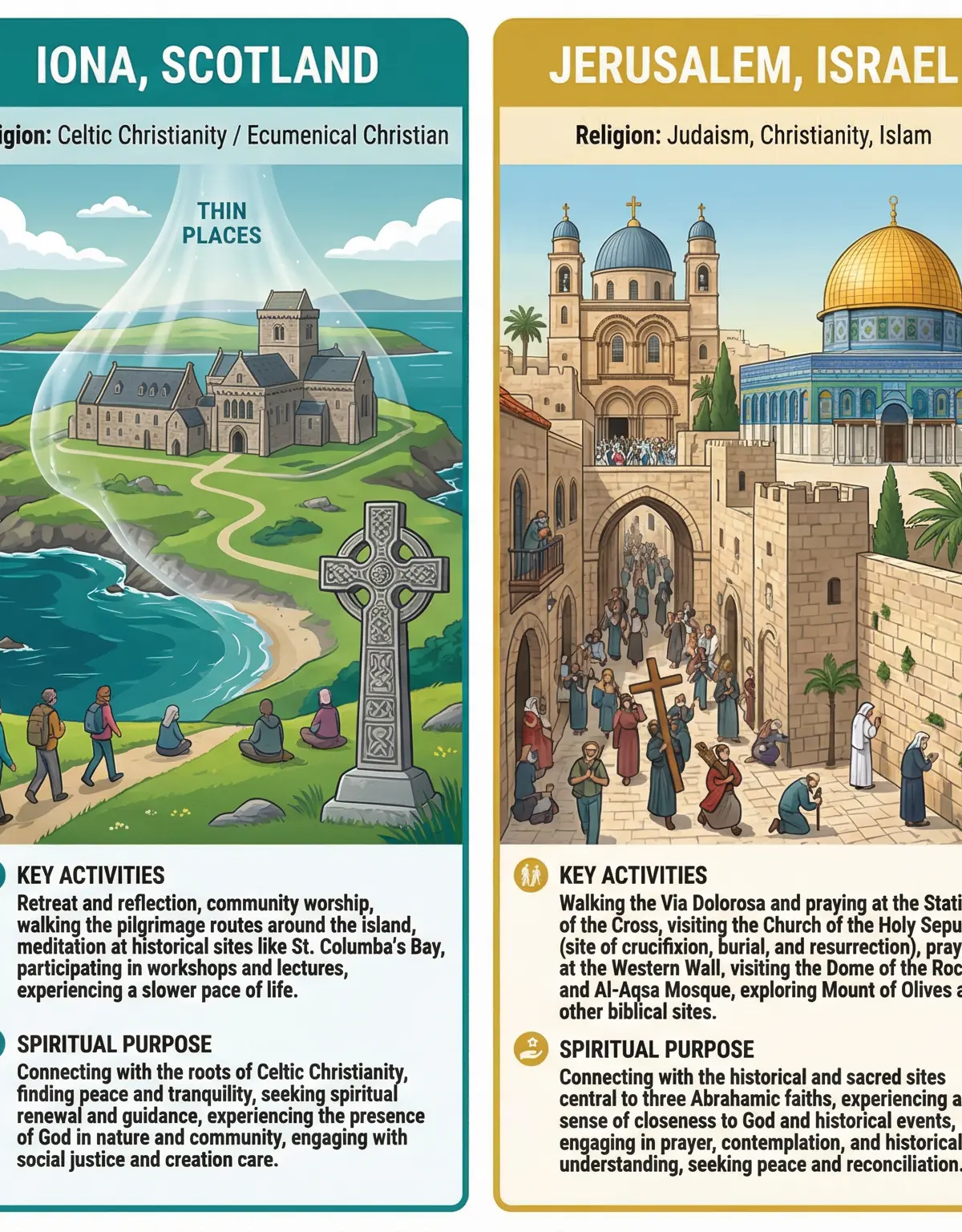
What happened: Founded by St. Columba in 563 CE, Iona became a major centre of Celtic Christianity. It was revived in 1938 by George MacLeod, who established the Iona Community, an ecumenical group dedicated to peace and social justice.
Why it matters: Iona represents a different form of Christian pilgrimage, focused on community, reflection, and experiencing a 'thin place'—where the veil between the divine and human worlds is considered especially thin. It is a key example of ecumenism in practice.
Specific Knowledge: Activities include reflective walks, community worship, and engaging with the island's natural beauty. It is not a site of miraculous healing like Lourdes, but one of spiritual renewal and connection to creation.
Jerusalem (Christianity, Judaism, Islam)
What happened: The central city of the Christian faith, where Jesus was crucified, died, and was resurrected. It is a focal point for all three Abrahamic faiths.
Why it matters: For Christians, pilgrimage to Jerusalem is an act of walking in the footsteps of Jesus. It makes the Gospel narratives tangible. Walking the Via Dolorosa (the 'Way of Suffering') is a key activity, allowing pilgrims to physically connect with Christ's passion. This demonstrates the link between physical action and spiritual understanding, a key concept for AO2 marks.
Specific Knowledge: Key sites include the Church of the Holy Sepulchre (site of crucifixion and resurrection) and the Stations of the Cross along the Via Dolorosa. Candidates should be able to explain how these actions deepen a pilgrim's faith.
Hajj - Mecca (Islam)
What happened: Hajj is the annual Islamic pilgrimage to Mecca, Saudi Arabia, the holiest city for Muslims. It is a mandatory religious duty for all adult Muslims who are physically and financially capable of undertaking the journey.
Why it matters: Hajj is one of the Five Pillars of Islam, making it fundamentally different from Christian pilgrimage. It is an act of obedience to a direct command in the Qur'an (Surah 3:97). It represents unity (Ummah), equality, and spiritual rebirth. Examiners expect precise knowledge of the rituals.
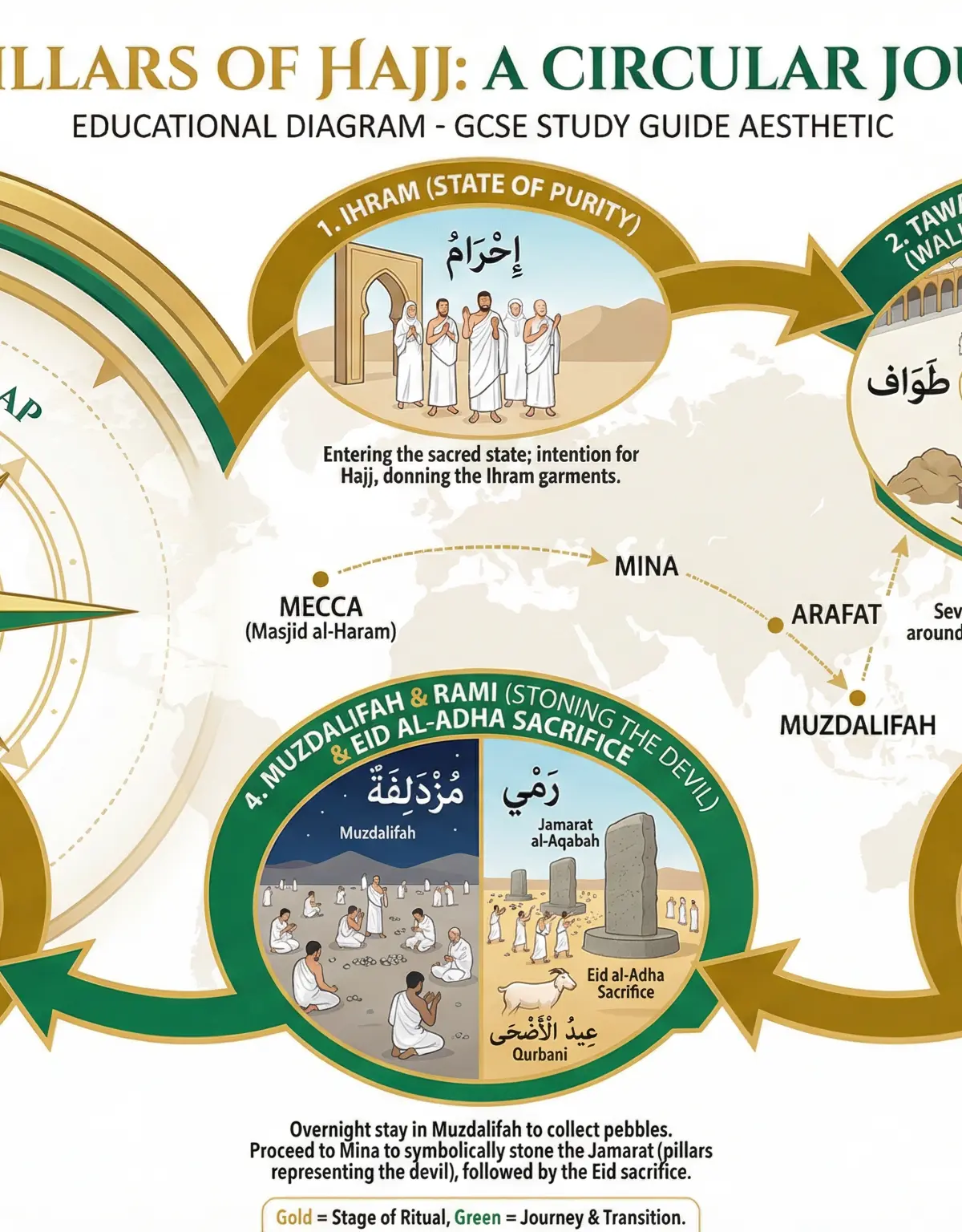
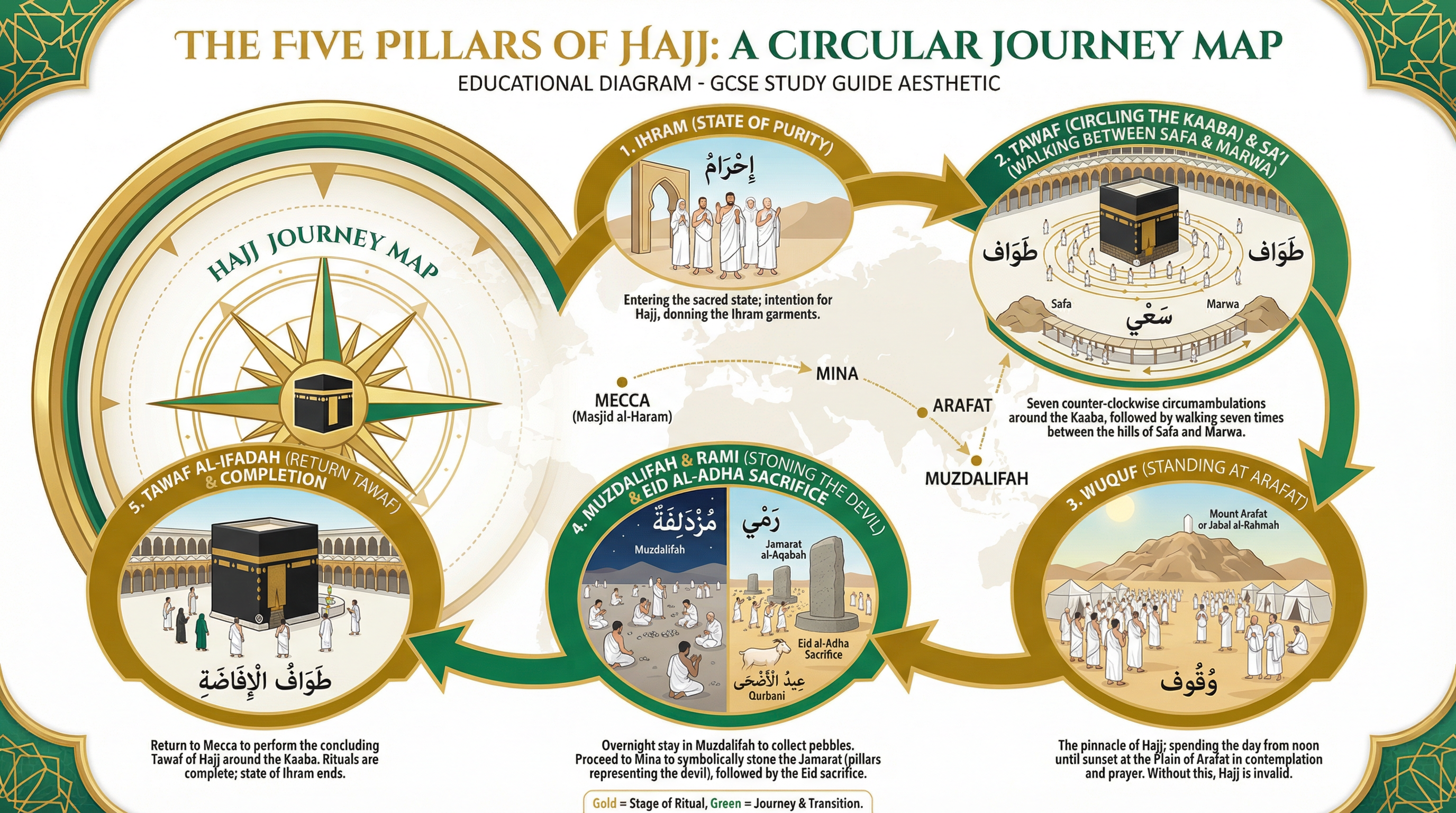
Specific Knowledge: Use Arabic terms for AO1 precision: Ihram (state of purity, symbolised by white garments), Tawaf (circling the Kaaba seven times), Sa'i (walking between the hills of Safa and Marwa), Wuquf (the stand at Mount Arafat, the climax of Hajj), and Rami (the symbolic stoning of the devil at Mina). A correctly performed Hajj is believed to cleanse a pilgrim of all past sins.
Second-Order Concepts
Divergence & Significance
The key conceptual skill here is understanding the divergence between Christian and Islamic pilgrimage. Christian pilgrimage is voluntary and focuses on spiritual enrichment, healing, or connection to saints/history. Islamic pilgrimage (Hajj) is obligatory (a Pillar of Faith) and is a foundational act of worship and submission to God, with a defined set of rituals that unite the global Muslim community (Ummah). The significance lies in how these practices reinforce core theological beliefs about salvation, duty, and the nature of God in each tradition.
Source Skills
When presented with a source, such as an excerpt from the Catechism or a Hadith, your first step is to identify its origin and purpose. A quote from the Catechism on pilgrimage will present a Catholic viewpoint, emphasizing its role in the journey of faith. A Hadith describing the rewards of Hajj provides insight into the motivation for Muslims. For AO2, you must evaluate the source's utility. For example, a personal account of a pilgrim at Lourdes is useful for understanding the lived experience of faith (AO1), but it cannot be used to argue that pilgrimage is a universal Christian duty (AO2). Always consider what the source tells you and what it doesn't tell you.
Podcast Episode
For a deeper audio dive into this topic, listen to our 10-minute exam-focused podcast. We cover the core concepts, exam tips, and a quick-fire quiz to test your recall.

Visual Resources
2 diagrams and illustrations
Interactive Diagrams
1 interactive diagram to visualise key concepts
Conceptual Flow Outline
Flowchart showing the distinction between Christian and Islamic pilgrimage routes and purposes.
Worked Examples
3 worked examples — open one to explore the question and available guidance.
Practice Questions
Test your understanding — click to reveal model answers
Describe the key features of pilgrimage to Iona. (5 marks)
Hint: Think about what makes Iona different from Lourdes. Focus on community and reflection.
Explain why Jerusalem is an important site of pilgrimage for Christians. (8 marks)
Hint: Connect the physical places in Jerusalem to the key events of Jesus' life and death.
Explain two contrasting ways in which pilgrimage is understood. (4 marks)
Hint: Think about the difference between obligation and choice.
Explain why the rituals of Hajj are important for a Muslim. (12 marks)
Hint: Go beyond describing the rituals. For each one, explain what it *means* and what effect it has on the believer.
'A physical journey is not necessary to get closer to God.' Evaluate this statement. (15 marks)
Hint: Use the FARM structure. Argue FOR the statement (e.g., God is omnipresent, sola fide) and AGAINST it (e.g., pilgrimage strengthens faith, follows prophets' example).