OCR · GCSE · Religious Studies
Science and Religion
This study guide critically examines the dynamic relationship between science and religion for OCR GCSE Religious Studies. It unpacks the core debates around creation, evolution, and environmental ethics, equipping students to analyse complex arguments and secure top marks.
- 7 min read
- 3 worked examples
- 4 practice questions
- 7 key terms
Study Notes
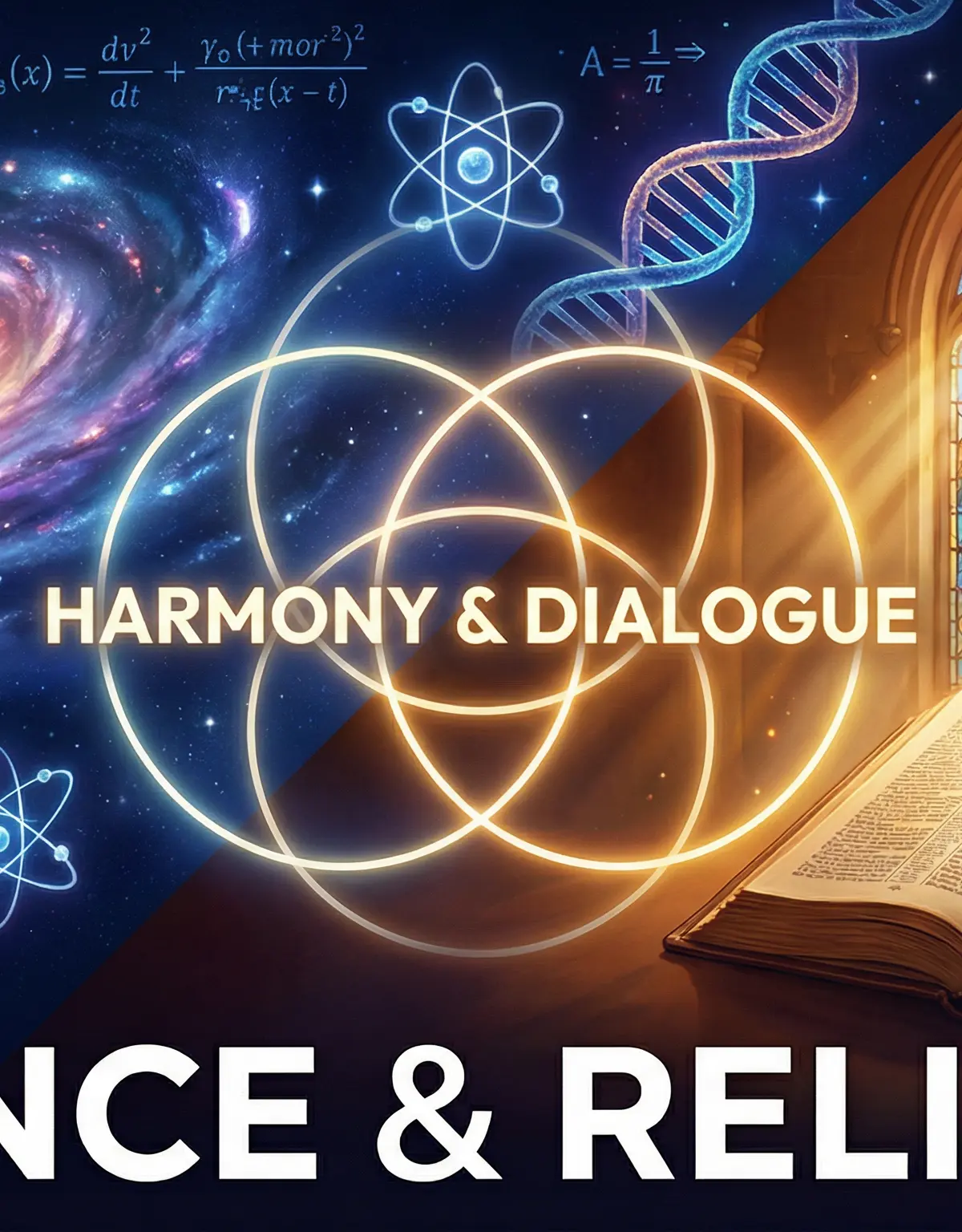
Overview
This topic, from OCR J625 (Component 02, Section 3), explores the dialogue between scientific and religious truths. Examiners expect candidates to move beyond a simplistic 'conflict' narrative and analyse the nuanced ways in which Christianity has responded to scientific discoveries like the Big Bang and Evolution. A key focus is the interpretation of Genesis and its implications for humanity's role as either ruler or caretaker of the planet. Credit is awarded for demonstrating an understanding of different Christian perspectives (e.g., Literal vs. Liberal) and philosophical models of compatibility, such as Polkinghorne's Integration model or Gould's NOMA. The goal is not to decide who is 'right', but to critically evaluate the strengths and weaknesses of different viewpoints, supported by specific sources of wisdom and authority.

Key Concepts & Debates
The Big Bang vs. Genesis
What is the Big Bang?: The leading cosmological theory for the origin of the universe. It states that approximately 13.8 billion years ago, all matter and energy burst forth from a single, infinitely dense point (a singularity) and has been expanding ever since. Evidence includes the red-shift of distant galaxies and cosmic microwave background radiation.
Christian Responses:
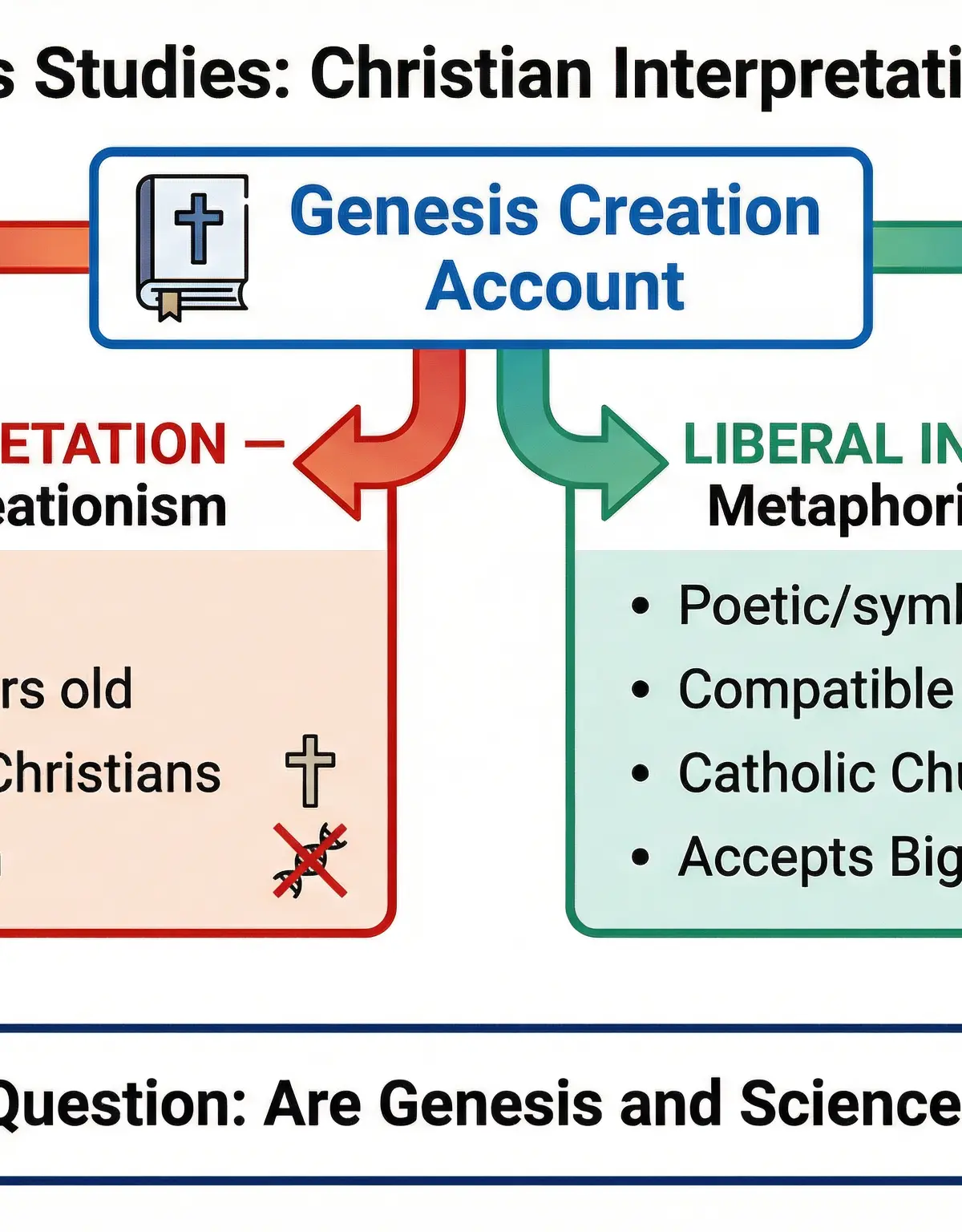
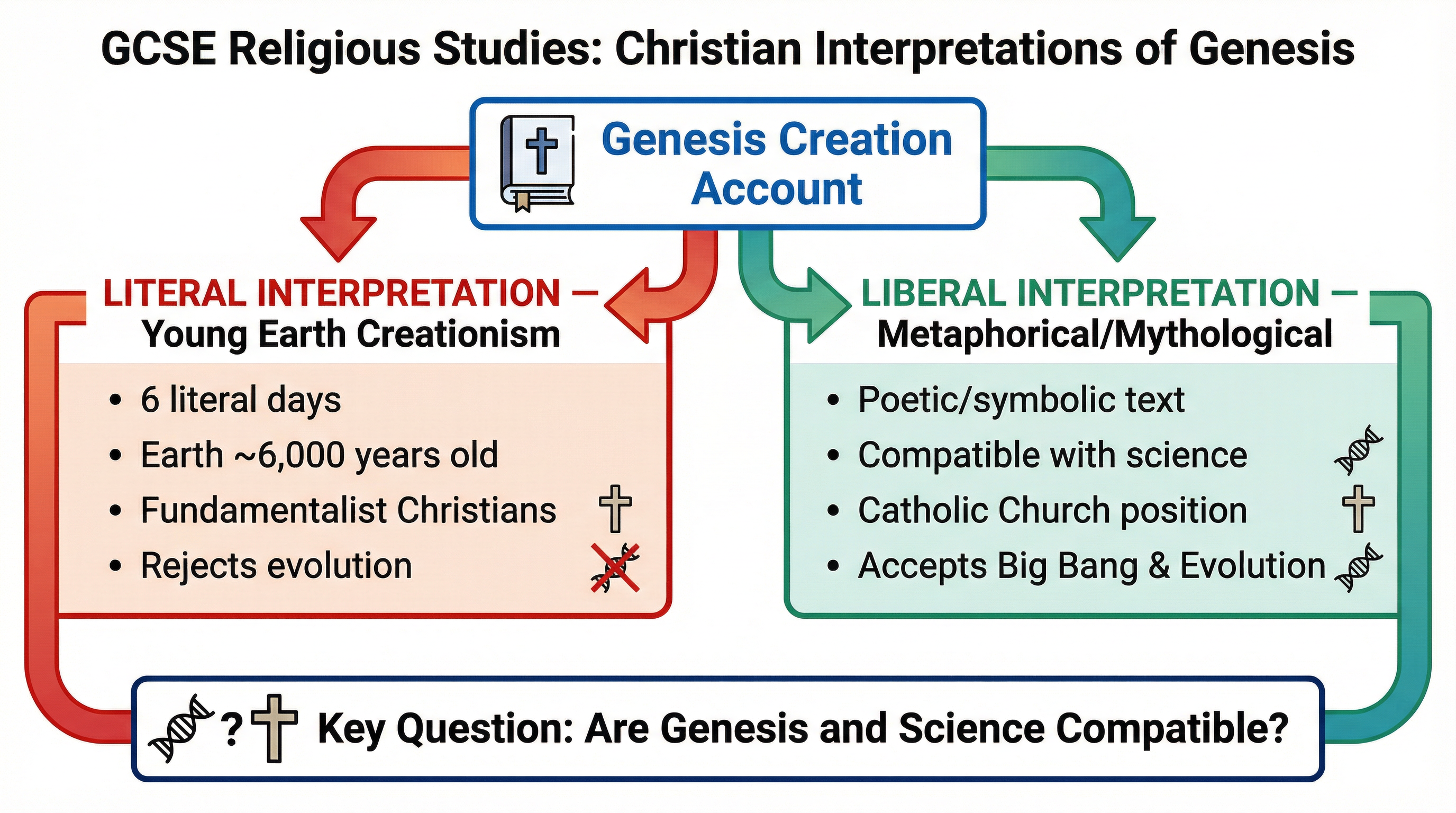
- Literal/Young Earth Creationist View: Rejects the Big Bang as it contradicts the six-day creation account in Genesis. For these believers, the Bible is the inerrant word of God, and scientific theories that challenge it must be false.
- Liberal/Metaphorical View: Accepts the Big Bang as a valid scientific explanation of how the universe began. They interpret the Genesis story as a poetic or mythological text that reveals theological truths (e.g., God is the creator) rather than scientific facts. The Catholic Church, for instance, officially accepts the Big Bang.
Why it matters: This is a core tension. Candidates must be able to explain both the scientific theory and the different Christian interpretations without misrepresenting either.
Evolution vs. Genesis
What is Evolution?: Charles Darwin's theory of natural selection, which explains how species change and develop over time. Random genetic mutations that provide a survival advantage are more likely to be passed on, leading to the gradual evolution of new species from common ancestors.
Christian Responses:
- Literal/Young Earth Creationist View: Rejects evolution, believing God created each species uniquely, as described in Genesis. They see evolution as a direct challenge to the status of humans as a special creation made in God's image.
- Liberal/Metaphorical View: Accepts evolution as the mechanism through which God brought about the diversity of life. This view sees no conflict between the scientific account of biological development and the theological claim that God is the ultimate creator. This is the official position of the Catholic and Anglican churches.
Specific Knowledge: Candidates should know Charles Darwin and his book On the Origin of Species (1859).
Stewardship vs. Dominion
What is the debate?: This centres on the interpretation of Genesis 1:28, where God commands humanity to "fill the earth and subdue it; and have dominion over... every living thing."
- Dominion: This has often been interpreted as giving humans absolute authority to rule over and use the natural world for their own benefit. Critics argue this view has led to environmental exploitation.
- Stewardship: This alternative interpretation argues that humans are caretakers or managers of God's creation. The earth belongs to God (Psalm 24:1: "The earth is the Lord's, and everything in it"), and humans have a responsibility to protect it for future generations. This view promotes environmental conservation and sustainability.
Why it matters: This debate is crucial for questions on environmental ethics. Candidates should be able to apply these concepts to issues like climate change and pollution, citing sources like Pope Francis' encyclical Laudato Si'.
Key Individuals & Models
John Polkinghorne
Role: Physicist and Anglican Priest
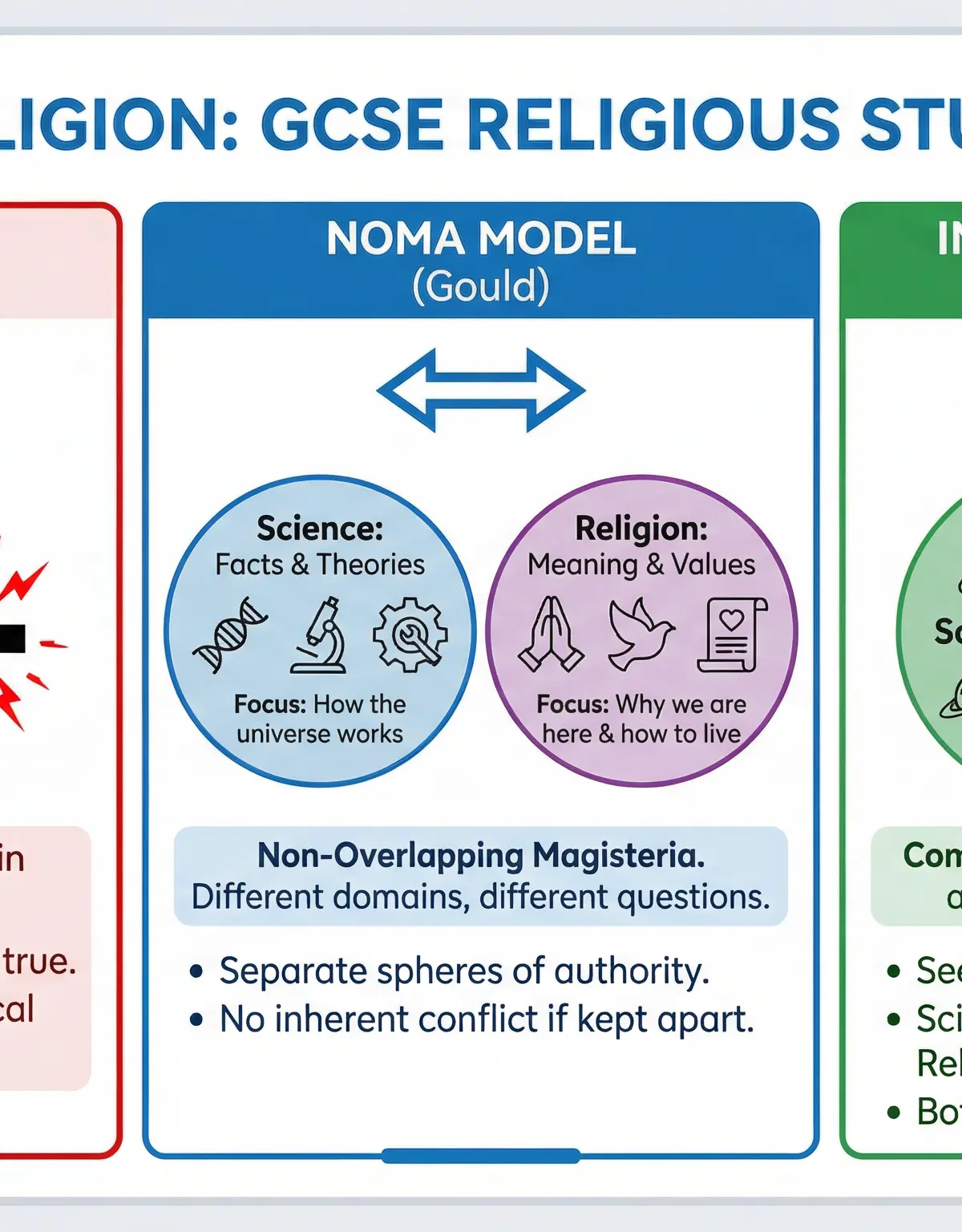
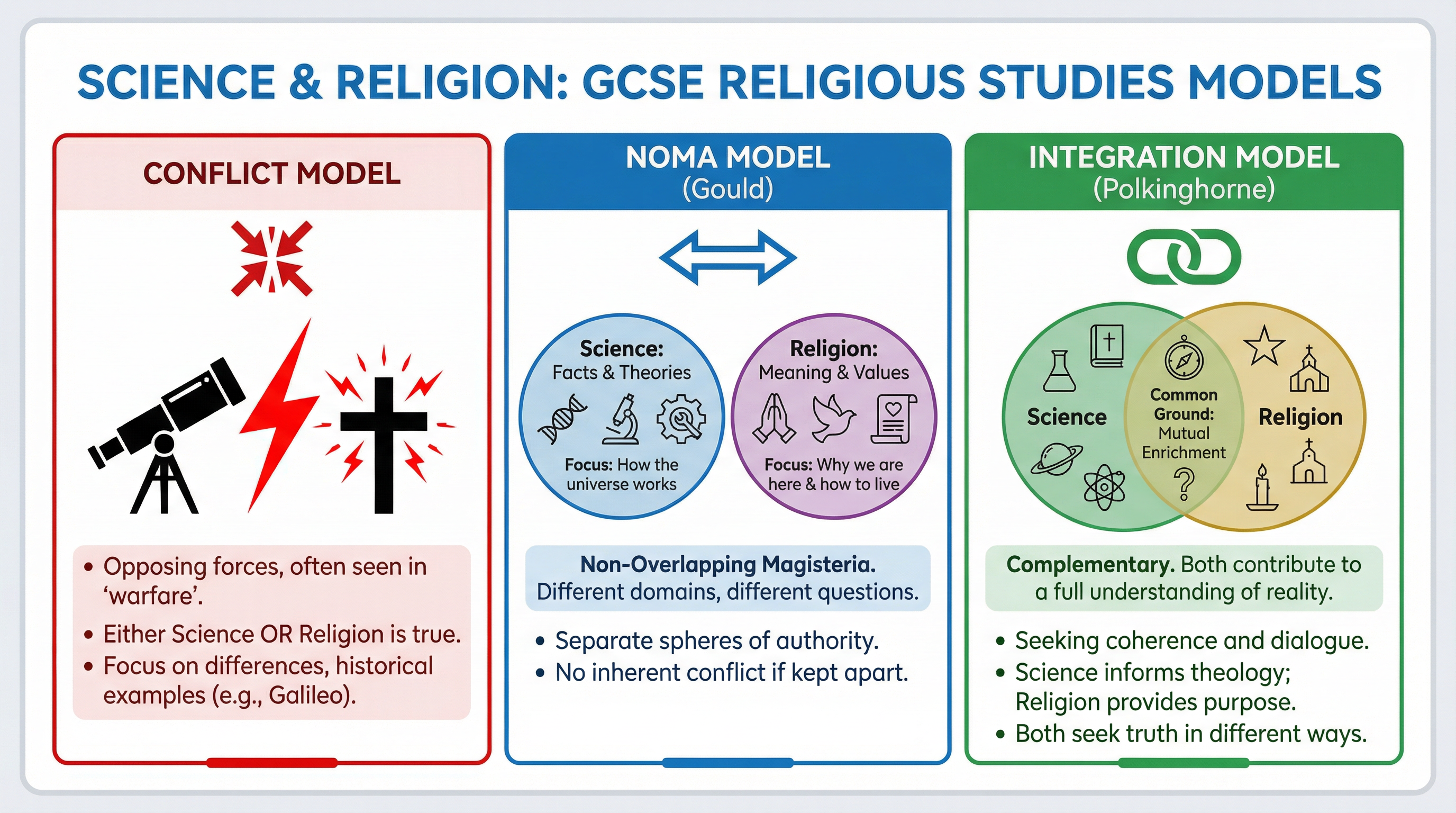
Key Idea: Integration/Dialogue Model. Polkinghorne argued that science and religion are not enemies but partners in the search for truth. Science asks 'how' questions, while religion asks 'why' questions. He saw evidence of a divine creator in the 'fine-tuning' of the universe's physical laws (the Anthropic Principle).
Impact: A leading voice for the view that science and faith can enrich each other.
Stephen Jay Gould
Role: Evolutionary Biologist
Key Idea: NOMA (Non-Overlapping Magisteria). Gould proposed that science and religion have two distinct domains of authority. Science deals with the empirical realm (facts and theories), while religion deals with the realm of ultimate meaning and moral value. As they don't overlap, they cannot conflict.
Impact: A popular model for reconciling science and faith by keeping them separate.
Richard Dawkins
Role: Evolutionary Biologist and Atheist author
Key Idea: Conflict Model. Dawkins argues that science and religion are fundamentally incompatible. He views religious faith as a delusion that is actively disproven by scientific evidence, particularly evolution. He is a key figure in the 'New Atheist' movement.
Impact: A prominent and vocal critic of religion, representing the 'warfare' view of the relationship.
Second-Order Concepts
Causation
- Long-term cause of conflict: The Enlightenment's emphasis on reason and empirical evidence created a new authority that could challenge traditional religious claims.
- Short-term trigger: Darwin's On the Origin of Species was a major trigger for the modern conflict, as it directly challenged the biblical account of human origins.
Change & Continuity
- Change: The official position of many mainstream Christian denominations (like the Catholic Church) has changed from suspicion or hostility towards science to acceptance and dialogue.
- Continuity: The literalist, fundamentalist rejection of evolution has remained a consistent position for some Christian groups since the 19th century.
Significance
- The science and religion debate is significant because it forces us to consider the nature of truth, the limits of human knowledge, and our place in the universe. For the exam, its significance lies in testing a candidate's ability to handle diverse and conflicting viewpoints with analytical precision.
Worked Examples
3 worked examples — open one to explore the question and available guidance.
Practice Questions
Test your understanding — click to reveal model answers
Outline three Christian beliefs about the origin of the universe. (3 marks)
Hint: Think about literal, metaphorical, and the role of God.
Explain two reasons why some Christians reject the theory of evolution. (4 marks)
Hint: Focus on the literal interpretation of scripture and the status of humans.
Explain two ways in which religion and science can be seen as compatible. (5 marks)
Hint: Think about NOMA and the Integration models.
"'Dominion' is a more important concept than 'Stewardship' for Christians today. Discuss. (15 marks)"
Hint: Use the FARM structure. Consider historical interpretations vs. modern environmental crises. Use Laudato Si'.