WJEC · GCSE · Religious Studies
Applying Religious Teachings to Contemporary Issues
This study guide for WJEC GCSE Religious Studies equips students to master the skill of applying religious teachings to contemporary ethical issues. It focuses on building the analytical and evaluative skills needed to deconstruct complex dilemmas, engage with diverse viewpoints, and construct theologically grounded arguments, which is essential for achieving top marks.
- 5 min read
- 3 worked examples
- 5 practice questions
- 6 key terms
Study Notes
Overview
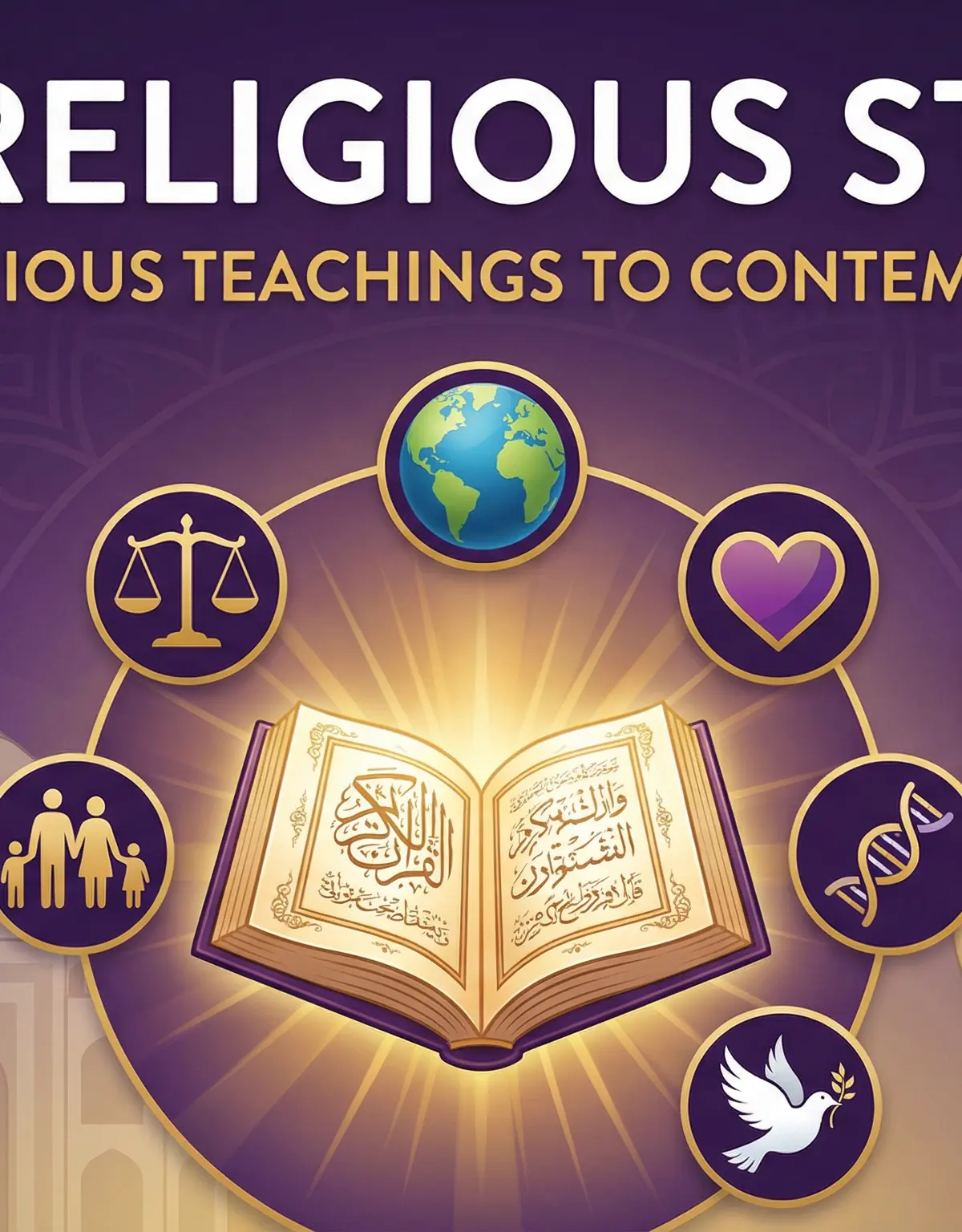
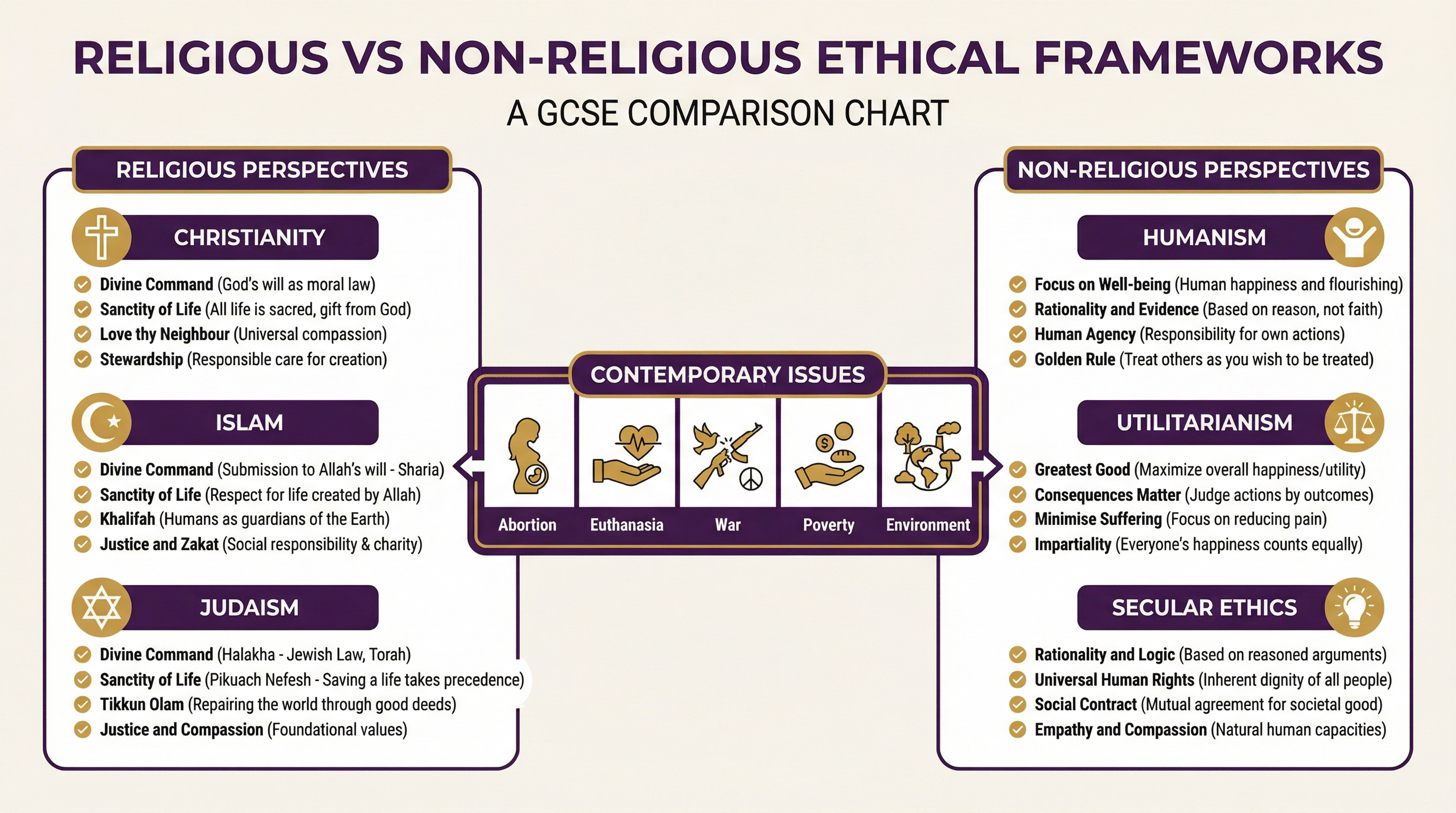
This section of the WJEC GCSE Religious Studies course is not about a single historical event, but a crucial skill: the rigorous application of sacred texts and religious concepts to modern ethical dilemmas. It covers four key themes: Relationships, Life and Death, Good and Evil, and Human Rights. Examiners expect candidates to demonstrate a sophisticated understanding of how specific theological doctrines, such as the Sanctity of Life, Stewardship, and Free Will, dictate moral responses to contemporary issues. A key requirement is to distinguish between divergent views within traditions (e.g., Catholic vs. Liberal Protestant stances on contraception) and to contrast these with non-religious perspectives like Humanism or Utilitarianism. Success in this area hinges on moving beyond simple statements of belief to a nuanced analysis of how and why religious followers arrive at their ethical conclusions. Marks are awarded for the precise use of religious terminology, accurate citation of sources, and the ability to construct a well-supported evaluation.

Key Concepts & Themes
Relationships
What it covers: The nature and purpose of marriage, sexual relationships, family, and divorce.
Why it matters: This theme tests a candidate's ability to apply religious teachings on love, commitment, and community to personal ethics. Examiners look for an understanding of how concepts like the sanctity of marriage in Christianity or the role of family in Islam inform views on issues like cohabitation, homosexuality, and divorce.
Specific Knowledge: Candidates must know the different views on same-sex marriage within Christianity (e.g., the Church of England's current position vs. more liberal denominations), the significance of the nikah (marriage contract) in Islam, and the Jewish concept of marriage as a sacred covenant.
Life and Death
What it covers: The value of human life, abortion, euthanasia, and beliefs about life after death.
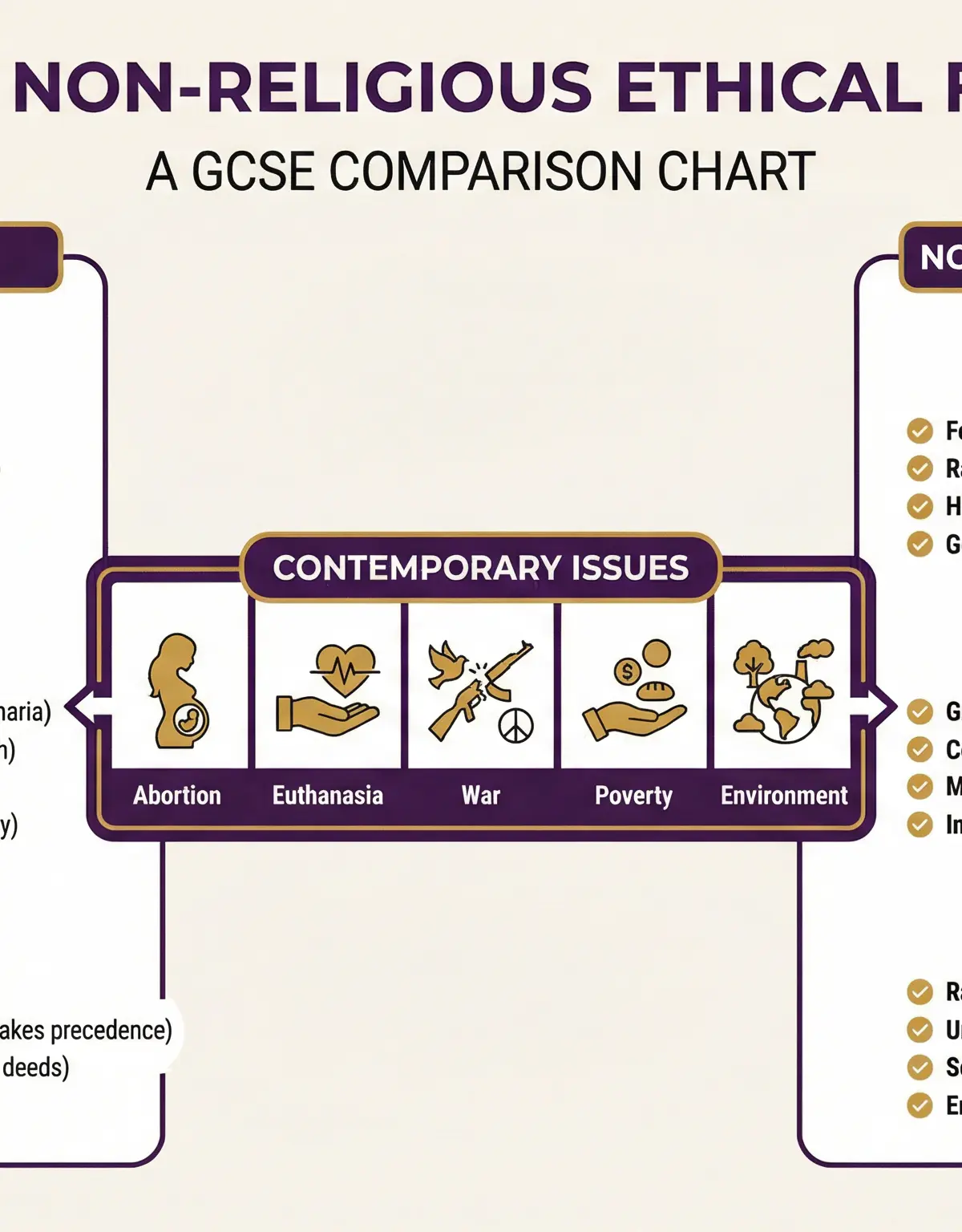
Why it matters: This is a core theme for testing the application of fundamental doctrines. The concept of the Sanctity of Life is central. Candidates must be able to explain how this principle, rooted in the belief that life is a sacred gift from God (Imago Dei in Christianity), leads to specific stances on abortion and euthanasia. Contrasting this with secular arguments based on quality of life and personal autonomy is crucial for high marks.
Specific Knowledge: Key teachings include 'Thou shalt not kill' (Exodus 20:13), the Roman Catholic Church's absolute opposition to abortion, the Islamic view on the ensoulment of the foetus, and the non-religious arguments of thinkers like Peter Singer (Utilitarianism) and the British Humanist Association.
Good and Evil
What it covers: The origins of good and evil, the problem of evil and suffering, and responses to crime and punishment.
Why it matters: This theme delves into theological philosophy. Candidates need to grapple with the 'inconsistent triad' (the idea that a God who is all-loving, all-powerful, and all-knowing seems incompatible with the existence of evil) and explain religious responses, such as the Augustinian and Irenaean theodicies. The application extends to justice, with candidates needing to apply concepts like forgiveness and retribution to the purpose of punishment.
Specific Knowledge: The story of Job, the concept of Original Sin, the Augustinian theodicy (evil as a privation of good), the Irenaean theodicy (evil as a test for soul-making), and different aims of punishment (retribution, deterrence, reformation, protection).
Human Rights
What it covers: The status and rights of women, freedom of religion, prejudice and discrimination, and wealth and poverty.
Why it matters: This theme requires candidates to connect religious teachings to social justice. They must apply concepts like agape (unconditional love), Khalifah (stewardship), and tzedakah (charitable giving in Judaism) to issues of equality and poverty. It is vital to acknowledge both the teachings that support human rights and those that have been used to justify discrimination.
Specific Knowledge: The Parable of the Good Samaritan (Luke 10:25-37) as a teaching on compassion, Martin Luther King Jr.'s use of Christian principles to fight racial injustice, Islamic teachings on Zakat (compulsory charity), and the work of religious charities like Christian Aid and Islamic Relief.
Visual Resources
2 diagrams and illustrations
Interactive Diagrams
1 interactive diagram to visualise key concepts
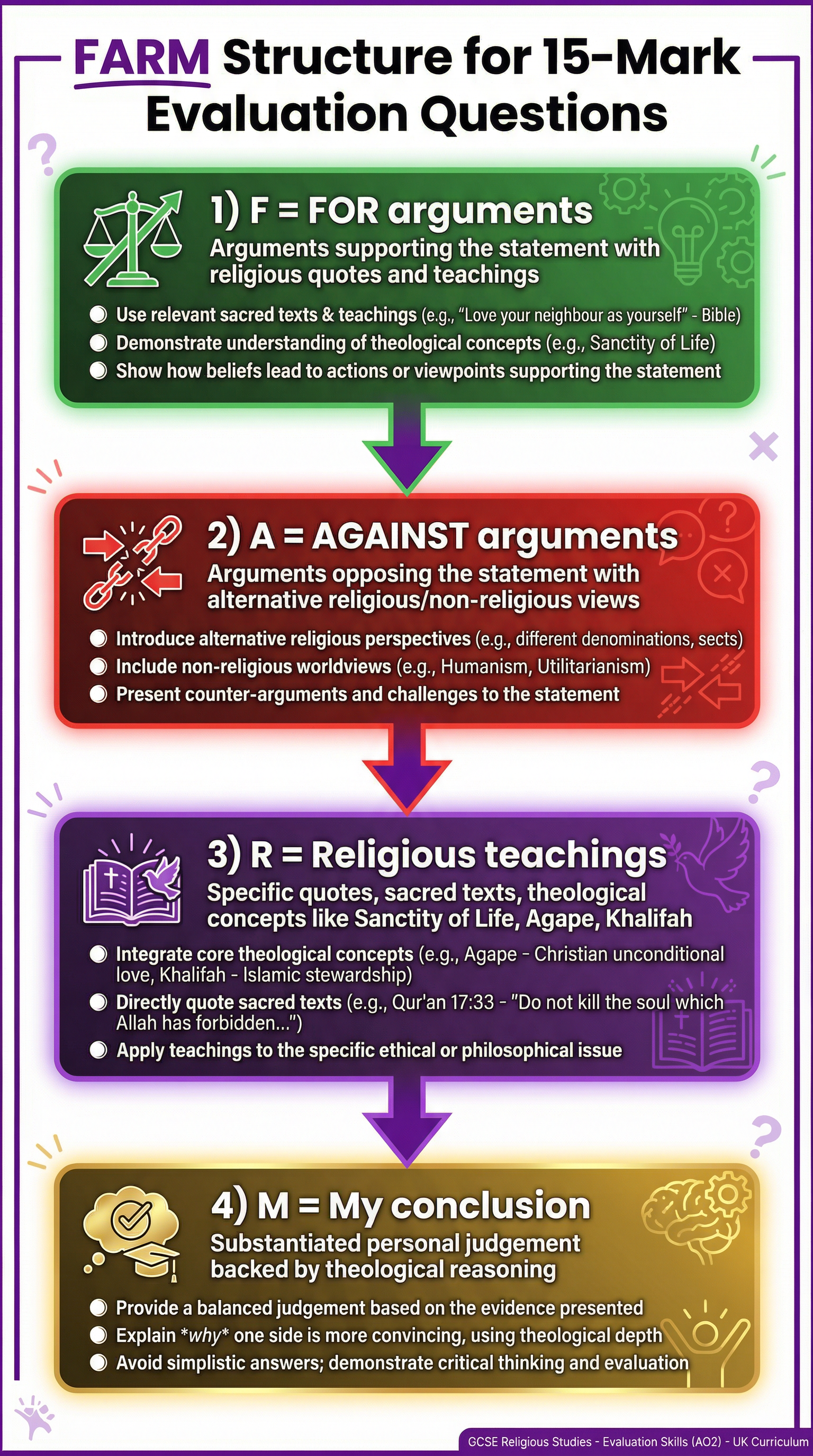
Conceptual Flow Outline
Flowchart applying the FARM structure to a 15-mark question on euthanasia.
Worked Examples
3 worked examples — open one to explore the question and available guidance.
Practice Questions
Test your understanding — click to reveal model answers
'War is never the right way to solve problems.' Discuss this statement showing that you have considered more than one point of view. (15 marks)
Hint: Consider pacifist views versus the Just War theory. Don't forget to include a non-religious perspective.
Explain two religious beliefs about prejudice and discrimination. (8 marks)
Hint: Think of a teaching that promotes equality and a story that demonstrates it.
Describe Muslim teachings about family life. (4 marks)
Hint: Focus on the roles and responsibilities within an Islamic family.
'Capital punishment is a valid form of punishment.' Discuss. (15 marks)
Hint: Contrast 'an eye for an eye' with teachings on forgiveness and the Sanctity of Life.
Explain two religious beliefs about divorce. (8 marks)
Hint: Contrast the Catholic view with the Protestant or Islamic view.