WJEC · GCSE · Religious Studies
Explaining Beliefs, Teachings, and Practices
This study guide for WJEC GCSE Religious Studies focuses on the core exam skill of explaining beliefs, teachings, and practices. It provides a detailed breakdown of how to connect theological concepts to real-world actions, a crucial skill for earning top marks."
- 5 min read
- 3 worked examples
- 5 practice questions
Study Notes
Overview
This guide focuses on a fundamental skill for the WJEC GCSE Religious Studies exam: explaining beliefs, teachings, and practices. Examiners consistently report that candidates who can clearly connect a theological idea (like the nature of God) to a practical action (like a form of worship or an ethical decision) achieve the highest marks. This unit will equip you with the language, structure, and specific knowledge needed to construct top-level responses. We will explore key concepts such as the nature of God, forms of worship, the role of conscience and scripture, and beliefs about the afterlife, always linking them back to how they are demonstrated in the lives of believers. You will learn how to use Sources of Wisdom and Authority effectively and avoid common pitfalls that limit marks.
Key Beliefs & Teachings
The Nature of God: Contrasting Views
What you need to know: A core topic is comparing the Christian and Islamic understanding of God. Candidates must use precise theological language.
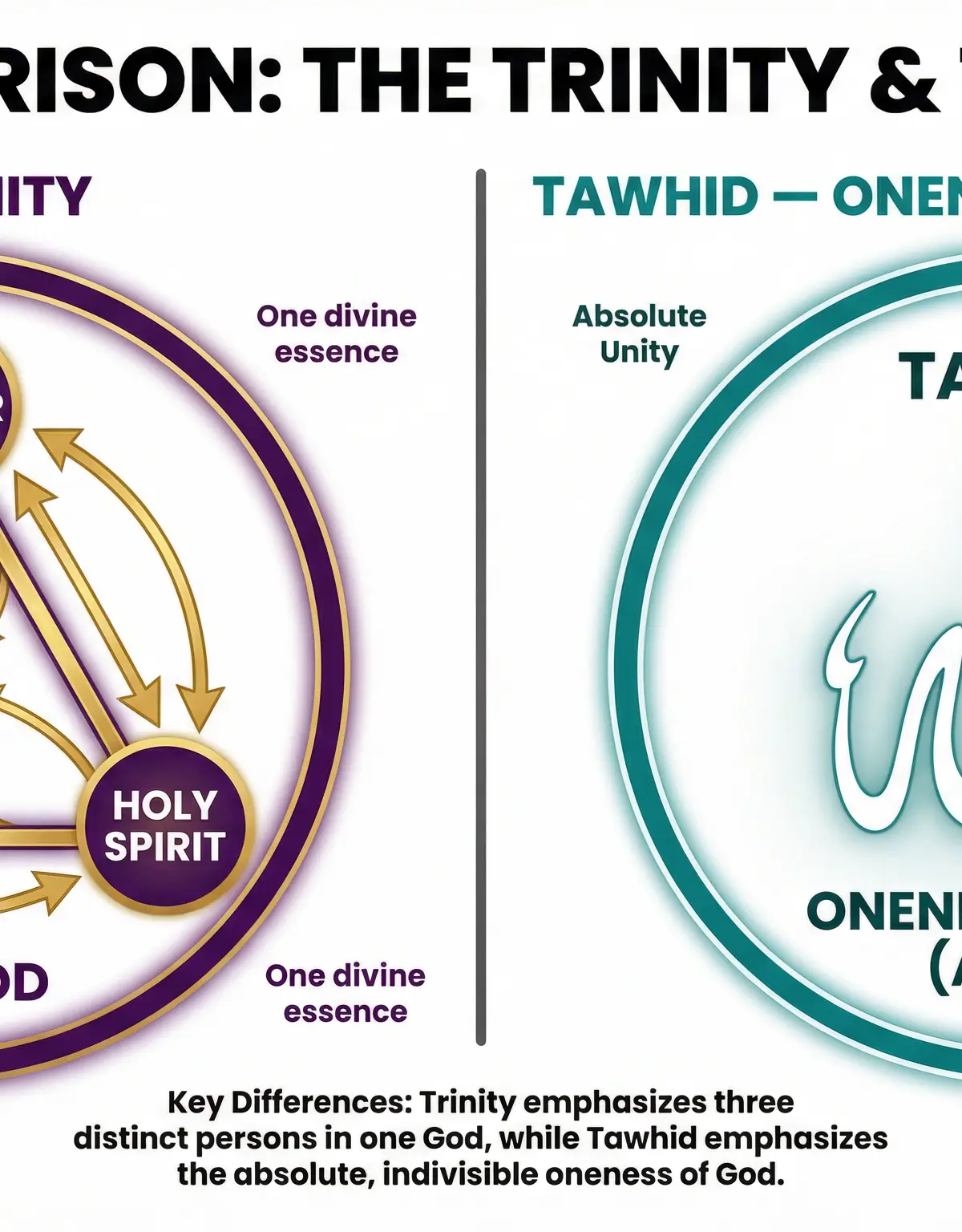
Christianity: The TrinityChristians believe in one God who exists as three distinct persons: God the Father, God the Son (Jesus Christ), and God the Holy Spirit. This is known as the Trinity. It is crucial to state that this is NOT a belief in three gods. The Nicene Creed, a statement of faith from 325 CE, is a key Source of Wisdom here, affirming belief in one God. Marks are awarded for explaining this complex idea clearly.
Islam: TawhidMuslims believe in the absolute and indivisible oneness of God (Allah). This is called Tawhid. The Qur'an, in Surah 112 (Al-Ikhlas), states: "Say, ‘He is Allah, the One... He neither begets nor is born, Nor is there to Him any equivalent.’" This is a direct contrast to the Christian idea of the Son of God. The sin of associating partners with God is called 'Shirk' and is the most serious sin in Islam.
Worship: Liturgical vs. Non-Liturgical
What you need to know: You must be able to explain how different forms of worship reflect underlying beliefs.
Liturgical Worship: This is a structured, formal service with set prayers and rituals. The Catholic Mass is a prime example. The belief behind it is that the service follows a tradition established by the apostles and that the rituals, like the Eucharist, were commanded by Jesus ('Do this in remembrance of me').
Non-Liturgical Worship: This is more spontaneous and informal. Quaker meetings, where believers wait in silence to be moved by the Holy Spirit, are a classic example. The belief here is in the 'priesthood of all believers' – the idea that every individual has a direct connection to God without needing a priest as an intermediary.
Authority: Conscience vs. Scripture
What you need to know: This is a key area for evaluation (AO2). How do believers make moral decisions?
Scripture as Ultimate Authority: Many Protestants, particularly Evangelicals, believe in 'Sola Scriptura' (Scripture Alone). The Bible is seen as the inspired word of God and the final authority on all matters. A key quote is 2 Timothy 3:16: "All Scripture is God-breathed and is useful for teaching..."
The Role of Conscience: The Catholic Church teaches that conscience is the 'voice of God' within a person. The theologian Thomas Aquinas argued that a person's primary duty is to follow their conscience. While Scripture is vital, it must be interpreted with reason, tradition, and conscience.
The Afterlife
What you need to know: Be able to compare beliefs across different religions, using specific terminology.
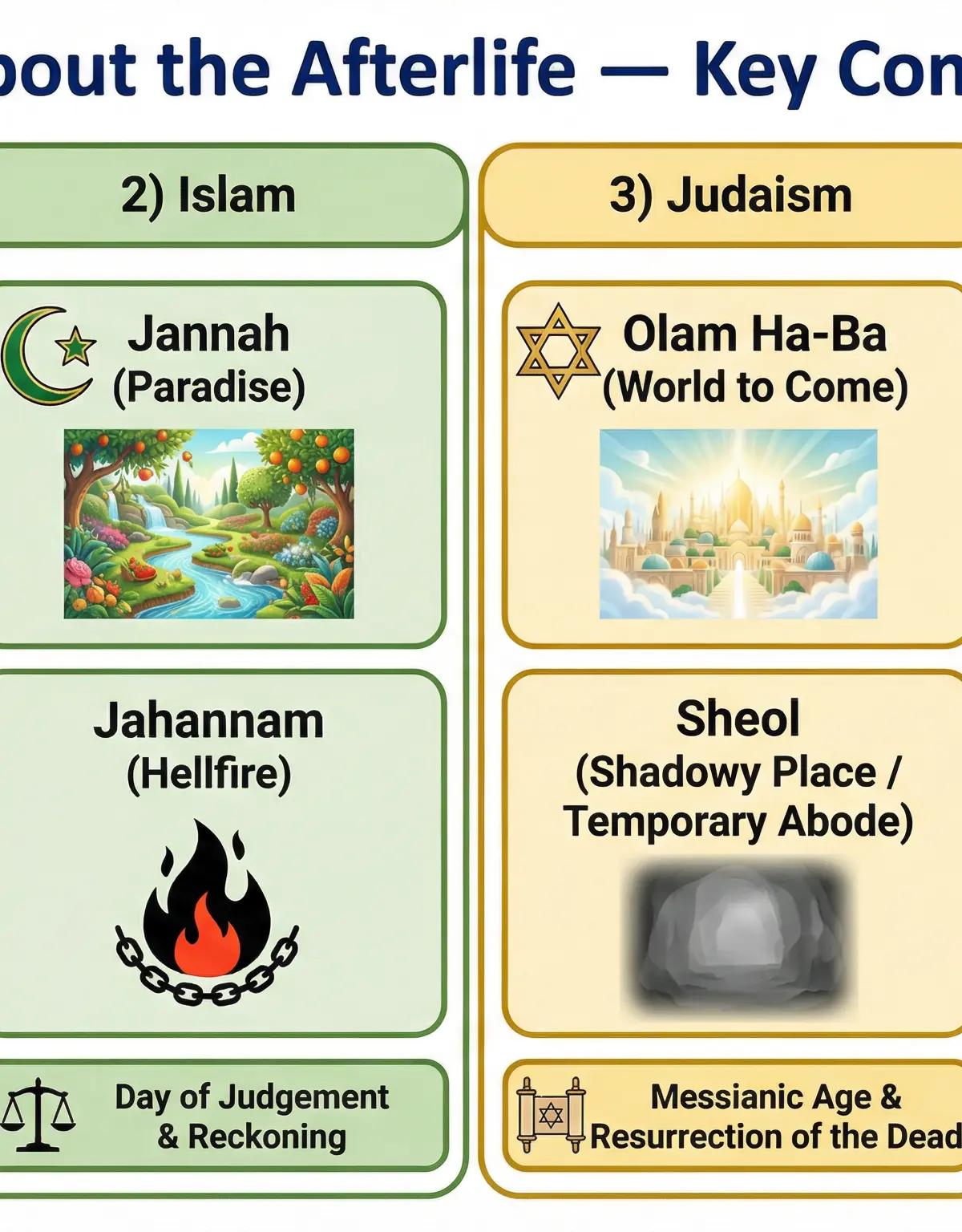
- Christianity: Resurrection of the body at the end of time, followed by judgement leading to Heaven (eternal life with God) or Hell (eternal separation from God). Catholics also believe in Purgatory, a state of purification.
- Islam: The soul enters Barzakh (a waiting state) until Yawm al-Qiyamah (Day of Judgement). Righteous souls go to Jannah (Paradise), while others go to Jahannam (Hell).
- Hinduism/Buddhism: Belief in Samsara (the cycle of reincarnation), driven by Karma. The goal is to achieve Moksha (in Hinduism) or Nirvana (in Buddhism) to escape the cycle.
Exam Skills: The P.E.E. Structure
For any 'Explain' question, the P.E.E. structure is your key to success. It ensures you hit all the assessment objectives.
- P - Point: State the belief clearly and concisely.
- E - Evidence: Back it up with a Source of Wisdom (a quote, paraphrase, or reference to a sacred text or key teaching).
- E - Explanation: Explain how this belief influences a believer's life, actions, or practices.
 "
"
Worked Examples
3 worked examples — open one to explore the question and available guidance.
Practice Questions
Test your understanding — click to reveal model answers
Explain two religious beliefs about life after death. Refer to sacred writings or another source of religious belief and teaching in your answer. (5 marks)
Hint: Choose two different religions and use their specific terminology for the afterlife.
Explain two ways in which the belief in God's omnipotence influences Christians. (4 marks)
Hint: Think about how believing God is all-powerful affects a Christian's actions or feelings.
'Sacred texts are no longer relevant for deciding how to live in the 21st century.' Discuss. (15 marks)
Hint: This is an AO2 question. Argue for and against the statement, using examples, and come to a justified conclusion.
Explain two contrasting religious beliefs about the role of women in worship. (4 marks)
Hint: Think about the difference between the Catholic/Orthodox view and the Church of England/Protestant view.
Explain two ways Muslims demonstrate their belief in Tawhid. (5 marks)
Hint: Think about daily practices and core declarations of faith.