WJEC · GCSE · Religious Studies
Festivals
This study guide provides a comprehensive, exam-focused analysis of key religious festivals for WJEC GCSE Religious Studies. It moves beyond simple descriptions to explore the deep theological significance and diverse practices that secure top marks.
- 6 min read
- 2 worked examples
- 2 practice questions
- 6 key terms
Study Notes
Overview
This unit explores the theological significance, key practices, and diverse expressions of major festivals within Christianity, Judaism, and Islam. For the WJEC GCSE, candidates are expected to move beyond mere description and analyse how these festivals function as core pillars of faith, connecting liturgical actions to foundational beliefs like the Incarnation, Atonement, and Salvation History. Examiners award marks for demonstrating an understanding of the festival's meaning for the individual believer and the wider religious community today. A crucial skill is the ability to contrast practices between different denominations (e.g., Catholic vs. Protestant, Orthodox vs. Reform) and to substantiate all claims with specific knowledge and references to Sources of Wisdom and Authority. This guide is structured to build these analytical skills, ensuring you can meet the demands of AO1 (knowledge and understanding) and AO2 (analysis and evaluation) which are weighted equally at 50% each.

Key Festivals & Theological Concepts
Easter (Christianity)
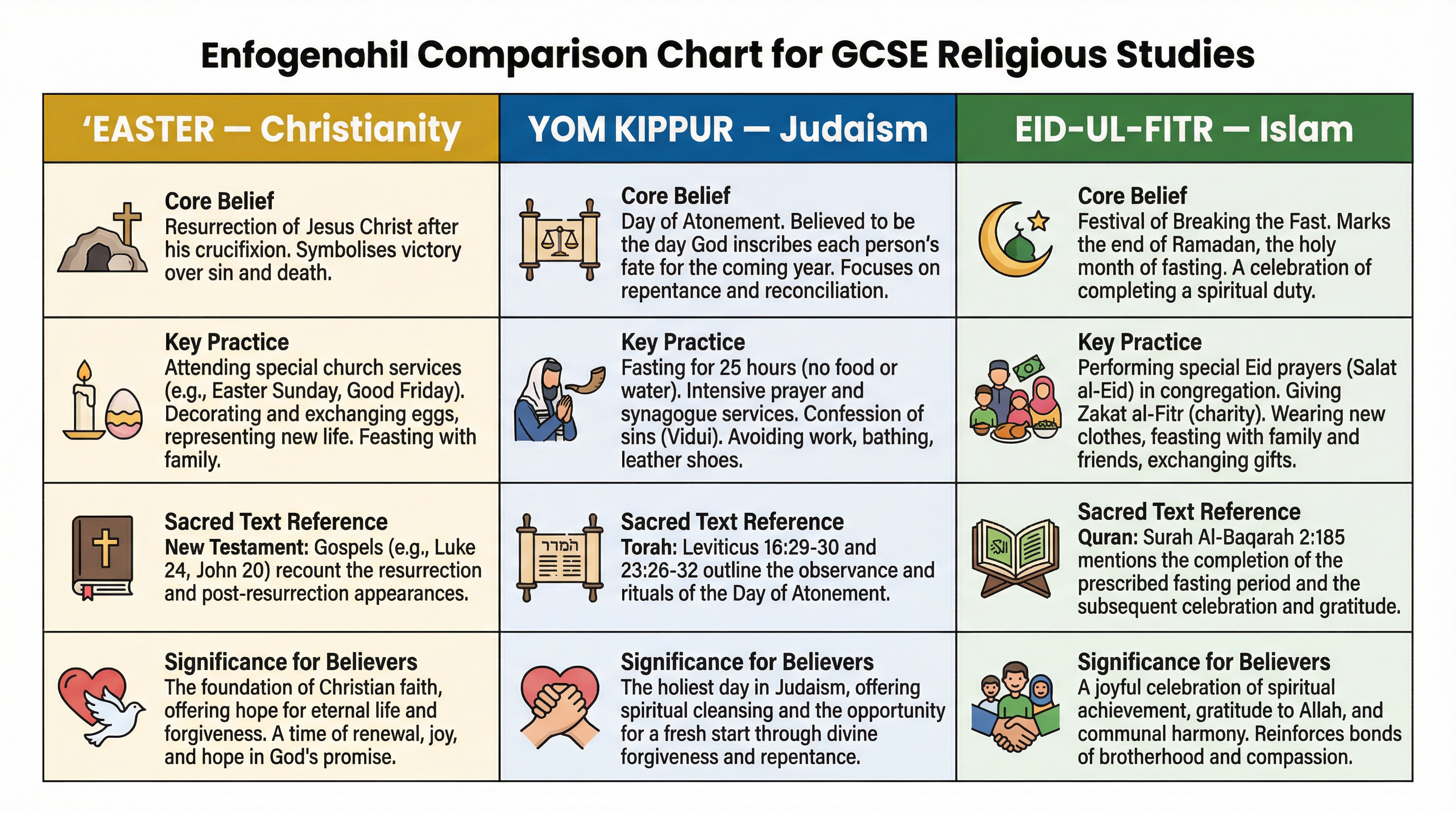
Core Belief: The Resurrection of Jesus Christ, which is the cornerstone of Christian faith. It signifies victory over sin and death and offers believers the hope of eternal life.
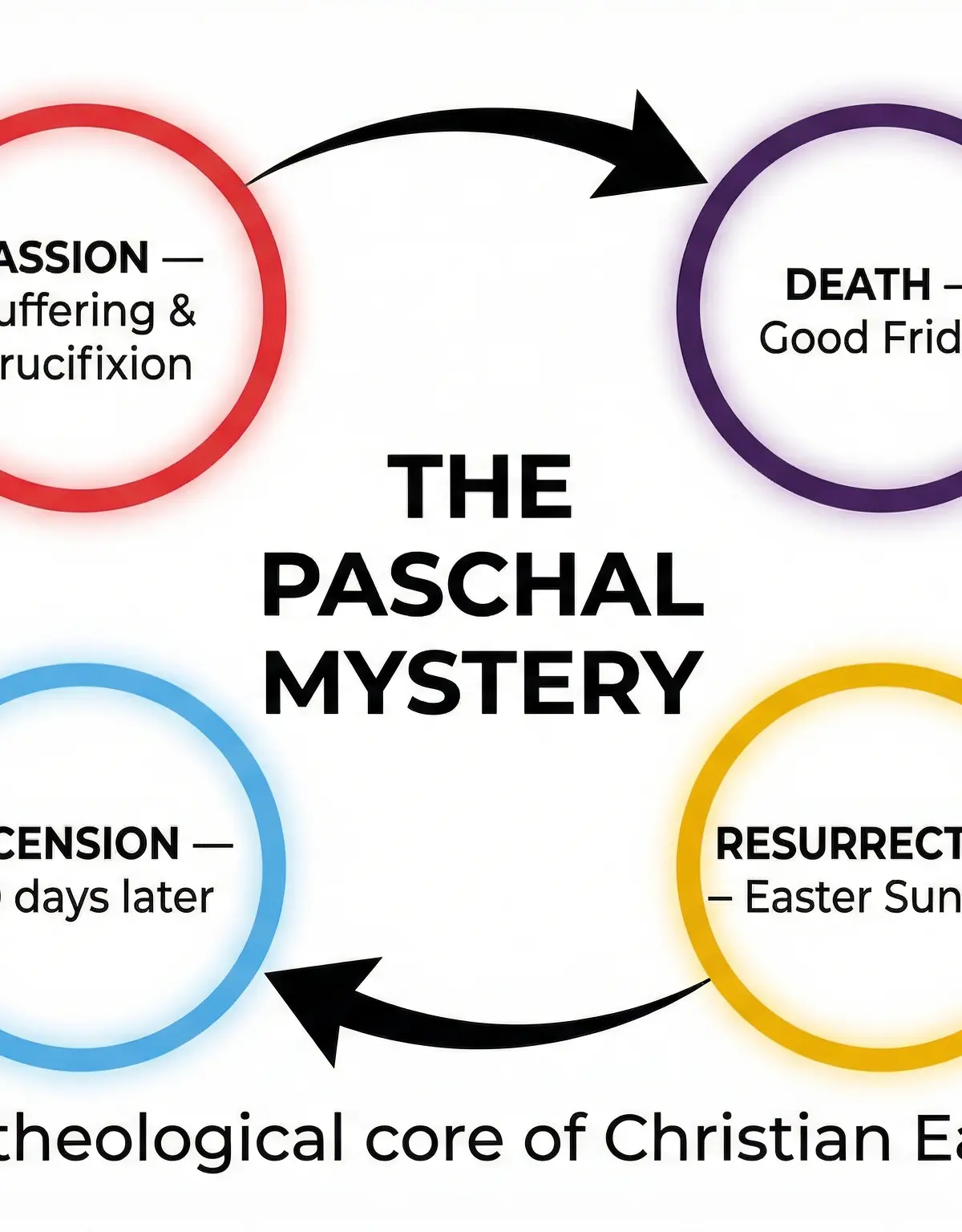
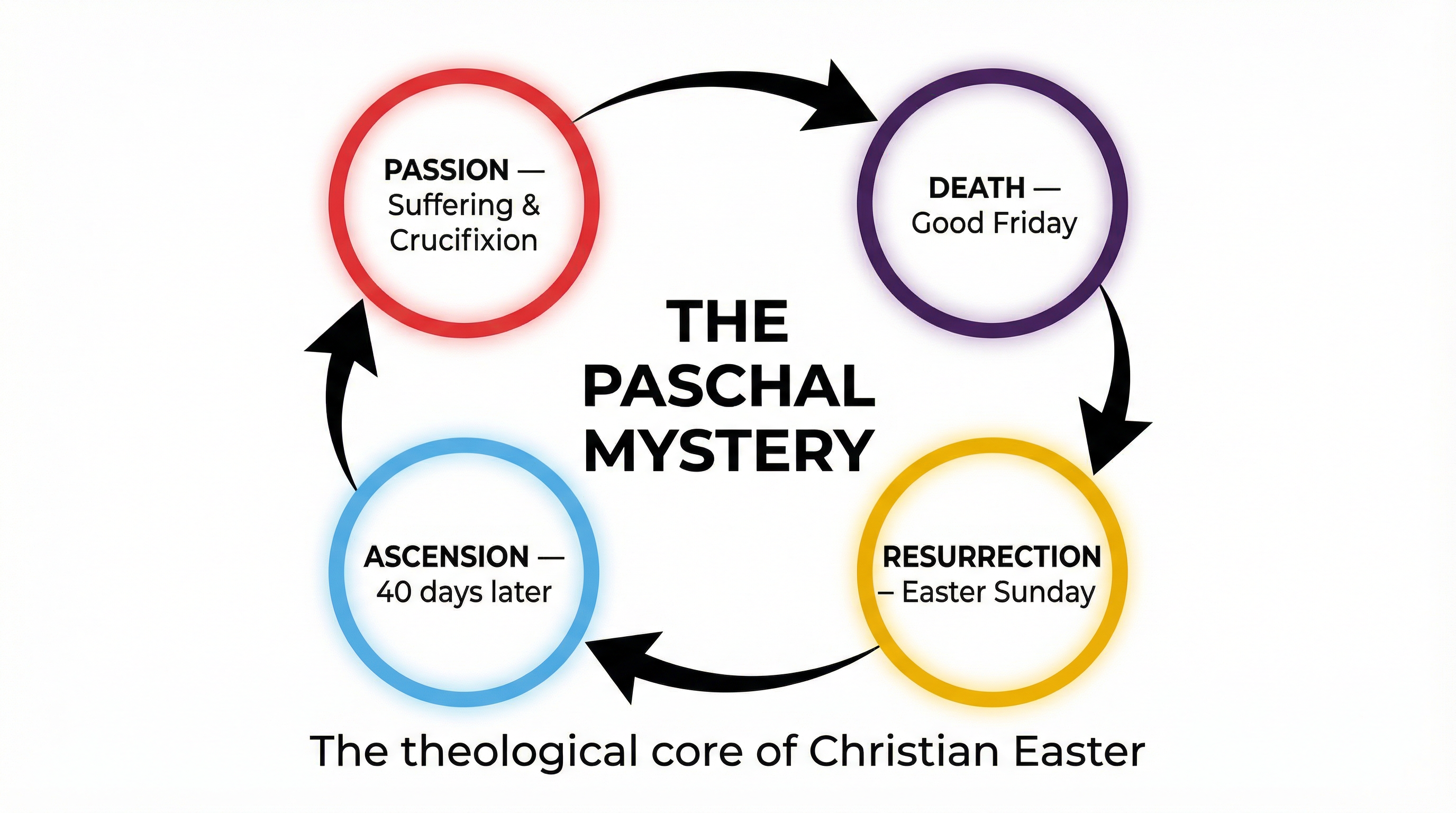
Theological Engine: The Paschal Mystery. This is a critical term for your exam. It refers to the four-stage process of salvation: the Passion (Jesus' suffering), his Death on the cross, his Resurrection on Easter Sunday, and his Ascension into heaven. It is not just a story, but the mechanism through which Christians believe salvation is achieved.
Key Practices & Their Significance:
- The Easter Vigil: The most important service of the year in Catholic and Anglican traditions. It begins in darkness, and the lighting of the Paschal Candle symbolises Christ as the Light of the World (John 1:5), overcoming the darkness of sin. The Liturgy of the Word traces salvation history, showing the Resurrection as the fulfilment of God's plan.
- Eucharist/Holy Communion: This sacrament takes on special significance at Easter, as it directly commemorates the Last Supper and Jesus' sacrifice.
Source of Authority: "And if Christ has not been raised, your faith is futile; you are still in your sins." (1 Corinthians 15:17). This quote is essential to argue for the primacy of Easter over all other festivals.
Yom Kippur (Judaism)
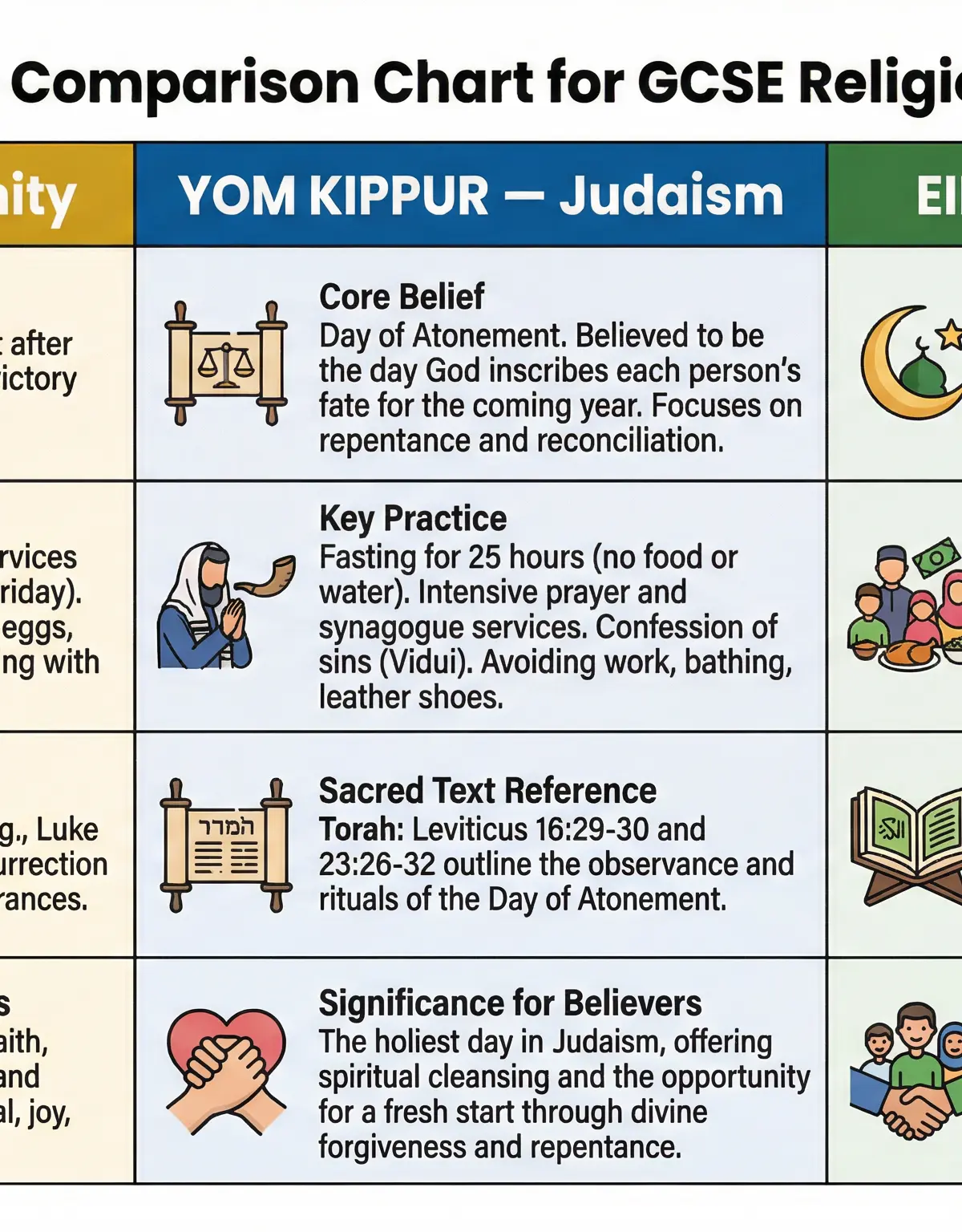
Core Belief: The Day of Atonement. This is the holiest day in the Jewish calendar, a day of solemn fasting and prayer to atone for the sins of the past year and achieve reconciliation with God.
Theological Engine: Atonement and Forgiveness. Yom Kippur is the climax of the Ten Days of Awe, a period of introspection that begins with Rosh Hashanah (the Jewish New Year). It is the final chance to have one's name inscribed in the 'Book of Life' for the coming year.
Key Practices & Their Significance:
- 25-Hour Fast: This complete fast (no food or water) is an act of self-denial and spiritual focus, detaching the individual from physical needs to concentrate on their soul.
- Wearing White: Symbolises purity and the desire to be cleansed from sin. It also resembles the burial shrouds, serving as a reminder of mortality and the need for repentance.
- Vidui (Confession): The confession of sins is recited communally and in the plural ("we have sinned"). This reflects the concept of collective responsibility for the community's moral and spiritual health.
Source of Authority: Leviticus 16 describes the original Day of Atonement rituals performed by the High Priest in the Temple, including the use of a 'scapegoat' to carry away the sins of the people.
Eid-ul-Fitr (Islam)
Core Belief: The 'Festival of Breaking the Fast'. It marks the successful completion of Ramadan, the month of fasting, and is a celebration of gratitude to Allah for the strength He provided.
Theological Engine: Gratitude and Submission. Eid is not just a party; it is a celebration of having fulfilled a divine command (one of the Five Pillars of Islam). The joy comes from the spiritual achievement of self-discipline and heightened God-consciousness (Taqwa).
Key Practices & Their Significance:
- Zakat-ul-Fitr: A compulsory donation paid by every Muslim before the Eid prayer. This is not just charity; it is an act of social justice designed to ensure that the poorest members of the community can also celebrate. It purifies the fast and reinforces the unity of the Ummah (global Muslim community).
- Salat al-Eid: A special congregational prayer held on the morning of Eid. Praying together in large numbers strengthens community bonds and expresses collective thanks to Allah.
Source of Authority: The command to fast during Ramadan is found in the Qur'an: "The month of Ramadan is that in which the Qur’an was revealed..." (Surah 2:185). Eid-ul-Fitr is the celebration that follows this period of obedience.
Second-Order Concepts
Significance
Why do these festivals matter? For the believer, they are not just historical commemorations but living realities. Easter is the source of hope for eternal life. Yom Kippur is the annual opportunity for a spiritual reset and a fresh start with God. Eid-ul-Fitr is a moment of profound gratitude and communal solidarity. For the community, these festivals reinforce shared identity, values, and theological commitments. They are the glue that binds a religious tradition together across generations.
Change & Continuity
Practices have changed. The elaborate Temple rituals of Yom Kippur described in Leviticus are no longer possible, so they have been replaced by prayer and synagogue services. However, the core theological purpose—atonement—remains unchanged. Similarly, while the commercialisation of Christmas and Easter is a modern change, the core belief in the Incarnation and Resurrection has been a point of continuity for two millennia.
Diversity
It is crucial to avoid monolithic descriptions. Easter is celebrated with the highly liturgical Vigil in Catholicism but with simpler services in many Protestant churches. Yom Kippur is observed with strict adherence by Orthodox Jews, while Reform Jews may take a more flexible approach. Acknowledging this diversity is essential for achieving higher marks in your exam answers.
Worked Examples
2 worked examples — open one to explore the question and available guidance.
Practice Questions
Test your understanding — click to reveal model answers
Explain two ways in which the practices of Eid-ul-Fitr show the importance of the Ummah. (5 marks)
Hint: Think about actions that are done as a community, not just as an individual or family.
Explain why Easter is the most important festival in Christianity. (8 marks)
Hint: You must use a Source of Authority and contrast the significance of the Resurrection with other events, like the Incarnation.