WJEC · GCSE · Religious Studies
Miracles and Religious Experience
This study guide delves into the complex topic of Miracles and Religious Experience for WJEC GCSE Religious Studies. It explores the philosophical debates, key theological concepts, and specific examples needed to excel in the exam, moving beyond simple definitions to the analytical depth required for top marks.
- 5 min read
- 3 worked examples
- 5 practice questions
- 6 key terms
Study Notes
Overview
This topic explores the nature of miracles and religious experiences, a cornerstone of theological and philosophical debate. For the WJEC GCSE exam, candidates are expected to move beyond simplistic definitions and engage with the profound questions these phenomena raise. Examiners are looking for a clear understanding of the different types of miracles, the philosophical challenges posed by thinkers like David Hume, and the ways in which miracles and religious experiences affirm key attributes of God. This guide will equip you with the precise definitions, specific examples, and analytical frameworks required to deconstruct exam questions and construct high-level responses. We will analyse the tension between an interventionist God and scientific naturalism, evaluate the impact of religious experiences on faith, and provide clear strategies for tackling both AO1 (knowledge) and AO2 (evaluation) questions.

Key Concepts & Debates
Defining a Miracle
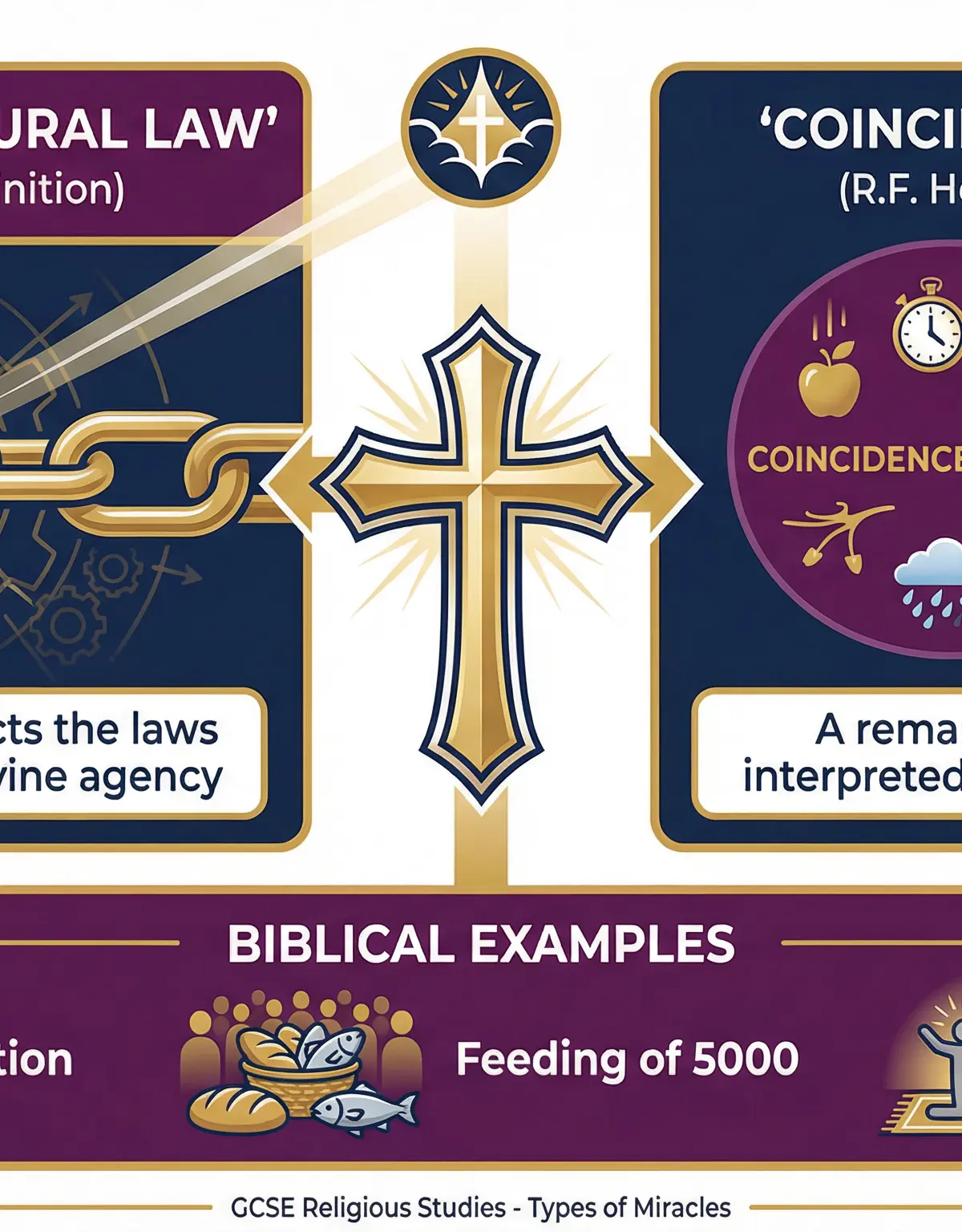
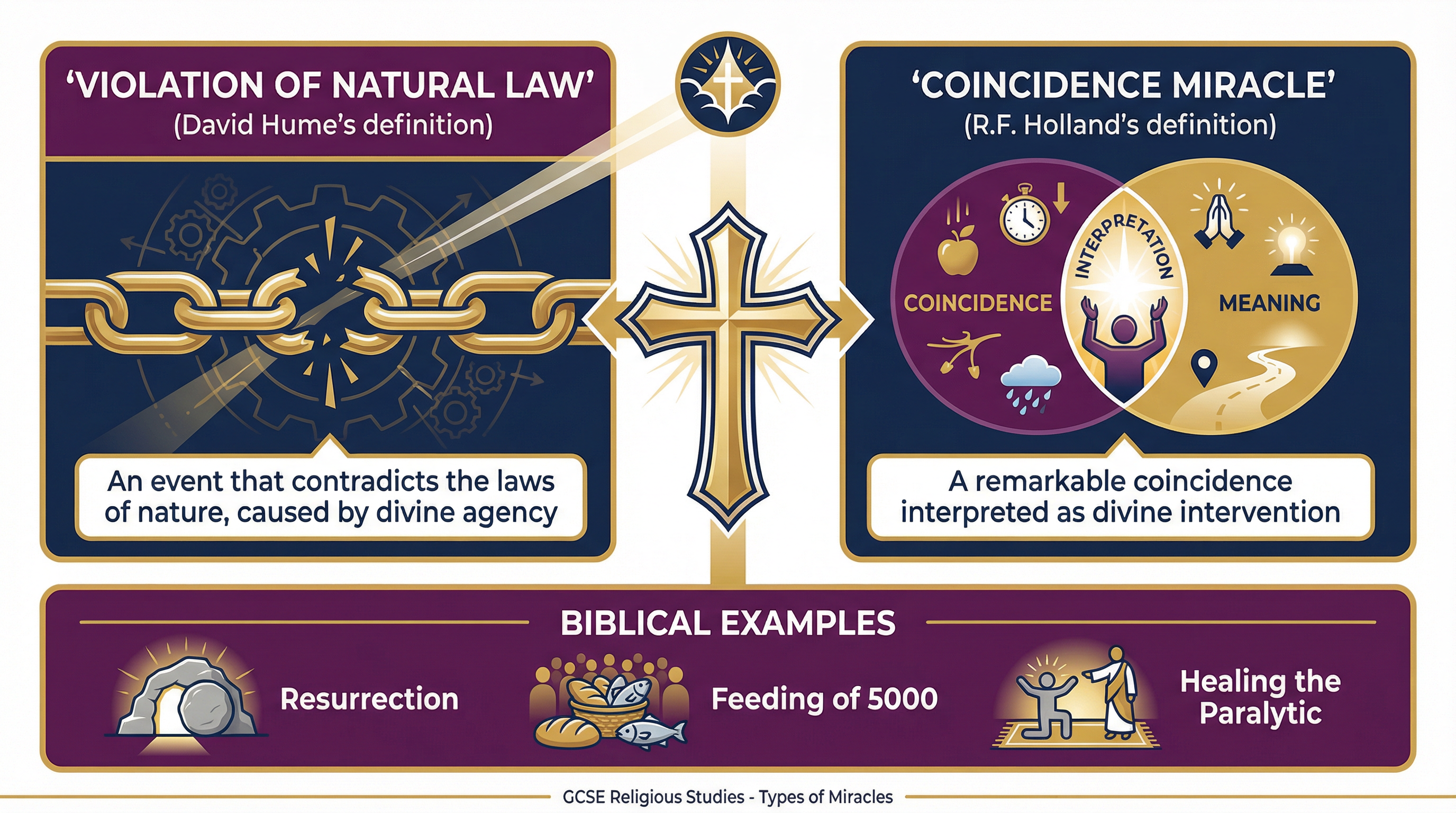
What is it: At its core, a miracle is an event that appears to be an act of God. However, for GCSE Religious Studies, a more nuanced understanding is required. Candidates must distinguish between two primary definitions.
Why it matters: Marks are awarded for precise definitions. Simply stating a miracle is 'something good' is a common mistake that limits candidates to lower mark bands. Showing the examiner you understand the philosophical distinction is key to accessing higher levels.
Specific Knowledge: You must know the two key definitions from David Hume and R.F. Holland.
The Philosophical Challenge to Miracles
What is it: This centres on the argument that it is irrational to believe in miracles. The most significant challenge comes from the 18th-century Scottish philosopher David Hume.
Why it matters: This is a core part of AO2 (evaluation). You will be expected to explain Hume's arguments and offer counter-arguments from a religious perspective. This demonstrates analytical skill.
Specific Knowledge: Hume's key arguments: that it is always more likely a witness is mistaken or lying than that a law of nature has been broken; that miracle stories originate in 'ignorant and barbarous nations'; and that competing religious claims to miracles cancel each other out.
Miracles and the Attributes of God
What is it: This involves connecting the concept of miracles to the nature and character of God as understood in Christianity. Miracles are not just random acts of power; they are seen as expressions of God's key attributes.
Why it matters: This is a synoptic link that examiners reward. It shows you can connect different parts of the specification (the nature of God and religious phenomena) to form a coherent theological understanding.
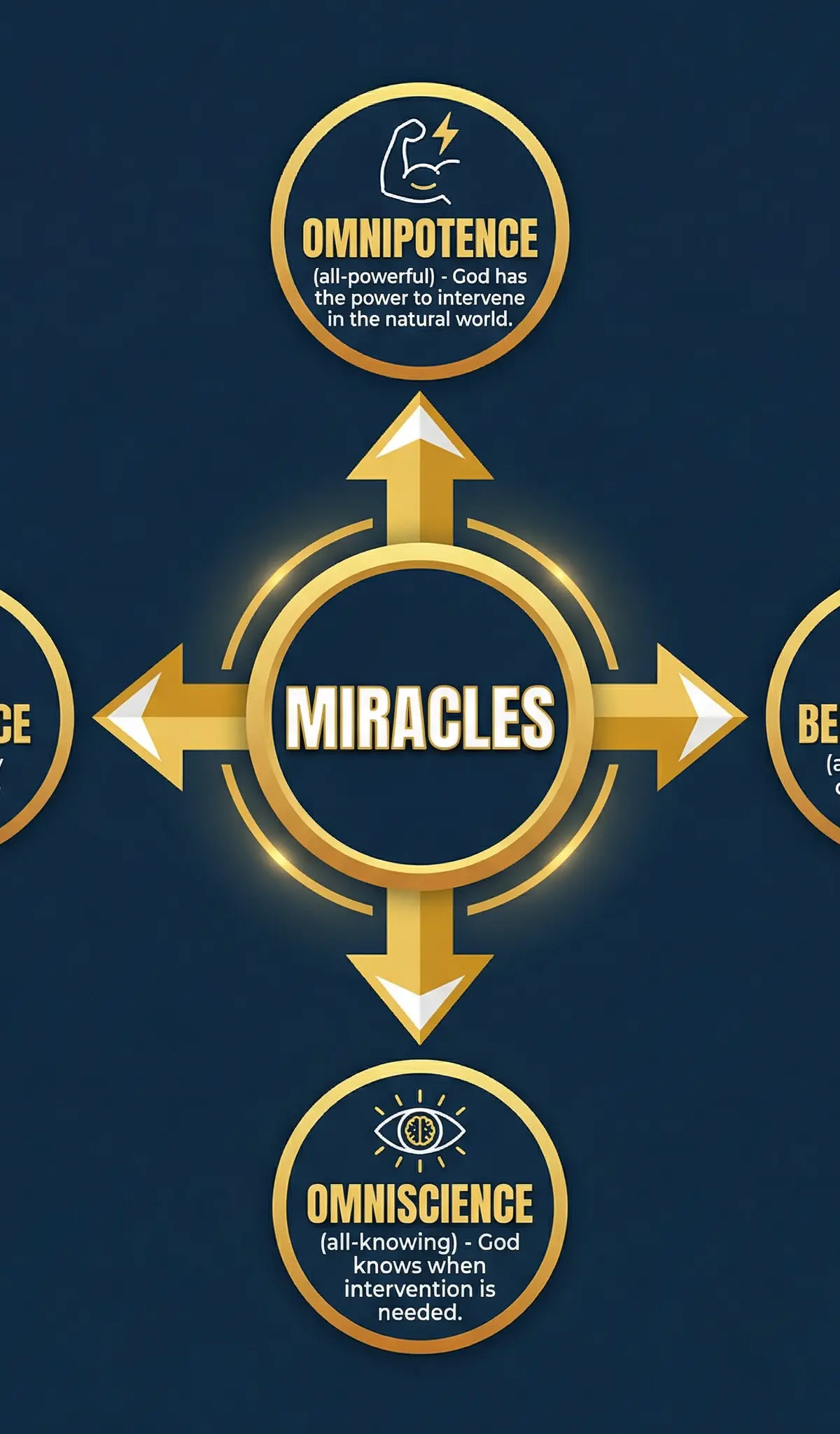
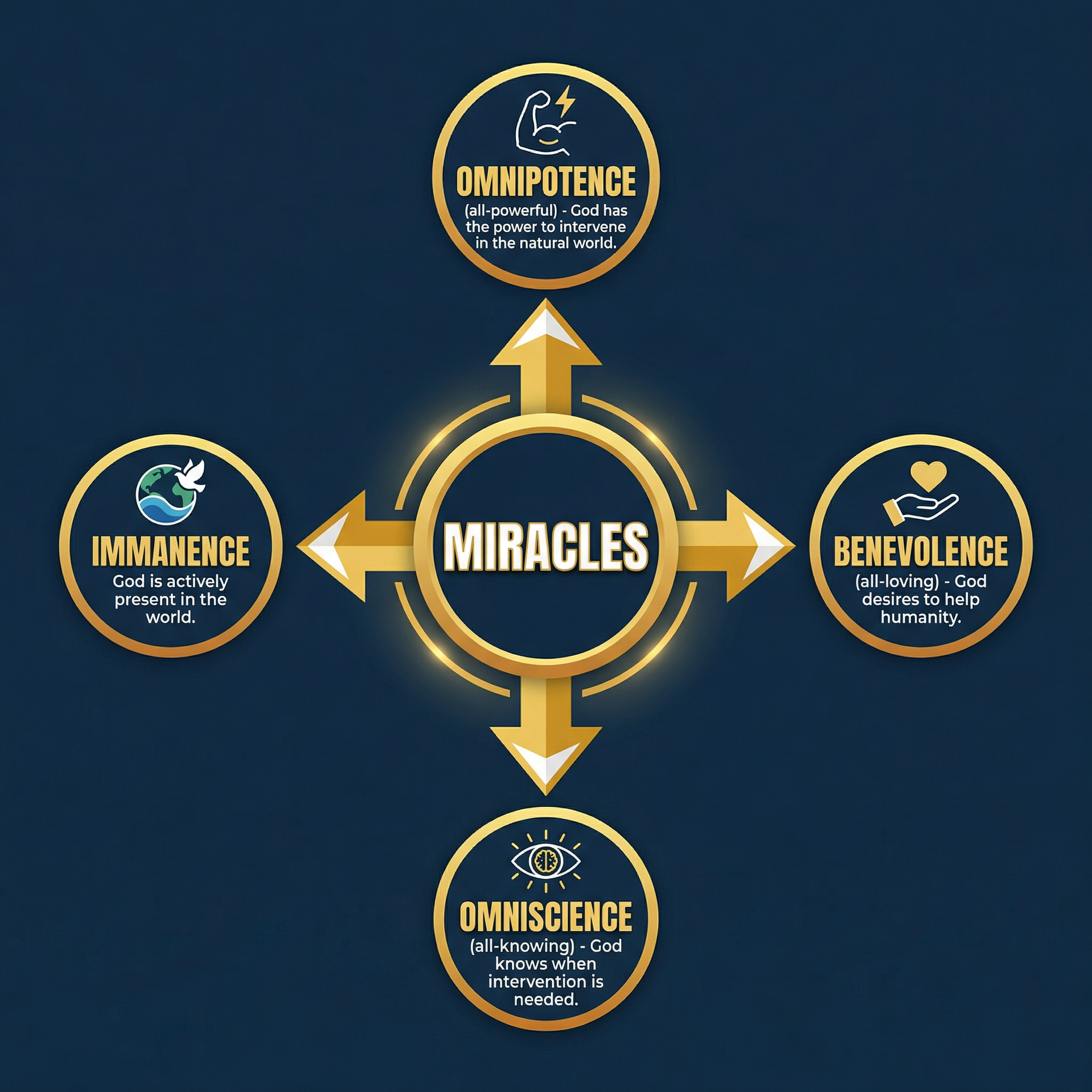
Specific Knowledge: You must link miracles to God's Omnipotence (all-powerful), Benevolence (all-loving), Omniscience (all-knowing), and Immanence (active in the world).
Key Individuals
David Hume (1711-1776)
Role: Enlightenment Philosopher
Key Actions: In his work An Enquiry Concerning Human Understanding, Hume formulated the most famous philosophical argument against the rationality of believing in miracles. He defined a miracle as a 'transgression of a law of nature by a particular volition of the Deity'.
Impact: Hume set the terms for the modern debate on miracles. His arguments remain the primary challenge that religious believers must address. In an exam, referencing Hume is essential for any high-level discussion of the problems of miracles.
R.F. Holland (1923-2013)
Role: 20th-Century Philosopher of Religion
Key Actions: Holland proposed the concept of the 'coincidence miracle'. He argued that a miracle does not need to violate natural law. It can be a remarkable and beneficial coincidence that is interpreted in a religious way.
Impact: Holland provided a way for modern believers to talk about miracles without having to reject science. His concept allows for a subjective, interpretative understanding of miracles, which contrasts with Hume's rigid, objective definition. Using Holland shows the examiner you understand the diversity of views on this topic.
St. Bernadette Soubirous (1844-1879)
Role: Visionary of Lourdes
Key Actions: As a 14-year-old girl in Lourdes, France, Bernadette reported 18 visions of the Virgin Mary in a grotto. A spring of water appeared at the site, which quickly became associated with miraculous healings.
Impact: Bernadette's experience created one of the most important Christian pilgrimage sites in the world. The events at Lourdes are a key case study for the impact of religious experience on faith communities and the modern belief in miracles. The Catholic Church has officially verified 70 miracles connected to Lourdes, providing a powerful counter-example to scientific skepticism.
Visual Resources
2 diagrams and illustrations
Interactive Diagrams
1 interactive diagram to visualise key concepts
Diagram could not be rendered
A timeline showing the key historical moments and publications in the debate surrounding miracles.
Worked Examples
3 worked examples — open one to explore the question and available guidance.
Practice Questions
Test your understanding — click to reveal model answers
Explain two reasons why a Christian might believe in miracles. (5 marks)
Hint: Think about evidence from the Bible and what miracles show about God.
Explain how a religious experience might lead a person to believe in God. (8 marks)
Hint: Use the PEEL structure. Explain different types of experience and their effects.
"Science has made it impossible to believe in miracles today." Discuss this statement. (15 marks)
Hint: This is an AO2 question. Argue for and against. Use Hume, but also consider modern religious responses like Holland's.
Explain the difference between a moral and a natural evil. (2 marks)
Hint: This is a related topic, but often comes up. Think about the cause of the suffering.
Explain what is meant by 'numinous'. (2 marks)
Hint: Think about Rudolf Otto and the feeling of being in God's presence.