WJEC · GCSE · Religious Studies
The Resurrection
The Resurrection of Jesus Christ is the cornerstone of Christian belief, marking the victory over death and the promise of eternal life. This guide provides a comprehensive, exam-focused breakdown of the key events, theological significance, and essential exam techniques required for the WJEC GCSE Religious Studies paper.
- 7 min read
- 2 worked examples
- 2 practice questions
- 6 key terms
Study Notes
Overview
The Resurrection is the foundational event upon which Christianity is built. For the WJEC GCSE exam, candidates are expected to demonstrate a thorough understanding of the biblical accounts, particularly Luke 24 and 1 Corinthians 15, and to analyse their profound theological implications. Examiners award marks for a clear grasp of the event's significance for Christian beliefs about salvation, atonement, and the nature of life after death. This study guide will equip you with the specific knowledge, source analysis skills, and exam techniques needed to tackle questions on this topic with confidence. It covers the narrative of the empty tomb, the nature of the resurrected body, and the core theological principles that every student must master. A key focus will be on distinguishing the physical event from its spiritual meaning, a skill highly credited by examiners.

Key Events & Developments
The Crucifixion and Burial
Date(s): Good Friday
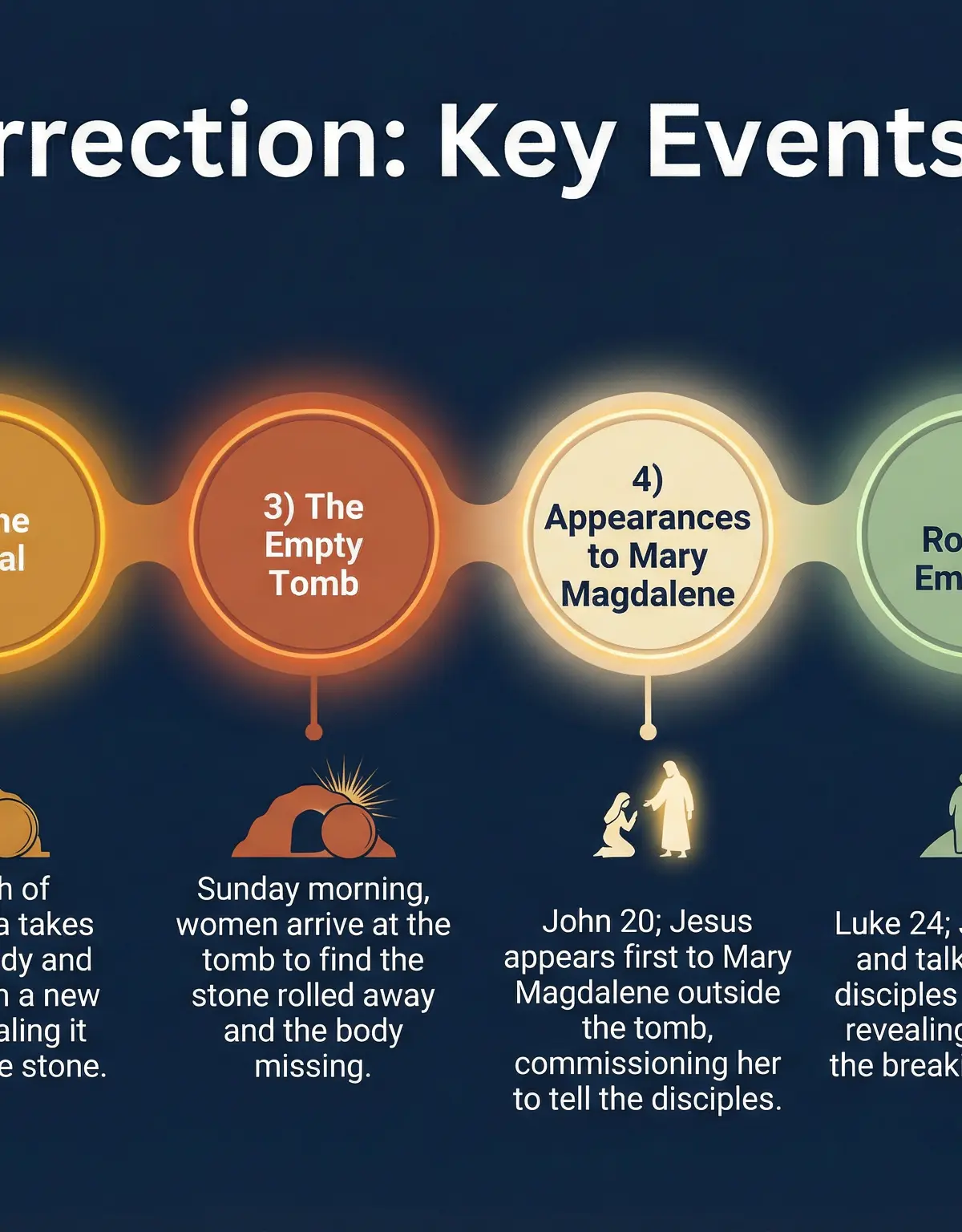
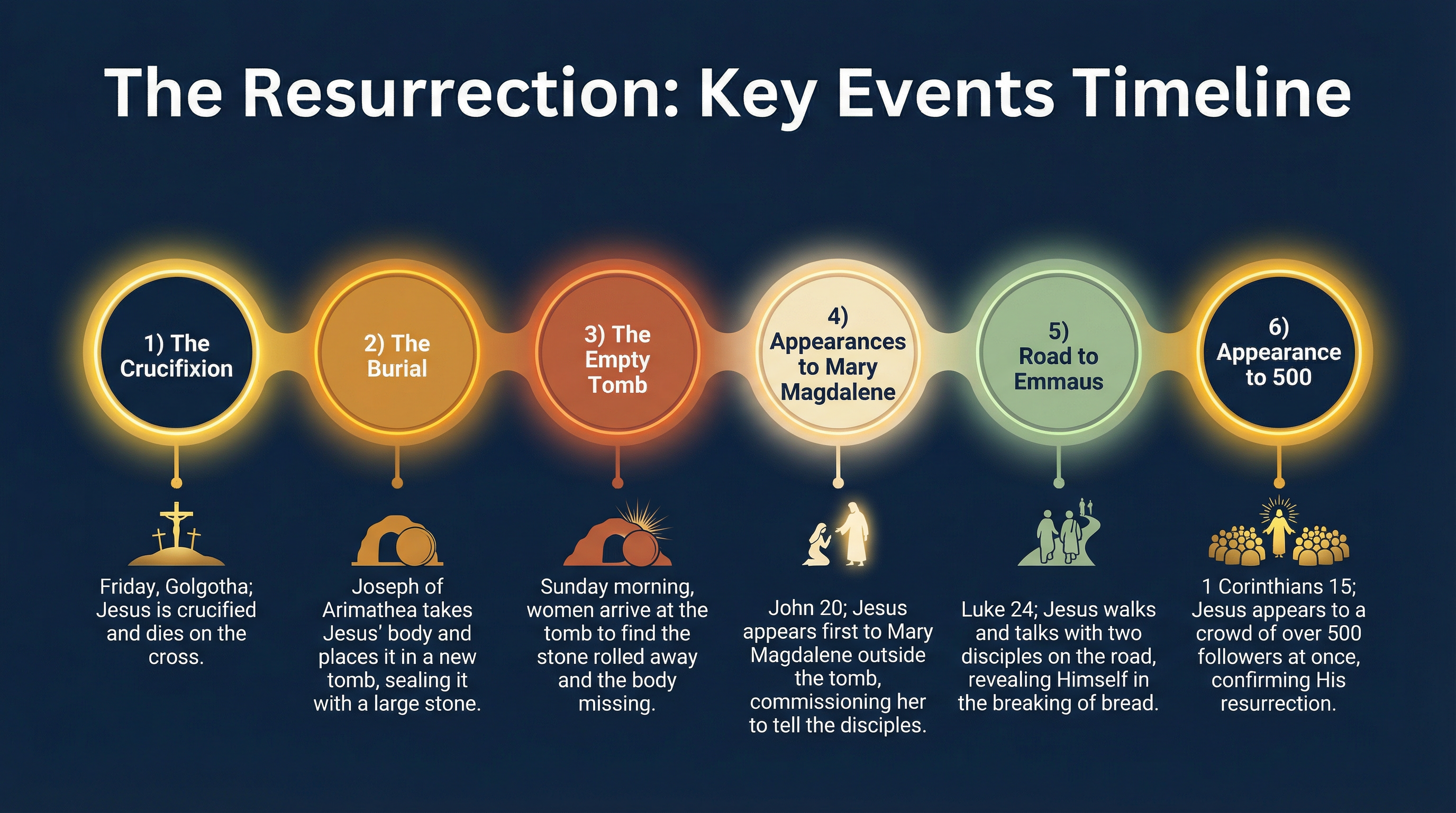
What happened: Jesus of Nazareth was crucified in Jerusalem at a place called Golgotha. His body was taken down from the cross by a member of the Sanhedrin named Joseph of Arimathea, who placed it in his own new tomb and rolled a large stone across the entrance. This act is significant as it establishes the physical reality of Jesus's death and burial, a crucial precursor to the Resurrection.
Why it matters: For the exam, this establishes the baseline reality of Jesus's death. Without a real death and burial, the Resurrection has no meaning. Marks are awarded for understanding that the tomb was sealed and guarded, making the subsequent discovery of its emptiness more miraculous.
Specific Knowledge: Joseph of Arimathea, Golgotha, the stone rolled across the entrance.
The Discovery of the Empty Tomb
Date(s): Easter Sunday
What happened: On the Sunday morning following the crucifixion, a group of female followers of Jesus, including Mary Magdalene, Joanna, and Mary the mother of James, went to the tomb to anoint Jesus's body with spices. They found the stone rolled away and the tomb empty. Angels appeared to them, announcing, "He is not here; he has risen!" (Luke 24:6).
Why it matters: The empty tomb is the primary physical evidence for the Resurrection. Candidates must be able to explain its significance as a sign, though not absolute proof, of Jesus's victory over death. It is the catalyst for the disciples' initial confusion and eventual belief.
Specific Knowledge: Mary Magdalene, Joanna, Luke 24, the angelic message.
The Post-Resurrection Appearances
Date(s): The 40 days between Easter and the Ascension
What happened: The Gospels and St. Paul's letters record numerous appearances of the risen Jesus to his followers. These include appearing to Mary Magdalene in the garden (John 20), to two disciples on the road to Emmaus (Luke 24), to the eleven disciples in a locked room, and, according to Paul, to over 500 people at once (1 Corinthians 15).
Why it matters: These appearances are crucial for demonstrating the physical, bodily nature of the Resurrection. Jesus is not a ghost; he can be touched, he eats food, and he talks with his disciples. This confirms the reality of his risen body and provides the eyewitness testimony that forms the basis of the apostles' preaching.
Specific Knowledge: Road to Emmaus, 1 Corinthians 15:6 (appearance to 500), the physical nature of the risen Jesus (eating fish, being touched).
Key Individuals
Jesus Christ
Role: The central figure of Christianity, believed by Christians to be the Son of God.
Key Actions: His death by crucifixion and subsequent Resurrection from the dead.
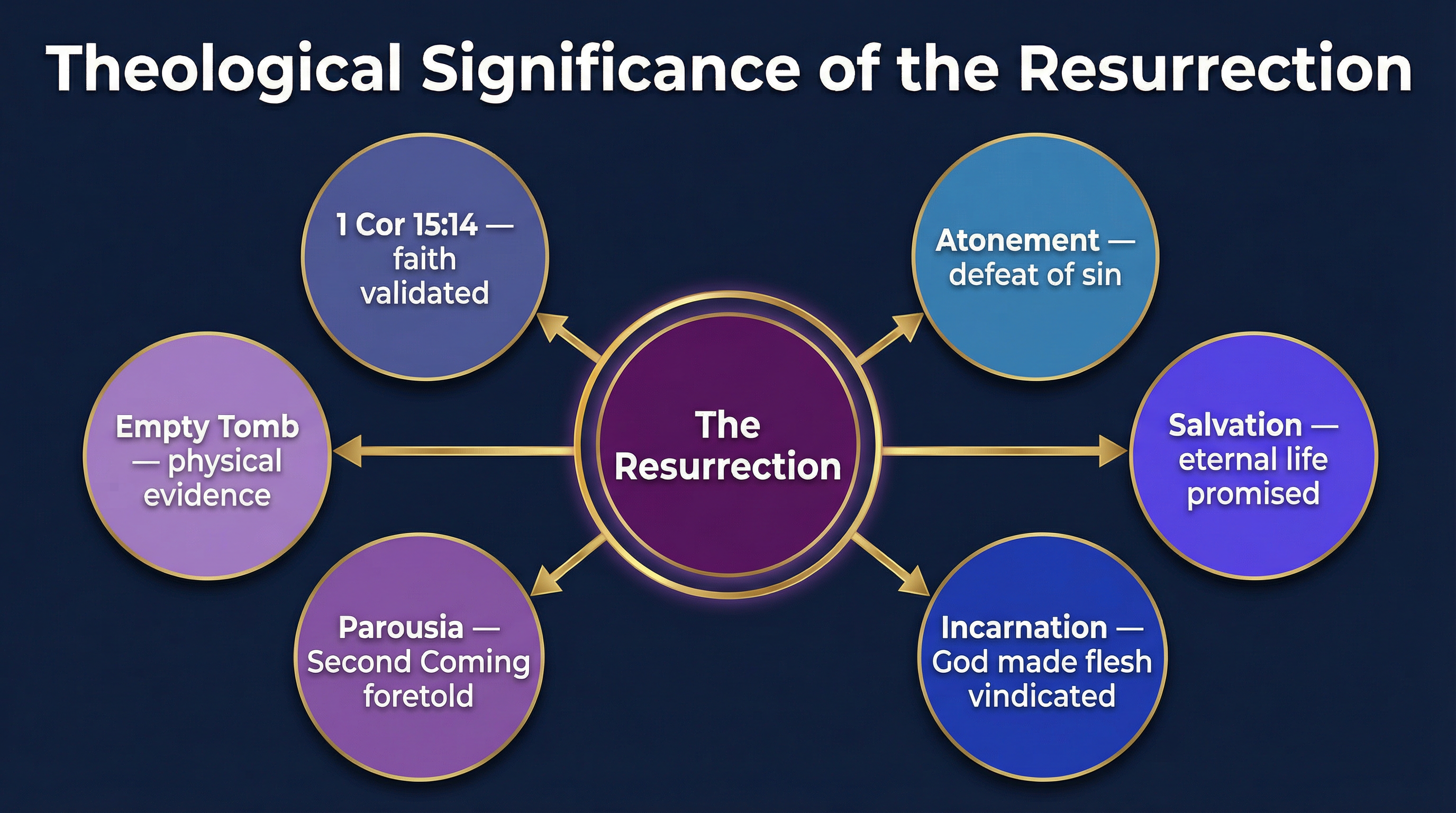
Impact: His Resurrection is the event that validates his claims, defeats sin and death, and offers the promise of eternal life to believers. It is the non-negotiable core of the Christian faith.
Mary Magdalene
Role: A devoted follower of Jesus.
Key Actions: She was one of the first to discover the empty tomb and the very first person to see the risen Jesus (according to John's Gospel). Jesus commissioned her to tell the disciples the news.
Impact: Her role as the 'apostle to the apostles' is hugely significant. It highlights the importance of women in the early church and the personal, relational nature of the Resurrection appearances.
St. Paul (formerly Saul of Tarsus)
Role: A Pharisee who initially persecuted Christians, he converted after an encounter with the risen Christ on the road to Damascus and became the most influential early Christian missionary and theologian.
Key Actions: Wrote the epistles (letters) that form a large part of the New Testament, including 1 Corinthians.
Impact: His theological explanation of the Resurrection in 1 Corinthians 15 is the most important in the Bible. He links the Resurrection to salvation, the future resurrection of believers, and the very meaning of faith itself. His quote, "If Christ has not been raised, your faith is futile" (1 Cor 15:17), is essential knowledge.
Second-Order Concepts
Significance
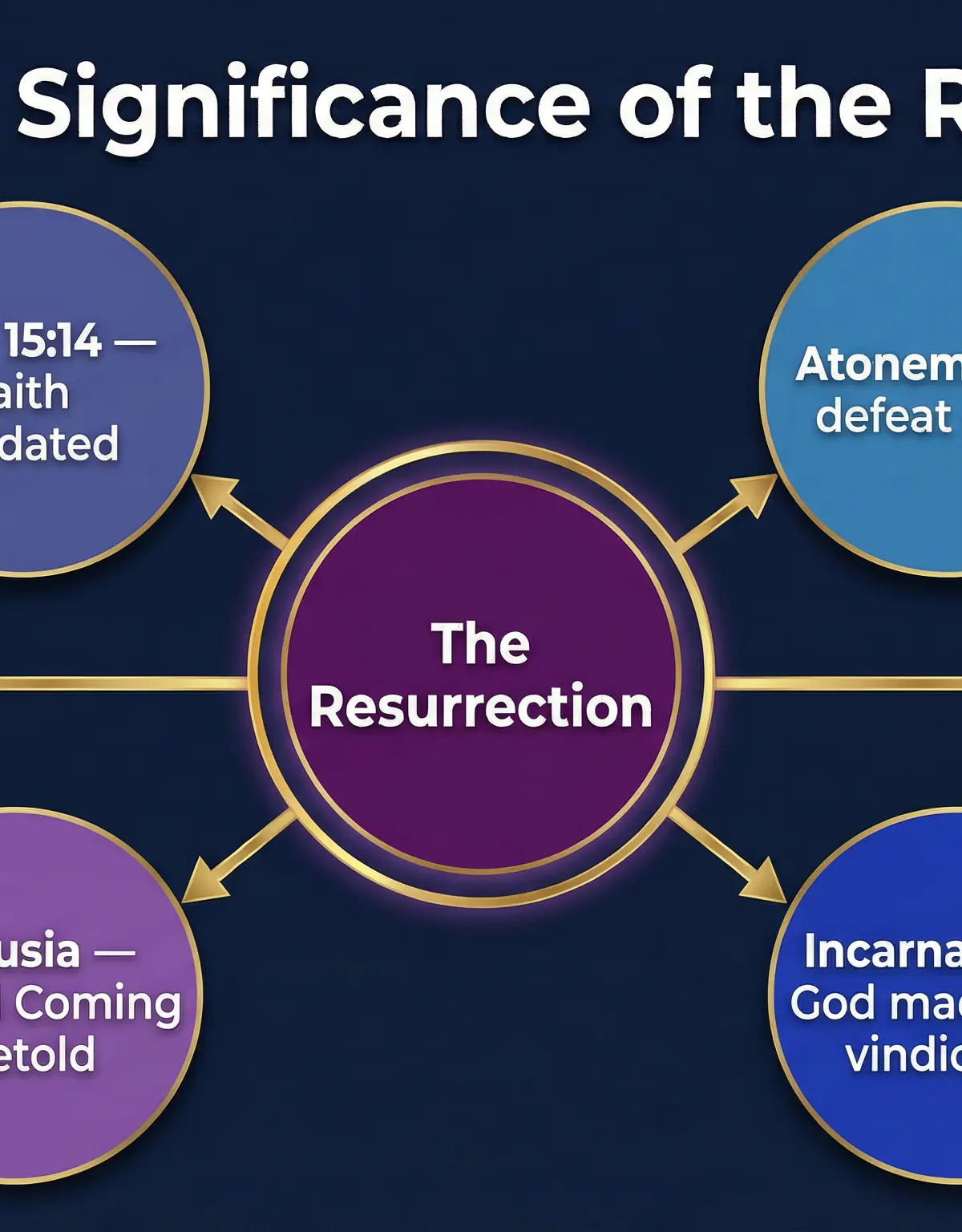
The significance of the Resurrection cannot be overstated. For Christians, it is the ultimate demonstration of God's power and love. It confirms Jesus's identity as the Son of God, provides the basis for the forgiveness of sins (Atonement), and offers hope for eternal life. It transforms Jesus from a martyred prophet into the living Lord and Saviour. In exam answers, candidates must move beyond narrative to explain these theological points.
Change & Continuity
The Resurrection brought about a radical change. It transformed a group of terrified, defeated disciples into bold preachers willing to die for their faith. It marked the birth of the Christian Church. However, it also represented continuity. The God who raised Jesus from the dead is the same God who created the world and made a covenant with Israel. The Resurrection is seen as the ultimate fulfilment of God's promises in the Old Testament.
Source Skills
When analysing biblical sources like Luke 24 or 1 Corinthians 15, consider the following:
- Provenance: Who wrote it? (e.g., Luke, a physician and companion of Paul; Paul, an eyewitness to the risen Christ). When was it written? (e.g., Paul's letters are earlier than the Gospels). Why was it written? (e.g., Luke provides an 'orderly account'; Paul is correcting theological misunderstandings in the Corinthian church).
- Content: What does the source actually say? Be precise. Quote key phrases.
- Emphasis: What is the author's particular focus? Luke emphasizes the physical reality of the Resurrection (eating fish, being touched) and the connection to Old Testament prophecy. Paul emphasizes the theological necessity of the Resurrection for faith and the nature of the spiritual, resurrected body.
- Comparison: How do the accounts differ? For example, the details of the empty tomb story vary slightly between the Gospels. This is not necessarily a weakness; it can be seen as evidence of multiple, independent early traditions. Acknowledging this nuance can gain credit for evaluation.
Worked Examples
2 worked examples — open one to explore the question and available guidance.
Practice Questions
Test your understanding — click to reveal model answers
Explain two ways the Resurrection influences Christians today. (8 marks)
Hint: Think about how the belief in a risen Jesus affects a believer's personal life, their view on death, and their worship.
Describe the account of the empty tomb in Luke's Gospel. (5 marks)
Hint: Focus on the key characters and events as told in Luke 24. Who went to the tomb? What did they find? Who did they see? What was the message?