WJEC · GCSE · Religious Studies
The Trinity
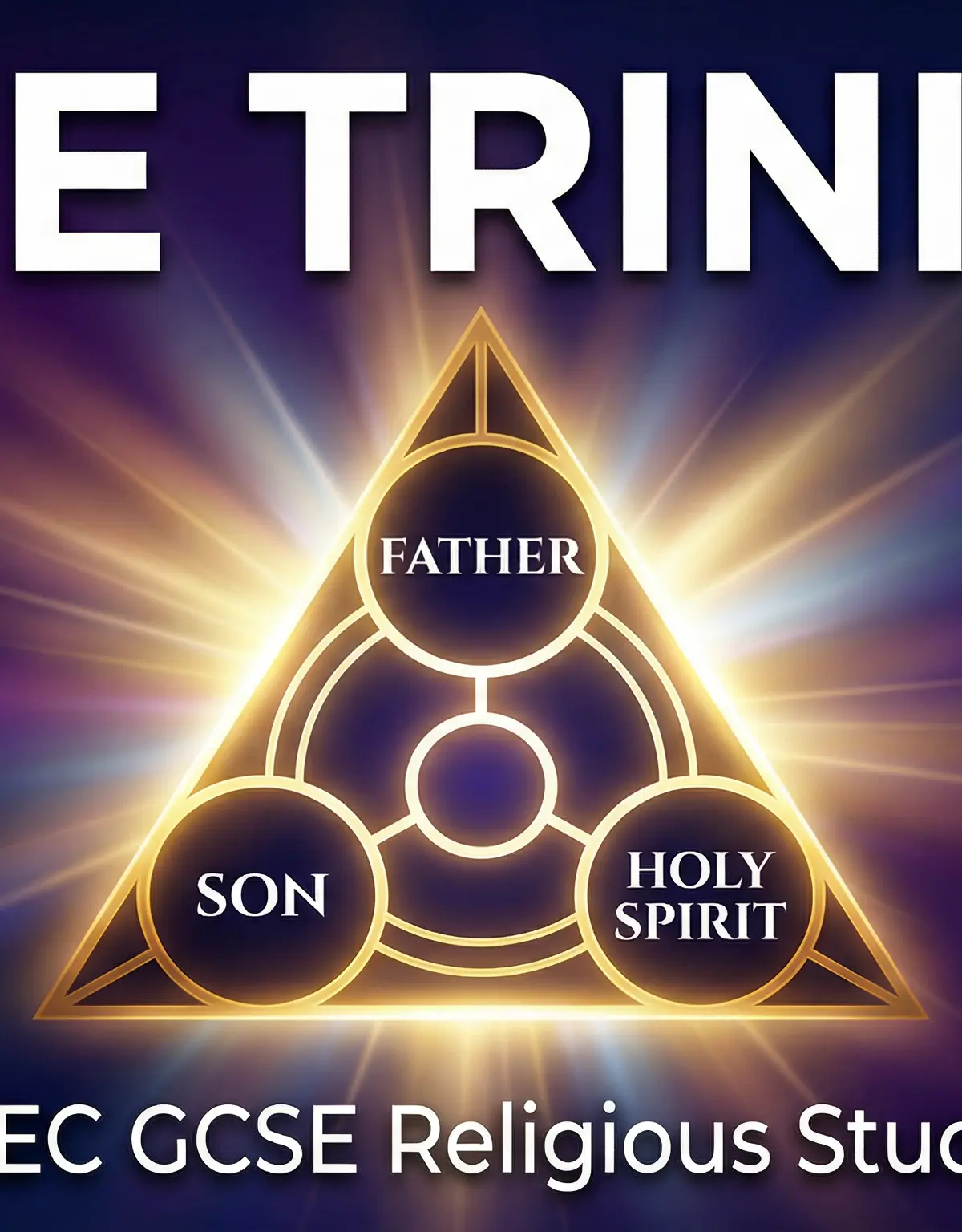
The Christian doctrine of the Trinity is a cornerstone of theology, defining God as one in essence but three in Person: Father, Son, and Holy Spirit. For WJEC GCSE candidates, mastering this topic is crucial for understanding the nature of God and its impact on Christian worship and life.
- 5 min read
- 2 worked examples
- 2 practice questions
- 6 key terms
Study Notes
Overview
The doctrine of the Trinity is the distinct Christian belief that God is one in being, yet exists eternally as three co-equal and distinct Persons: the Father, the Son (Jesus Christ), and the Holy Spirit. This is not the belief in three gods (a heresy known as Tritheism) but a complex concept of 'unity in diversity'. For your WJEC exam, examiners expect you to articulate this definition clearly, using precise theological language. You must be able to explain the roles of each Person of the Trinity and refer to key sources of wisdom and authority, namely the Nicene Creed and specific biblical texts like the Baptism of Jesus. Understanding the Trinity is not just an abstract theological exercise; it underpins Christian understanding of creation, salvation, and the ongoing life of the Church. Marks are awarded for showing how this belief impacts worship, such as in Baptism and the Eucharist.

Key Concepts & Developments
The Nicene Creed
Date(s): 325 AD (Council of Nicaea) and 381 AD (Council of Constantinople)
What happened: The early Church councils met to formalise key Christian doctrines in response to various heresies. The Nicene Creed was established as the definitive statement on the nature of God and the relationship between the Father and the Son.
Why it matters: The Creed is a foundational Source of Wisdom and Authority (SOWA). It explicitly states that the Son is 'of one substance' (homoousios) with the Father, directly combating the Arian heresy which claimed the Son was a lesser, created being. For your exam, citing the Nicene Creed demonstrates a strong understanding of the historical and theological development of the doctrine.
Specific Knowledge: You must know that the Creed affirms the full divinity of both the Son and the Holy Spirit, describing the Holy Spirit as 'the giver of life, who proceeds from the Father and the Son'.
The Baptism of Jesus
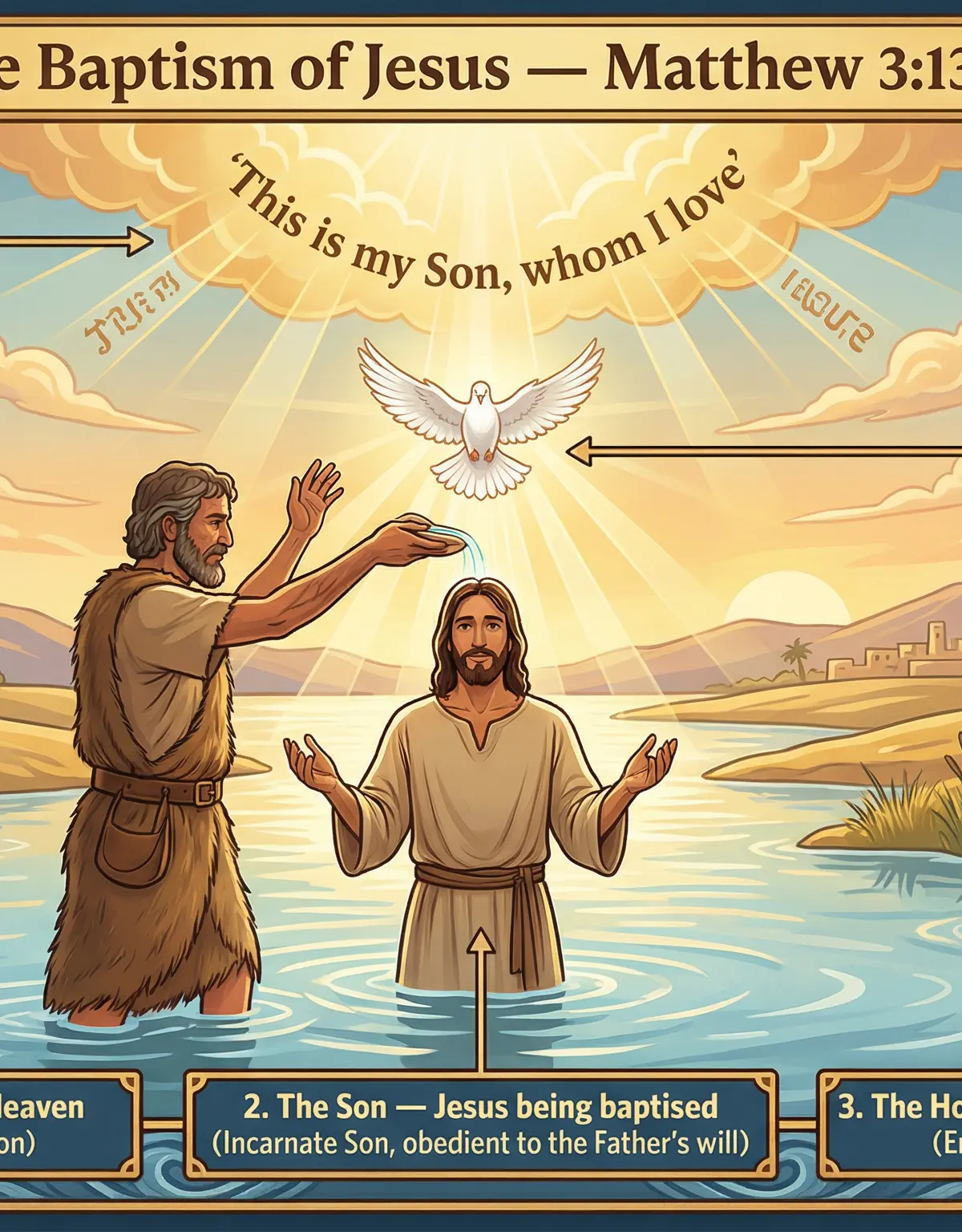
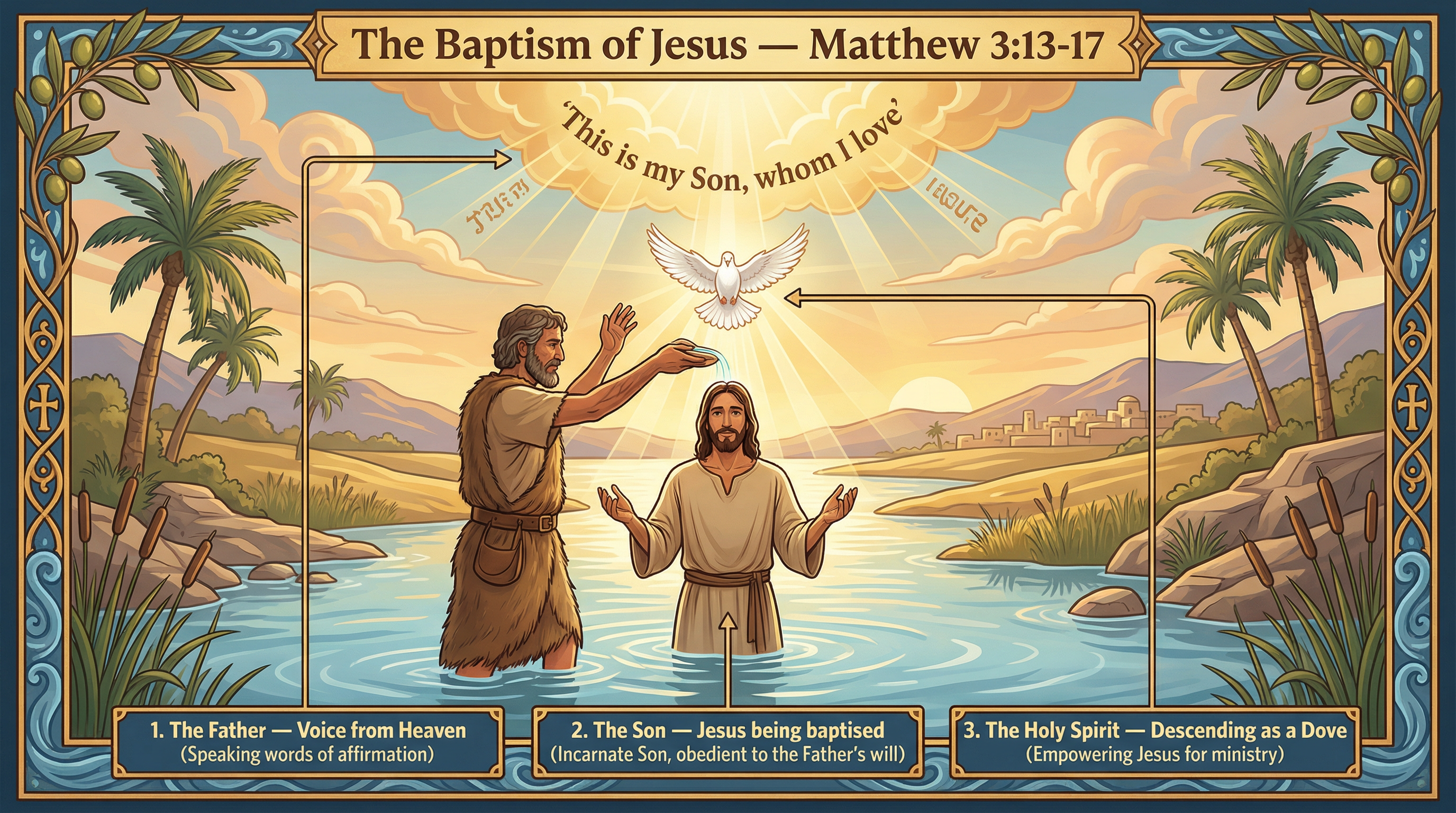
Source: Matthew 3:13-17
What happened: Jesus was baptised by John the Baptist in the River Jordan. At this moment, the heavens opened, the Spirit of God descended like a dove, and a voice from heaven said, 'This is my Son, whom I love; with him I am well pleased.'
Why it matters: This is the single most important biblical event for demonstrating the Trinity. It shows all three Persons present and active at the same time, yet distinct from one another. Candidates who use this passage to explain the Trinity are given significant credit.
Specific Knowledge: Be able to identify the three distinct Persons in the account: God the Father (the voice), God the Son (Jesus), and God the Holy Spirit (the dove).
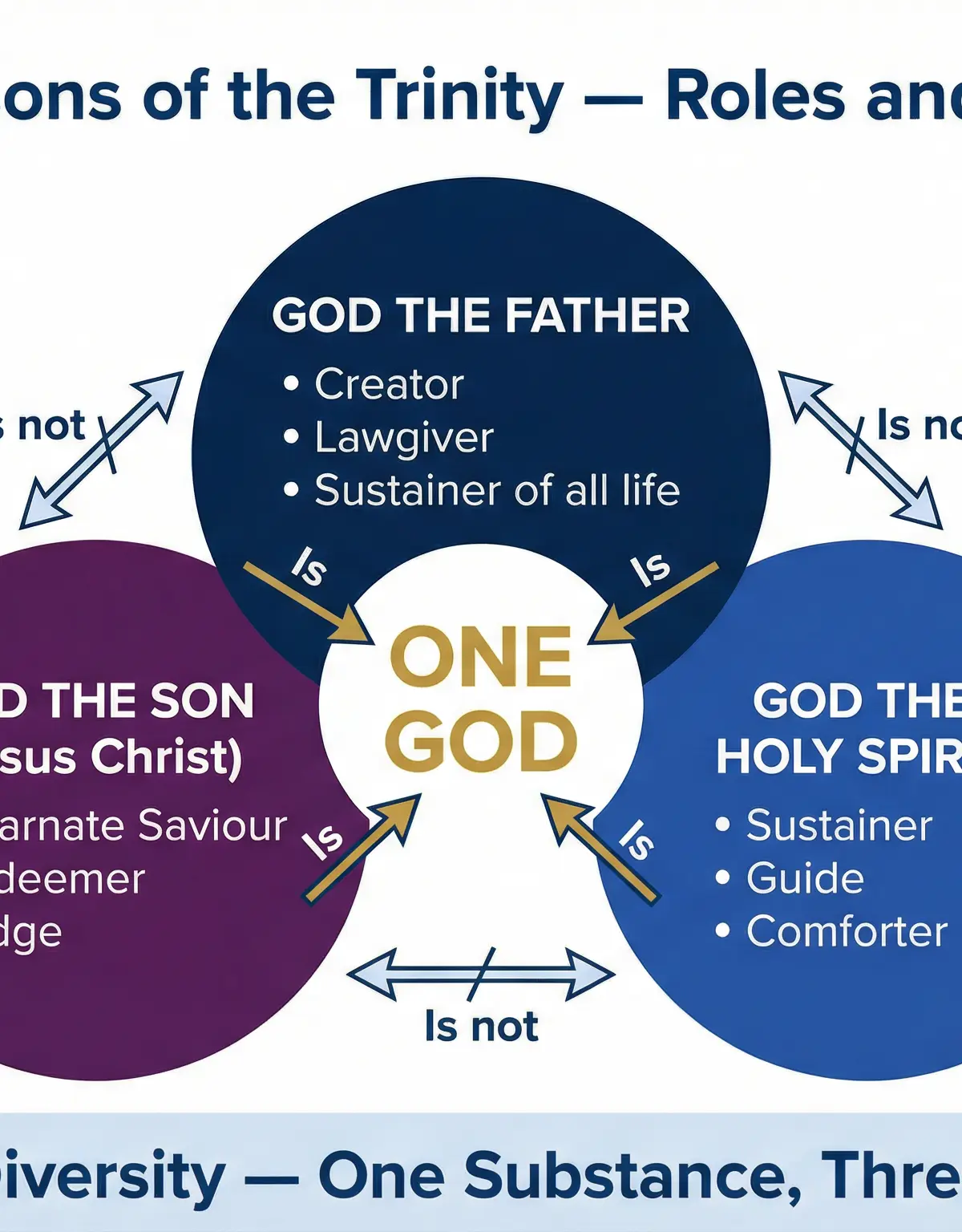
The Three Persons of the Trinity
God the Father
Role: Creator, Lawgiver, Sustainer
Key Actions: Brought the universe into being; gave the Law to Moses; sustains and rules over all creation.
Impact: Understanding God as Father establishes a relationship of love, authority, and care. In worship, Christians address God as 'Our Father'.
God the Son (Jesus Christ)
Role: Incarnate Saviour, Redeemer, Judge
Key Actions: Became human (the Incarnation) to live among humanity; died on the cross to atone for sin (salvation); rose again and will return to judge the living and the dead.
Impact: The Son provides the means of salvation and is the ultimate revelation of God to humanity. He is the focus of Christian worship and the model for Christian life.
God the Holy Spirit
Role: Sustainer, Guide, Comforter
Key Actions: Descended at Pentecost (Acts 2) to empower the Church; guides believers in truth; provides spiritual gifts; dwells within Christians.
Impact: The Holy Spirit is the active presence of God in the world and in the lives of believers today. It is through the Spirit that Christians feel a personal connection to God.
Second-Order Concepts
Significance
Why is the Trinity so significant? It is the model for relationships, both divine and human. It explains how God can be both transcendent (beyond the world) and immanent (active within the world). It is also essential for the Christian plan of salvation – it required the Father to send the Son, and the Son to willingly offer himself, and the Spirit to apply the work of salvation to believers' lives.
Visual Resources
2 diagrams and illustrations
Interactive Diagrams
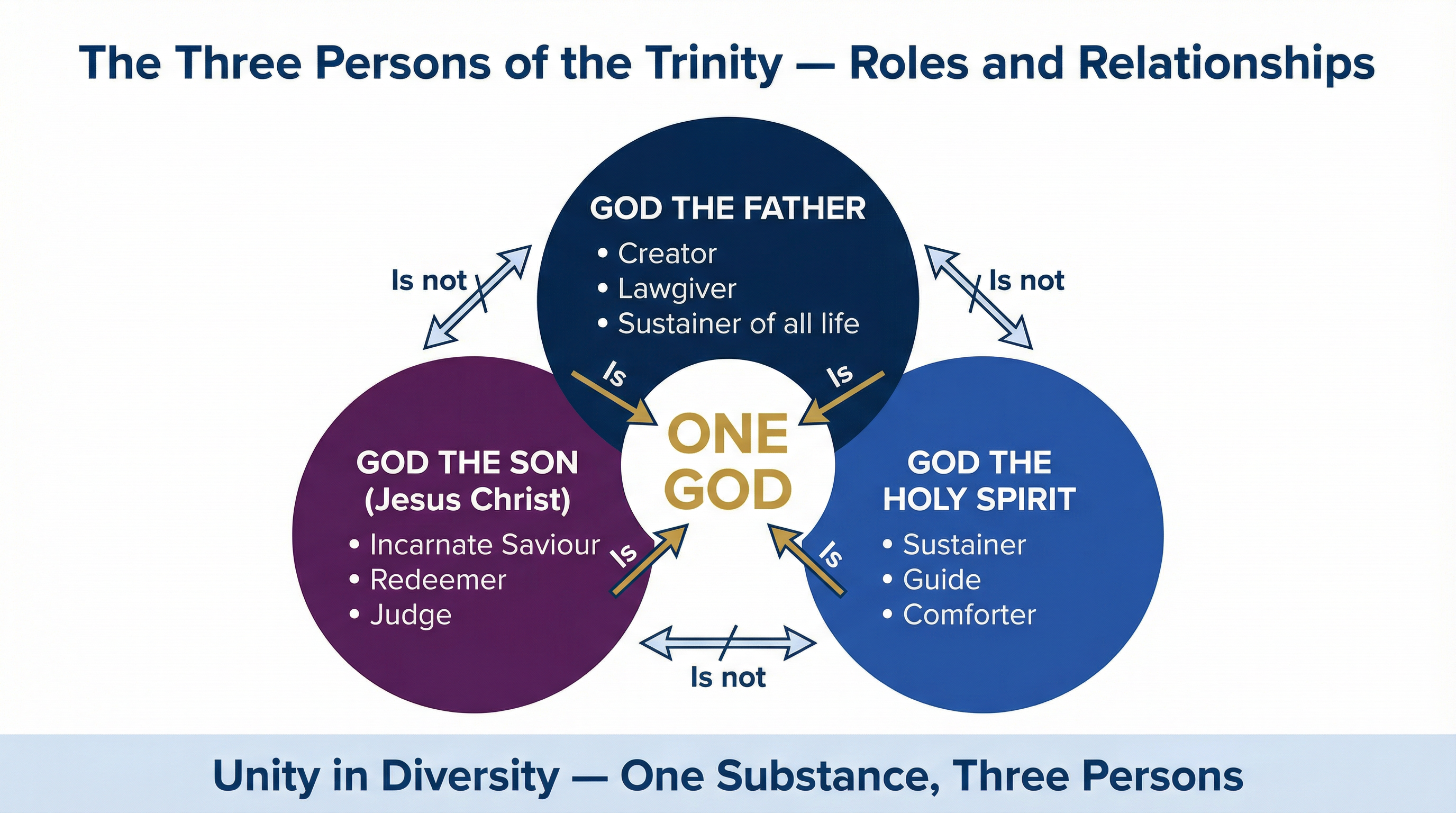
1 interactive diagram to visualise key concepts
Conceptual Flow Outline
A simple diagram illustrating the relationships within the Trinity, often known as the Shield of the Trinity.
Worked Examples
2 worked examples — open one to explore the question and available guidance.
Practice Questions
Test your understanding — click to reveal model answers
Describe Christian beliefs about God the Father. (5 marks)
Hint: Think about his role in creation and his relationship with Jesus and humanity.
Explain how the Nicene Creed expresses the doctrine of the Trinity. (8 marks)
Hint: Focus on the specific language used in the Creed to describe the Son and the Holy Spirit.