AQA · GCSE · Biology
Course version: 8461 · Version from Sept 2018
Environmental changes affect the distribution of species in an ecosystem.…
Full specification wording
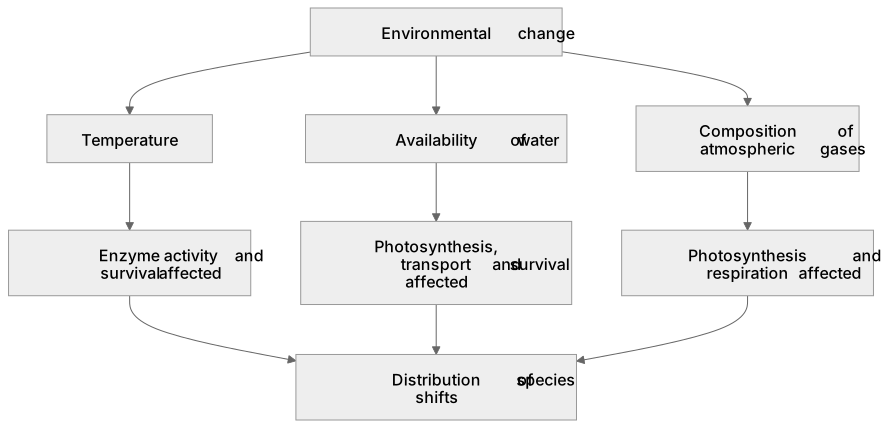
Impact of environmental change (biology only) (HT only): Environmental changes affect the distribution of species in an ecosystem. These changes include: • temperature • availability of water • composition of atmospheric gases.
Species are adapted to particular conditions, so when the environment changes, the places where they can survive also change.
Checked against the AQA 8461 specification (opens in a new tab) on .
- Point 2 of 3
- 4 key terms
Study notes
From the checked teaching notes for this specification point.
The idea
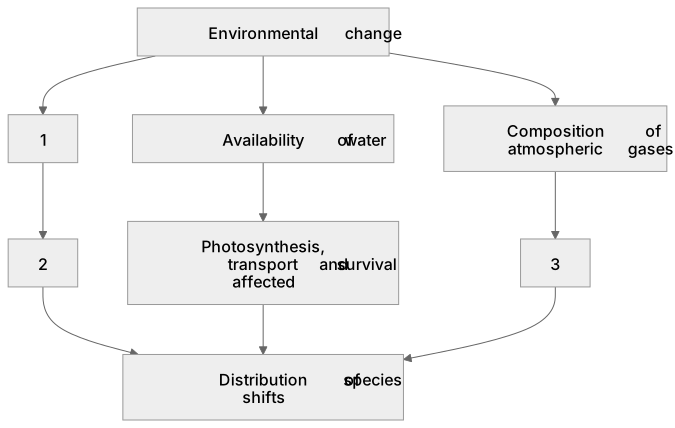
Species are adapted to particular conditions, so when the environment changes, the places where they can survive also change. Temperature affects enzyme activity and the survival of organisms; a rise or fall outside a species' tolerance can force it to move or die out locally. Availability of water affects photosynthesis, transport and survival, so drought or flooding changes which species thrive. The composition of atmospheric gases, such as changing carbon dioxide or oxygen levels, affects photosynthesis and respiration and therefore growth and distribution. For example, increased carbon dioxide can favour fast-growing plants, while low oxygen in water can reduce fish populations. These changes shift the distribution of species within the ecosystem.
What earns the marks
- State that environmental changes alter the distribution of species in an ecosystem.
- Explain how temperature change affects enzyme activity and the survival of organisms.
- Explain how water availability affects processes such as photosynthesis, transport and survival.
- Explain how the composition of atmospheric gases, such as carbon dioxide or oxygen, affects photosynthesis and respiration.
- Link each change to a shift in where species are found, such as moving to more suitable areas or dying out locally.
Common mistakes and how to put them right
Listing the three changes without explaining their effects.
Put it right by linking each change to a biological process and a distribution shift.
Confusing the effect of carbon dioxide and oxygen.
Put it right by stating that carbon dioxide is used in photosynthesis while oxygen is used in respiration.
Assuming a change affects all species equally.
Put it right by explaining that species have different tolerances and adaptations.
Exam tips
- Learn the three named changes and be ready to give a biological effect for each.
- Use examples such as drought reducing plant distribution or warmer water shifting fish species.
- Link every effect back to distribution, not just to the survival of one organism.
Try the lesson
The start of the Impact of environmental change (biology only) (HT only): Environmental changes affect the distribution of species in an ecosystem. These changes include: • temperature • availability of water • composition of atmospheric gases. lesson, made from checked teaching notes for this specification point.
Have a go first
A species of lichen grows on the bark of trees. Over several years, a nearby factory increases its emissions of sulfur dioxide. The lichen is now only found on trees on the side of the forest furthest from the factory. Which environmental change is most directly responsible for the change in the distribution of the lichen?
Listen
Species are adapted to particular conditions, so when the environment changes, the places where they can survive also change. Temperature affects enzyme activity and the survival of organisms; a rise or fall outside a species' tolerance can force it to move or die out locally. Availability of water affects photosynthesis, transport and survival, so drought or flooding changes which species thrive. The composition of atmospheric gases, such as changing carbon dioxide or oxygen levels, affects photosynthesis and respiration and therefore growth and distribution. For example, increased carbon dioxide can favour fast-growing plants, while low oxygen in water can reduce fish populations. These changes shift the distribution of species within the ecosystem. A strong answer earns marks for these points. State that environmental changes alter the distribution of species in an ecosystem. Explain how temperature change affects enzyme activity and the survival of organisms. Explain how water availability affects processes such as photosynthesis, transport and survival. Explain how the composition of atmospheric gases, such as carbon dioxide or oxygen, affects photosynthesis and respiration. A common slip: Listing the three changes without explaining their effects. Instead, linking each change to a biological process and a distribution shift. Exam tip: Learn the three named changes and be ready to give a biological effect for each.
See it
Key words
Say what each word means before you turn the card.
Environmental change
Try answering aloud or in your head before turning the card.
Species distribution
Try answering aloud or in your head before turning the card.
Temperature and enzyme activity
Try answering aloud or in your head before turning the card.
Water and gas availability
Try answering aloud or in your head before turning the card.
See every definition
- Environmental change
- A change in conditions such as temperature, availability of water or composition of atmospheric gases, which affects the distribution of species in an ecosystem.
- Species distribution
- Where species are found within an ecosystem, which shifts when environmental changes force organisms to move to more suitable areas or die out locally.
- Temperature and enzyme activity
- Temperature affects enzyme activity and the survival of organisms, and a rise or fall outside a species' tolerance can force it to move or die out locally.
- Water and gas availability
- Availability of water affects photosynthesis, transport and survival, while the composition of atmospheric gases affects photosynthesis and respiration and therefore growth and distribution.
Label the diagram
Some boxes have lost their names. Pick the right name for each number.
1Box 1
2Box 2
3Box 3
There is more to this lesson
The full lesson goes on to check your understanding and help you earn the marks. Create a free account to carry on, with your progress saved.
A week of Premium from your first lesson · Then the free plan continues · No card, no charge
Test your understanding of Impact of environmental change (biology only) (HT only): Environmental changes affect the distribution of species in an ecosystem. These changes include: • temperature • availability of water • composition of atmospheric gases.
Active recall beats re-reading. Take an instant quiz now to test what you’ve learned and lock it into long-term memory.
A week of Premium from your first lesson · Then the free plan continues · No card, no charge