AQA · GCSE · Biology
Course version: 8461 · Version from Sept 2018
Water, ions and urea are lost from the skin in sweat.
Full specification wording
Maintaining water and nitrogen balance in the body (biology only): Water, ions and urea are lost from the skin in sweat.
Sweat is produced by sweat glands in the skin and released onto the skin surface through ducts.
Checked against the AQA 8461 specification (opens in a new tab) on .
- Point 3 of 17
Study notes
From the checked teaching notes for this specification point.
The idea
Sweat is produced by sweat glands in the skin and released onto the skin surface through ducts. Sweat is mainly water, but it also contains dissolved ions such as sodium and chloride, and small amounts of urea. When sweat evaporates from the skin, it helps to cool the body, but it also removes water, ions and urea from the body. The volume and composition of sweat vary with activity, temperature and hydration: more sweat is produced when the body is hot or during exercise. This route contributes to water balance, ion balance and nitrogen balance, and the lost water and ions must be replaced.
What earns the marks
- Sweat is produced by sweat glands in the skin.
- Sweat contains water, dissolved ions and urea.
- Water is lost from the body when sweat evaporates from the skin surface.
- Ions such as sodium and chloride are lost in sweat.
- Urea is lost in sweat, although the kidneys remove most urea in urine.
- Sweat production increases during exercise or in hot conditions, increasing these losses.
- The loss of water and ions in sweat must be replaced to maintain balance.
Common mistakes and how to put them right
Stating that sweat contains only water.
Put it right: Sweat also contains ions and urea.
Claiming that sweat glands are found only in the palms.
Put it right: Sweat glands are distributed widely in the skin.
Saying that urea is lost only in sweat.
Put it right: Urea is mainly lost in urine, with a smaller amount in sweat.
Confusing sweat with urine.
Put it right: Sweat is produced by sweat glands and contains water, ions and urea, while urine is produced by the kidneys.
Exam tips
- List all three substances lost in sweat: water, ions and urea.
- Name the sweat glands as the structures that produce sweat.
- Link sweat production to temperature or exercise when explaining why losses change.
- State that evaporation of sweat also has a cooling function, but keep the focus on the substances lost.
Try the lesson
The start of the Maintaining water and nitrogen balance in the body (biology only): Water, ions and urea are lost from the skin in sweat. lesson, made from checked teaching notes for this specification point.
Have a go first
Which substances are lost from the skin in sweat?
Listen
Sweat is produced by sweat glands in the skin and released onto the skin surface through ducts. Sweat is mainly water, but it also contains dissolved ions such as sodium and chloride, and small amounts of urea. When sweat evaporates from the skin, it helps to cool the body, but it also removes water, ions and urea from the body. The volume and composition of sweat vary with activity, temperature and hydration: more sweat is produced when the body is hot or during exercise. This route contributes to water balance, ion balance and nitrogen balance, and the lost water and ions must be replaced. A strong answer earns marks for these points. Sweat is produced by sweat glands in the skin. Sweat contains water, dissolved ions and urea. Water is lost from the body when sweat evaporates from the skin surface. Ions such as sodium and chloride are lost in sweat. A common slip: Stating that sweat contains only water. Instead, sweat also contains ions and urea. Exam tip: List all three substances lost in sweat: water, ions and urea.
See it
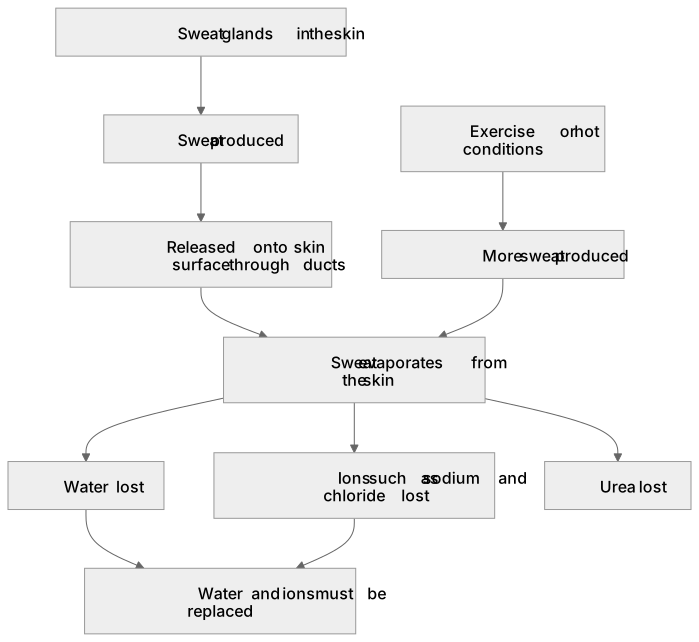
Label the diagram
Some boxes have lost their names. Pick the right name for each number.
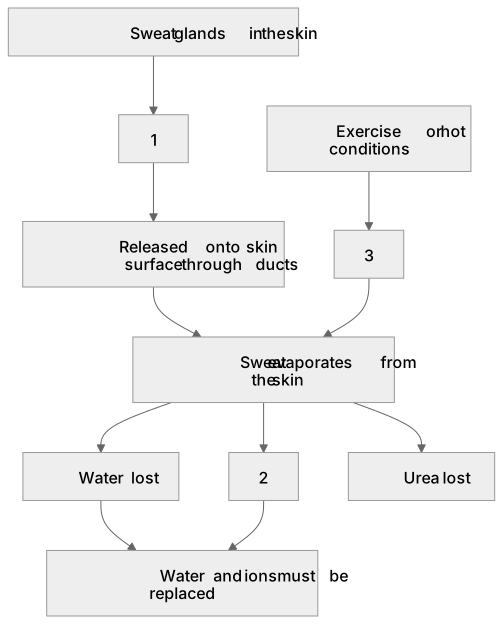
1Box 1
2Box 2
3Box 3
There is more to this lesson
The full lesson goes on to check your understanding and help you earn the marks. Create a free account to carry on, with your progress saved.
A week of Premium from your first lesson · Then the free plan continues · No card, no charge
Test your understanding of Maintaining water and nitrogen balance in the body (biology only): Water, ions and urea are lost from the skin in sweat.
Active recall beats re-reading. Take an instant quiz now to test what you’ve learned and lock it into long-term memory.
A week of Premium from your first lesson · Then the free plan continues · No card, no charge