AQA · GCSE · Biology
Course version: 8461 · Version from Sept 2018
Water leaves the body via the lungs during exhalation.
Full specification wording
Maintaining water and nitrogen balance in the body (biology only): Water leaves the body via the lungs during exhalation.
Water is lost from the body by several routes, and one of these is the lungs.
Checked against the AQA 8461 specification (opens in a new tab) on .
- Point 2 of 17
Study notes
From the checked teaching notes for this specification point.
The idea
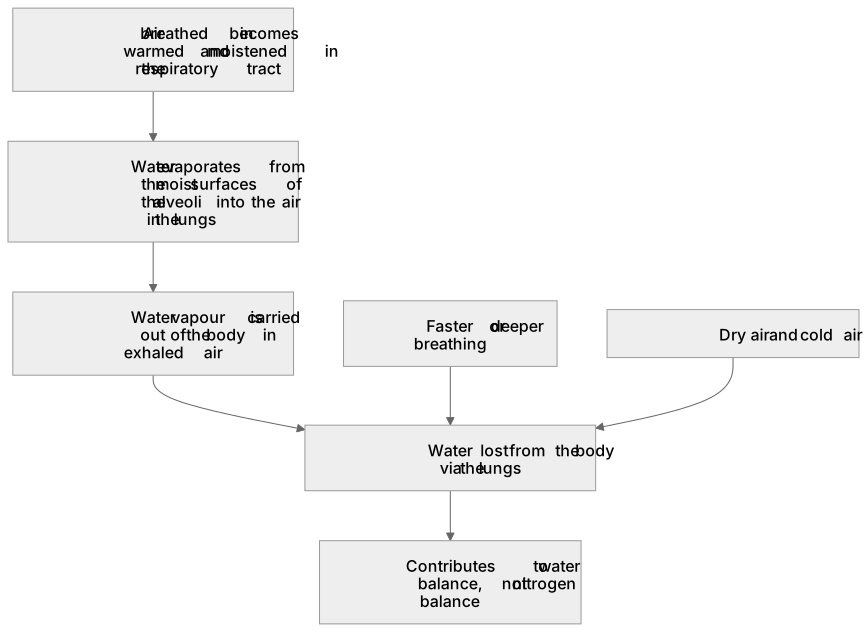
Water is lost from the body by several routes, and one of these is the lungs. The air breathed in becomes warmed and moistened as it passes through the respiratory tract. Water evaporates from the moist surfaces of the alveoli into the air in the lungs. During exhalation, this water vapour is carried out of the body in the exhaled air. The loss is continuous but varies with breathing rate, temperature and humidity: faster or deeper breathing, dry air and cold air tend to increase it. This route removes water but not urea, so it contributes to water balance rather than to nitrogen balance.
What earns the marks
- Water evaporates from the moist surfaces of the lungs into the air in the alveoli.
- The water vapour is removed from the body when air is exhaled.
- The lungs are a route of water loss, not a route of urea loss.
- The rate of water loss through the lungs increases with faster or deeper breathing.
- Exhaled air contains more water vapour than inhaled air.
Common mistakes and how to put them right
Stating that water is lost from the lungs during inhalation.
Put it right: Water vapour leaves the body during exhalation.
Confusing water loss with urea loss.
Put it right: The lungs lose water but urea is removed mainly by the kidneys.
Saying that the lungs produce water.
Put it right: Water evaporates from moist lung surfaces and is carried out in exhaled air.
Ignoring the effect of breathing rate.
Put it right: More frequent or deeper breathing increases water loss.
Exam tips
- Name the process as evaporation from the moist surfaces of the lungs.
- State clearly that the water leaves during exhalation, not inhalation.
- Link the loss to breathing rate or environmental conditions if the question asks for factors.
- Keep this route separate from urea loss, which occurs mainly in urine.
Try the lesson
The start of the Maintaining water and nitrogen balance in the body (biology only): Water leaves the body via the lungs during exhalation. lesson, made from checked teaching notes for this specification point.
Have a go first
Which process results in the loss of water vapour from the body via the lungs?
Listen
Water is lost from the body by several routes, and one of these is the lungs. The air breathed in becomes warmed and moistened as it passes through the respiratory tract. Water evaporates from the moist surfaces of the alveoli into the air in the lungs. During exhalation, this water vapour is carried out of the body in the exhaled air. The loss is continuous but varies with breathing rate, temperature and humidity: faster or deeper breathing, dry air and cold air tend to increase it. This route removes water but not urea, so it contributes to water balance rather than to nitrogen balance. A strong answer earns marks for these points. Water evaporates from the moist surfaces of the lungs into the air in the alveoli. The water vapour is removed from the body when air is exhaled. The lungs are a route of water loss, not a route of urea loss. The rate of water loss through the lungs increases with faster or deeper breathing. A common slip: Stating that water is lost from the lungs during inhalation. Instead, water vapour leaves the body during exhalation. Exam tip: Name the process as evaporation from the moist surfaces of the lungs.
See it
Label the diagram
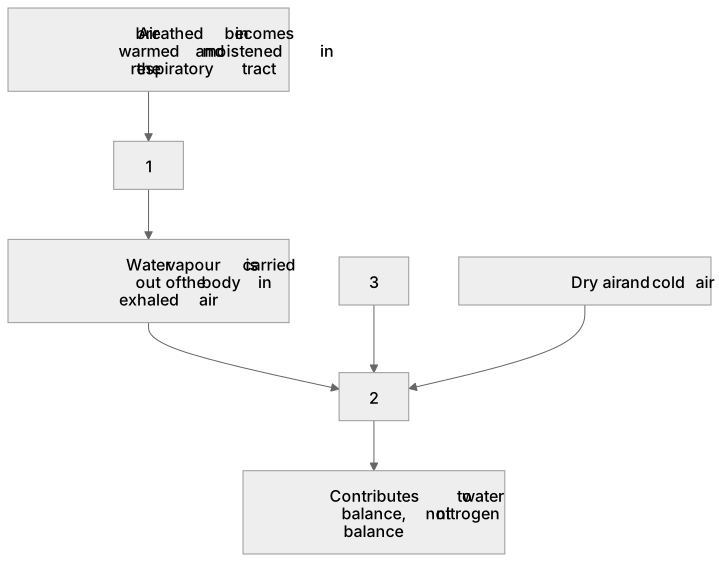
Some boxes have lost their names. Pick the right name for each number.
1Box 1
2Box 2
3Box 3
There is more to this lesson
The full lesson goes on to check your understanding and help you earn the marks. Create a free account to carry on, with your progress saved.
A week of Premium from your first lesson · Then the free plan continues · No card, no charge
Test your understanding of Maintaining water and nitrogen balance in the body (biology only): Water leaves the body via the lungs during exhalation.
Active recall beats re-reading. Take an instant quiz now to test what you’ve learned and lock it into long-term memory.
A week of Premium from your first lesson · Then the free plan continues · No card, no charge