OCR · GCSE · Biology
Course version: J247 · Version from Sept 2018
Calculate with numbers written in standard form
Full specification wording
Cell structures: calculate with numbers written in standard form (Higher tier only)
Standard form expresses very large or microscopic numbers conveniently in the format A × 10ⁿ, where A is a number between 1 and 10 and n is an integer.
- Point 3 of 6
Study notes
From the teaching notes for this specification point.
The idea
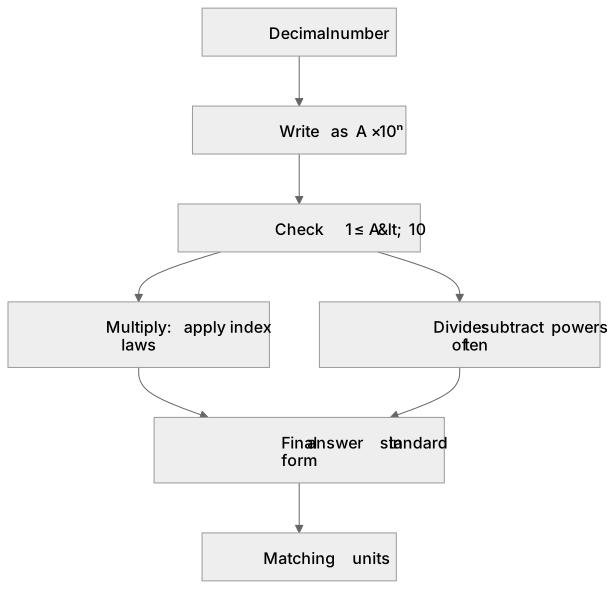
Standard form expresses very large or microscopic numbers conveniently in the format A × 10ⁿ, where A is a number between 1 and 10 and n is an integer. In cell biology, microscopic structures possess dimensions far smaller than 1 meter: an erythrocyte has a diameter of roughly 7 × 10⁻⁶ m (0.000007 m), a bacterium measures 2 × 10⁻⁶ m, and a ribosome measures 2 × 10⁻⁸ m. Working with standard form requires applying index laws when multiplying, dividing, or comparing quantities.
For example: Dividing image length by actual length both expressed in standard form yields total magnification without handling cumbersome strings of zeros.
What earns the marks
- Converting decimal numbers into standard form A × 10ⁿ where 1 ≤ A < 10.
- Subtracting powers of ten correctly when dividing quantities in standard form.
- Expressing final calculated cellular dimensions in standard form with matching units.
Common mistakes and how to put them right
Leaving the coefficient A as 10 or greater, such as writing 70 × 10⁻⁷ m instead of 7 × 10⁻⁶ m.
Making sign errors with negative indices, such as adding rather than subtracting negative exponents when dividing.
Exam tips
- Double check that the coefficient is at least 1 and strictly less than 10 before finalizing your answer.
- When using standard form on a scientific calculator, use the EXP or ×10ˣ button to avoid order of operation errors.
Try the lesson
The start of the Cell structures: calculate with numbers written in standard form (Higher tier only) lesson, made from teaching notes for this specification point.
Have a go first
A ribosome has a diameter of approximately 2 × 10⁻⁸ m. A typical animal cell has a diameter of 8 × 10⁻⁶ m. How many times larger is the cell diameter than the ribosome diameter?
Listen
Standard form expresses very large or microscopic numbers conveniently in the format A × 10ⁿ, where A is a number between 1 and 10 and n is an integer. In cell biology, microscopic structures possess dimensions far smaller than 1 meter: an erythrocyte has a diameter of roughly 7 × 10⁻⁶ m (0.000007 m), a bacterium measures 2 × 10⁻⁶ m, and a ribosome measures 2 × 10⁻⁸ m. Working with standard form requires applying index laws when multiplying, dividing, or comparing quantities. For example, dividing image length by actual length both expressed in standard form yields total magnification without handling cumbersome strings of zeros. A strong answer earns marks for these points. converting decimal numbers into standard form A × 10ⁿ where 1 ≤ A < 10. subtracting powers of ten correctly when dividing quantities in standard form. expressing final calculated cellular dimensions in standard form with matching units. Exam tip: Double check that the coefficient is at least 1 and strictly less than 10 before finalizing your answer.
See it
Label the diagram
Some boxes have lost their names. Pick the right name for each number.
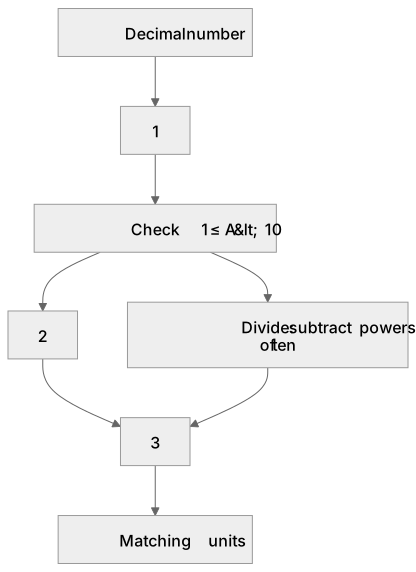
1Box 1
2Box 2
3Box 3
There is more to this lesson
The full lesson goes on to check your understanding and help you earn the marks. Create a free account to carry on, with your progress saved.
A week of Premium from your first lesson · Then the free plan continues · No card, no charge
Test your understanding of Cell structures: calculate with numbers written in standard form (Higher tier only)
Active recall beats re-reading. Take an instant quiz now to test what you’ve learned and lock it into long-term memory.
A week of Premium from your first lesson · Then the free plan continues · No card, no charge