OCR · GCSE · Biology
Course version: J247 · Version from Sept 2018
Describe and explain some possible biotechnological solutions to the…
Full specification wording
Feeding the human race: describe and explain some possible biotechnological solutions to the demands of the growing human population (to include: genetic modification) (content found only in the biology separate science qualification)
Biotechnological solutions provide sustainable, space-efficient methods to feed the expanding human population.
- Point 8 of 8
- 2 key terms
Study notes
From the teaching notes for this specification point.
The idea
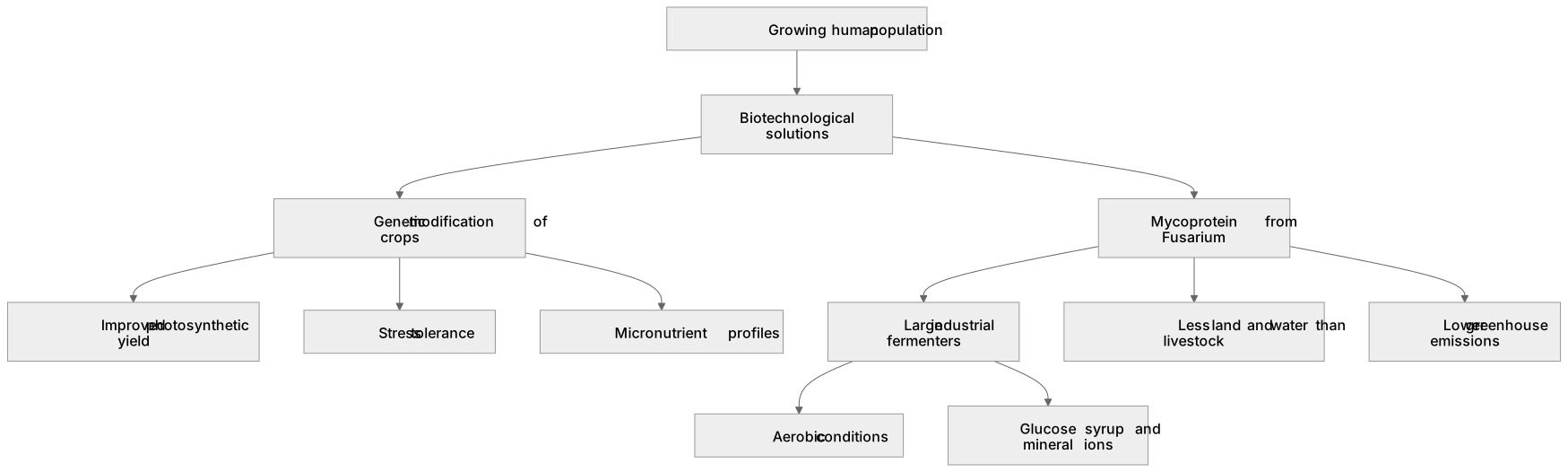
Biotechnological solutions provide sustainable, space-efficient methods to feed the expanding human population. Genetic modification engineers staple crops with enhanced photosynthetic rates, drought resistance, and enriched nutritional content. Beyond crops, industrial microbiology utilizes large-scale fermenters to culture microorganisms. A prime example is the production of mycoprotein, a high-protein meat substitute derived from the filamentous fungus Fusarium. Cultured under continuous aerobic conditions with glucose syrup and mineral ions, mycoprotein generates high-fibre protein rapidly, requiring significantly less land, water, and fossil fuels than traditional cattle farming while producing minimal greenhouse emissions.
What earns the marks
- Describe genetic modification of crops to improve photosynthetic yield, stress tolerance, and micronutrient profiles.
- Explain the production of mycoprotein using the fungus Fusarium cultured in large industrial fermenters under aerobic conditions.
- Explain the environmental advantages of mycoprotein: requires far less land and water than livestock, generating protein with lower greenhouse emissions.
Common mistakes and how to put them right
Stating mycoprotein is made from bacteria or plant leaves, rather than the fungus Fusarium.
Forgetting that fungal fermenters require aerobic conditions with oxygen and continuous glucose and mineral supplies.
Exam tips
- Remember the name of the fungus: Fusarium; it is grown in fermenters on glucose syrup to produce mycoprotein.
- Compare mycoprotein to beef farming in terms of trophic efficiency: converting glucose directly into fungal biomass loses far less energy than feeding cattle.
Try the lesson
The start of the Feeding the human race: describe and explain some possible biotechnological solutions to the demands of the growing human population (to include: genetic modification) (content found only in the biology separate science qualification) lesson, made from teaching notes for this specification point.
Have a go first
Which of these is a biotechnological solution that can help to feed a growing human population?
Listen
Biotechnological solutions provide sustainable, space-efficient methods to feed the expanding human population. Genetic modification engineers staple crops with enhanced photosynthetic rates, drought resistance, and enriched nutritional content. Beyond crops, industrial microbiology utilizes large-scale fermenters to culture microorganisms. A prime example is the production of mycoprotein, a high-protein meat substitute derived from the filamentous fungus Fusarium. Cultured under continuous aerobic conditions with glucose syrup and mineral ions, mycoprotein generates high-fibre protein rapidly, requiring significantly less land, water, and fossil fuels than traditional cattle farming while producing minimal greenhouse emissions. A strong answer earns marks for these points. Describe genetic modification of crops to improve photosynthetic yield, stress tolerance, and micronutrient profiles. Explain the production of mycoprotein using the fungus Fusarium cultured in large industrial fermenters under aerobic conditions. Explain the environmental advantages of mycoprotein: requires far less land and water than livestock, generating protein with lower greenhouse emissions. Exam tip: Remember the name of the fungus: Fusarium; it is grown in fermenters on glucose syrup to produce mycoprotein.
See it
Key words
Say what each word means before you turn the card.
genetic modification
Try answering aloud or in your head before turning the card.
mycoprotein
Try answering aloud or in your head before turning the card.
See every definition
- genetic modification
- Engineering staple crops with enhanced photosynthetic rates, drought resistance, and enriched nutritional content.
- mycoprotein
- A high-protein meat substitute derived from the filamentous fungus Fusarium, cultured under continuous aerobic conditions with glucose syrup and mineral ions.
Label the diagram
Some boxes have lost their names. Pick the right name for each number.
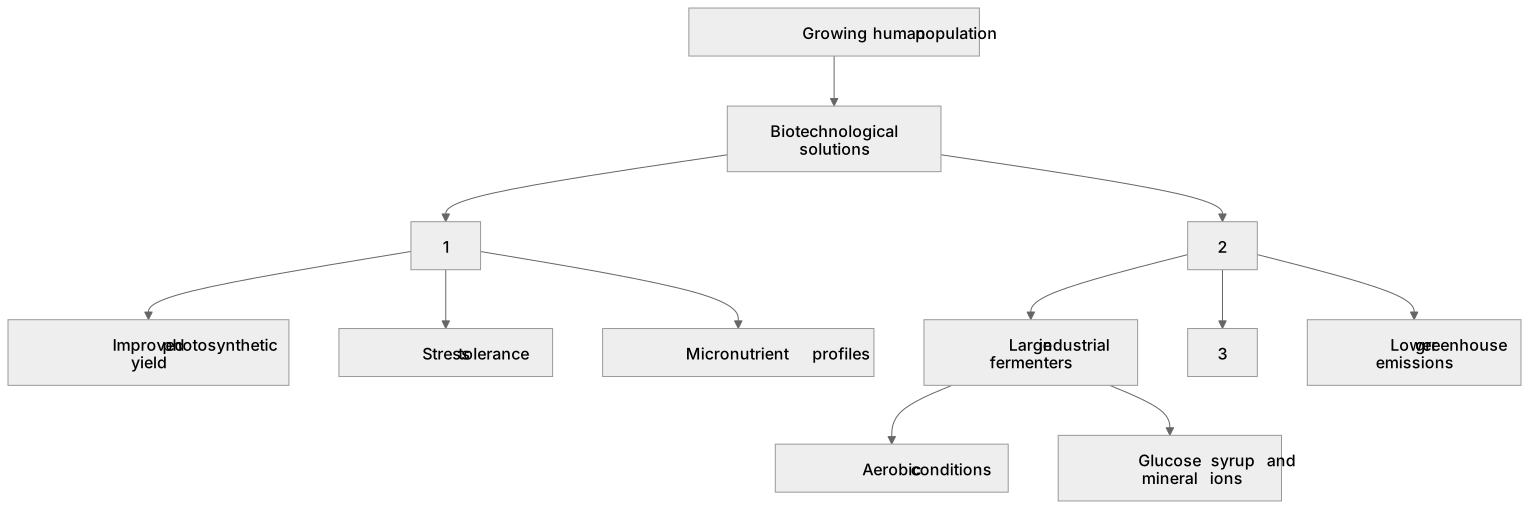
1Box 1
2Box 2
3Box 3
There is more to this lesson
The full lesson goes on to check your understanding and help you earn the marks. Create a free account to carry on, with your progress saved.
A week of Premium from your first lesson · Then the free plan continues · No card, no charge
Test your understanding of Feeding the human race: describe and explain some possible biotechnological solutions to the demands of the growing human population (to include: genetic modification) (content found only in the biology separate science qualification)
Active recall beats re-reading. Take an instant quiz now to test what you’ve learned and lock it into long-term memory.
A week of Premium from your first lesson · Then the free plan continues · No card, no charge