OCR · GCSE · Biology
Course version: J247 · Version from Sept 2018
Describe the interactions between different types of disease (to include:…
Full specification wording
Monitoring and maintaining health: describe the interactions between different types of disease (to include: HIV and tuberculosis; HPV and cervical cancer)
Diseases frequently interact, where infection with one condition increases vulnerability to another.
- Point 8 of 29
- 2 key terms
Study notes
From the teaching notes for this specification point.
The idea
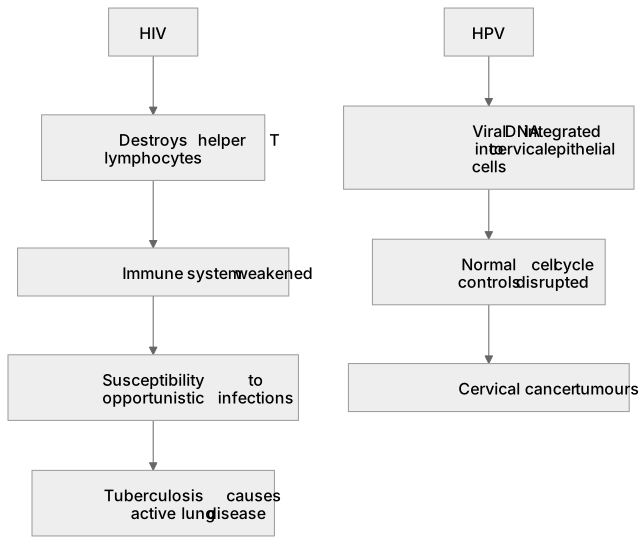
Diseases frequently interact, where infection with one condition increases vulnerability to another. A major clinical interaction occurs between Human Immunodeficiency Virus (HIV) and tuberculosis (TB). HIV infects and destroys helper T lymphocytes, severely suppressing adaptive immune responses; this immunodeficiency allows opportunistic bacteria like Mycobacterium tuberculosis to cause severe, active lung disease. Another interaction involves Human Papillomavirus (HPV) and cervical cancer: high-risk strains of sexually transmitted HPV integrate viral DNA into cervical epithelial cells, disrupting normal cell cycle controls and triggering malignant cervical cancer tumours.
What earns the marks
- Explain that HIV destroys white blood cells, weakening the immune system and increasing susceptibility to opportunistic infections like tuberculosis.
- Explain that persistent infection with Human Papillomavirus (HPV) triggers changes in cervical cells that lead to cervical cancer.
- State that physical illness can lower resistance to other infections or lead to mental health conditions like depression.
Common mistakes and how to put them right
Stating that HIV causes tuberculosis directly, rather than explaining that HIV damages the immune system so TB bacteria can cause disease.
Believing HPV is a bacterial infection rather than a sexually transmitted virus.
Exam tips
- Use precise phrasing: HIV weakens the immune system so pathogens like tuberculosis cannot be fought off.
- Mention the HPV vaccine as a preventative measure against cervical cancer.
Try the lesson
The start of the Monitoring and maintaining health: describe the interactions between different types of disease (to include: HIV and tuberculosis; HPV and cervical cancer) lesson, made from teaching notes for this specification point.
Have a go first
HIV can interact with tuberculosis because HIV attacks which part of the body?
Listen
Diseases frequently interact, where infection with one condition increases vulnerability to another. A major clinical interaction occurs between Human Immunodeficiency Virus (HIV) and tuberculosis (TB). HIV infects and destroys helper T lymphocytes, severely suppressing adaptive immune responses; this immunodeficiency allows opportunistic bacteria like Mycobacterium tuberculosis to cause severe, active lung disease. Another interaction involves Human Papillomavirus (HPV) and cervical cancer: high-risk strains of sexually transmitted HPV integrate viral DNA into cervical epithelial cells, disrupting normal cell cycle controls and triggering malignant cervical cancer tumours. A strong answer earns marks for these points. Explain that HIV destroys white blood cells, weakening the immune system and increasing susceptibility to opportunistic infections like tuberculosis. Explain that persistent infection with Human Papillomavirus (HPV) triggers changes in cervical cells that lead to cervical cancer. State that physical illness can lower resistance to other infections or lead to mental health conditions like depression. Exam tip: Use precise phrasing: HIV weakens the immune system so pathogens like tuberculosis cannot be fought off.
See it
Key words
Say what each word means before you turn the card.
HIV and tuberculosis
Try answering aloud or in your head before turning the card.
HPV and cervical cancer
Try answering aloud or in your head before turning the card.
See every definition
- HIV and tuberculosis
- A major clinical interaction in which HIV destroys helper T lymphocytes, and this immunodeficiency allows opportunistic bacteria like Mycobacterium tuberculosis to cause severe, active lung disease.
- HPV and cervical cancer
- An interaction in which high-risk strains of sexually transmitted HPV integrate viral DNA into cervical epithelial cells, disrupting normal cell cycle controls and triggering malignant cervical cancer tumours.
Label the diagram
Some boxes have lost their names. Pick the right name for each number.
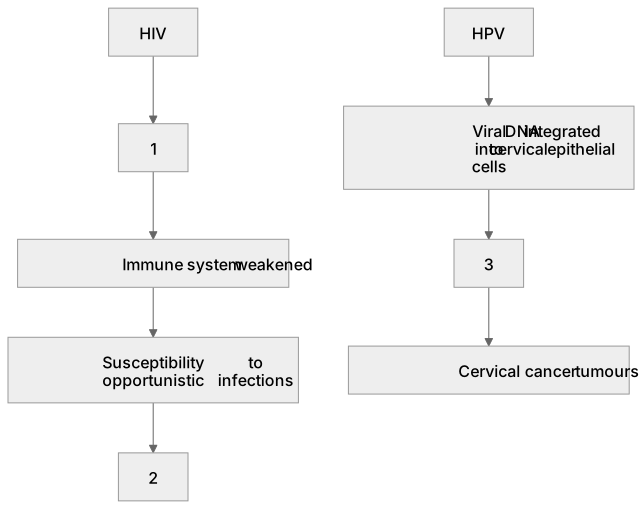
1Box 1
2Box 2
3Box 3
There is more to this lesson
The full lesson goes on to check your understanding and help you earn the marks. Create a free account to carry on, with your progress saved.
A week of Premium from your first lesson · Then the free plan continues · No card, no charge
Test your understanding of Monitoring and maintaining health: describe the interactions between different types of disease (to include: HIV and tuberculosis; HPV and cervical cancer)
Active recall beats re-reading. Take an instant quiz now to test what you’ve learned and lock it into long-term memory.
A week of Premium from your first lesson · Then the free plan continues · No card, no charge