OCR · GCSE · Biology
Course version: J247 · Version from Sept 2018
Explain the importance of sugars in the synthesis and breakdown of…
Full specification wording
Respiration: explain the importance of sugars in the synthesis and breakdown of carbohydrates (to include: use of the terms monomer and polymer)
Simple sugars such as glucose serve as single monomer building blocks in carbohydrate biochemistry.
- Point 4 of 6
- 4 key terms
Study notes
From the teaching notes for this specification point.
The idea
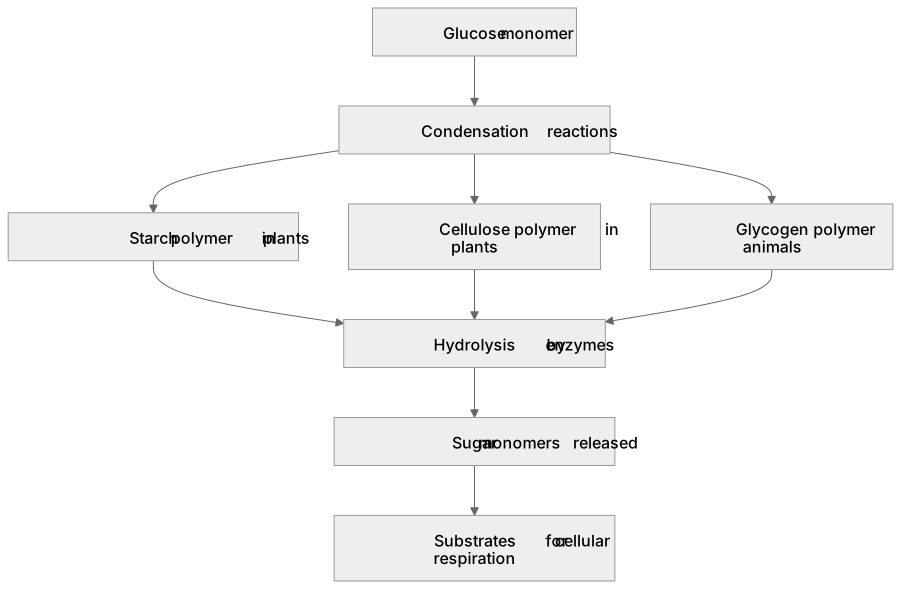
Simple sugars such as glucose serve as single monomer building blocks in carbohydrate biochemistry. During condensation reactions, enzyme systems link multiple glucose monomers together into large polymer chains. In plants, glucose monomers polymerize into starch for energy storage or cellulose to build strong cell walls; in animals, excess glucose is polymerized into glycogen stored in liver and muscle cells. Conversely, when energy is needed, digestive or cellular enzymes break down these polymers via hydrolysis into individual sugar monomers, readily available to enter cellular respiration.
What earns the marks
- Defining simple sugars like glucose as monomers that join to synthesize carbohydrate polymers.
- Identifying starch and cellulose in plants, and glycogen in animals, as polymers of glucose.
- Explaining that carbohydrate breakdown releases sugar monomers to act as substrates for respiration.
Common mistakes and how to put them right
Confusing monomer (single sugar unit) and polymer (long chain of sugar units).
Stating that plants store carbohydrate as glycogen or animals store carbohydrate as starch.
Exam tips
- Use the terms monomer and polymer explicitly in your answer when describing glucose and starch.
- State the dual roles of glucose: synthesized into storage polymers (starch/glycogen) and released by breakdown for respiration.
Try the lesson
The start of the Respiration: explain the importance of sugars in the synthesis and breakdown of carbohydrates (to include: use of the terms monomer and polymer) lesson, made from teaching notes for this specification point.
Have a go first
Which term describes a simple sugar such as glucose?
Listen
Simple sugars such as glucose serve as single monomer building blocks in carbohydrate biochemistry. During condensation reactions, enzyme systems link multiple glucose monomers together into large polymer chains. In plants, glucose monomers polymerize into starch for energy storage or cellulose to build strong cell walls; in animals, excess glucose is polymerized into glycogen stored in liver and muscle cells. Conversely, when energy is needed, digestive or cellular enzymes break down these polymers via hydrolysis into individual sugar monomers, readily available to enter cellular respiration. A strong answer earns marks for these points. defining simple sugars like glucose as monomers that join to synthesize carbohydrate polymers. identifying starch and cellulose in plants, and glycogen in animals, as polymers of glucose. explaining that carbohydrate breakdown releases sugar monomers to act as substrates for respiration. Exam tip: Use the terms monomer and polymer explicitly in your answer when describing glucose and starch.
See it
Key words
Say what each word means before you turn the card.
monomer
Try answering aloud or in your head before turning the card.
polymer
Try answering aloud or in your head before turning the card.
glucose and starch
Try answering aloud or in your head before turning the card.
glycogen
Try answering aloud or in your head before turning the card.
See every definition
- monomer
- A single sugar unit, such as glucose, that joins with others to synthesise carbohydrate polymers.
- polymer
- A long chain of sugar units, such as starch, cellulose or glycogen, built from glucose monomers.
- glucose and starch
- Glucose monomers polymerise into starch for energy storage in plants, and are released by breakdown for respiration.
- glycogen
- A polymer of glucose in animals, stored in liver and muscle cells when glucose is in excess.
Label the diagram
Some boxes have lost their names. Pick the right name for each number.
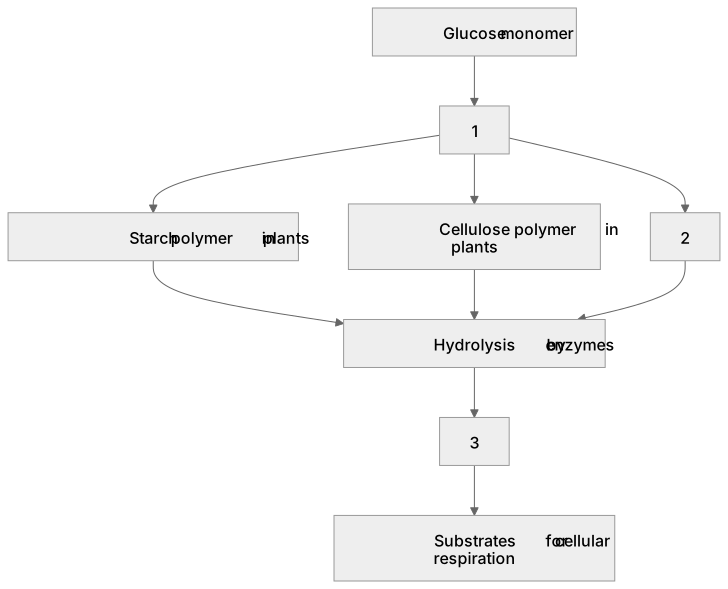
1Box 1
2Box 2
3Box 3
There is more to this lesson
The full lesson goes on to check your understanding and help you earn the marks. Create a free account to carry on, with your progress saved.
A week of Premium from your first lesson · Then the free plan continues · No card, no charge
Test your understanding of Respiration: explain the importance of sugars in the synthesis and breakdown of carbohydrates (to include: use of the terms monomer and polymer)
Active recall beats re-reading. Take an instant quiz now to test what you’ve learned and lock it into long-term memory.
A week of Premium from your first lesson · Then the free plan continues · No card, no charge