OCR · GCSE · Biology
Course version: J247 · Version from Sept 2018
Describe the human circulatory system (to include: the relationship with…
Full specification wording
The challenges of size: describe the human circulatory system (to include: the relationship with the gaseous exchange system, the need for a double circulatory system in mammals and the arrangement of vessels)
The human circulatory system operates as a closed double circulation where blood passes through the four-chambered heart twice during each complete circuit.
- Point 7 of 14
- 4 key terms
Study notes
From the teaching notes for this specification point.
The idea
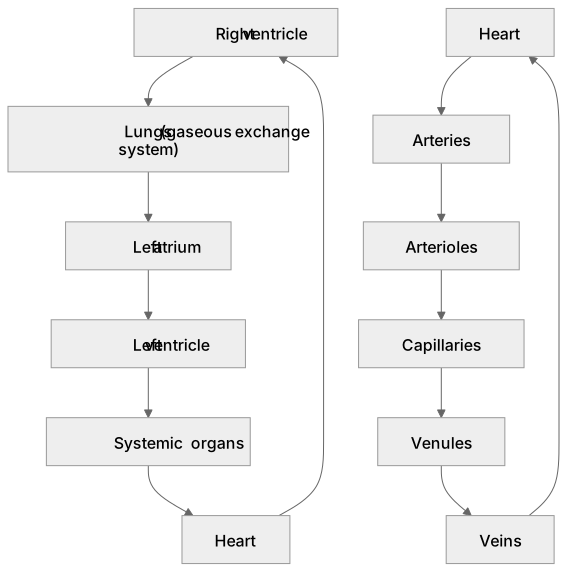
The human circulatory system operates as a closed double circulation where blood passes through the four-chambered heart twice during each complete circuit. In the pulmonary circulation, the right ventricle pumps deoxygenated blood under low pressure to the lungs (gaseous exchange system), where it takes up oxygen and discharges carbon dioxide across alveoli before returning to the left atrium. In the systemic circulation, the muscular left ventricle pumps oxygenated blood under high pressure to systemic organs. This double system prevents pressure drop, sustaining the rapid delivery of oxygen needed for high endothermic metabolism.
What earns the marks
- Describing a double circulatory system where blood passes through the heart twice per complete body circuit.
- Distinguishing pulmonary circulation to the lungs from systemic circulation to the body organs.
- Explaining the double circulation allows blood to be repressurized to supply high metabolic demands.
- Outlining vessel arrangement: heart to arteries to arterioles to capillaries to venules to veins to heart.
Common mistakes and how to put them right
Confusing single circulation (in fish) with double circulation (in mammals).
Claiming pulmonary circulation operates under high pressure, which would rupture delicate pulmonary capillaries.
Exam tips
- Remember the two circuits: Pulmonary (heart to lungs and back) and Systemic (heart to body tissues and back).
- Explain the adaptive advantage of double circulation: high pressure delivery of oxygenated blood sustains high mammalian metabolic rates.
Try the lesson
The start of the The challenges of size: describe the human circulatory system (to include: the relationship with the gaseous exchange system, the need for a double circulatory system in mammals and the arrangement of vessels) lesson, made from teaching notes for this specification point.
Have a go first
Which blood vessel carries oxygenated blood away from the heart to the body?
Listen
The human circulatory system operates as a closed double circulation where blood passes through the four-chambered heart twice during each complete circuit. In the pulmonary circulation, the right ventricle pumps deoxygenated blood under low pressure to the lungs (gaseous exchange system), where it takes up oxygen and discharges carbon dioxide across alveoli before returning to the left atrium. In the systemic circulation, the muscular left ventricle pumps oxygenated blood under high pressure to systemic organs. This double system prevents pressure drop, sustaining the rapid delivery of oxygen needed for high endothermic metabolism. A strong answer earns marks for these points. describing a double circulatory system where blood passes through the heart twice per complete body circuit. distinguishing pulmonary circulation to the lungs from systemic circulation to the body organs. explaining the double circulation allows blood to be repressurized to supply high metabolic demands. outlining vessel arrangement: heart to arteries to arterioles to capillaries to venules to veins to heart. Exam tip: Remember the two circuits: Pulmonary (heart to lungs and back) and Systemic (heart to body tissues and back).
See it
Key words
Say what each word means before you turn the card.
double circulatory system
Try answering aloud or in your head before turning the card.
pulmonary circulation
Try answering aloud or in your head before turning the card.
systemic circulation
Try answering aloud or in your head before turning the card.
vessel arrangement
Try answering aloud or in your head before turning the card.
See every definition
- double circulatory system
- A system where blood passes through the heart twice during each complete circuit.
- pulmonary circulation
- The circuit in which the right ventricle pumps deoxygenated blood under low pressure to the lungs and it returns to the left atrium.
- systemic circulation
- The circuit in which the muscular left ventricle pumps oxygenated blood under high pressure to systemic organs.
- vessel arrangement
- The order of vessels from heart to arteries to arterioles to capillaries to venules to veins to heart.
There is more to this lesson
The full lesson goes on to check your understanding and help you earn the marks. Create a free account to carry on, with your progress saved.
A week of Premium from your first lesson · Then the free plan continues · No card, no charge
Test your understanding of The challenges of size: describe the human circulatory system (to include: the relationship with the gaseous exchange system, the need for a double circulatory system in mammals and the arrangement of vessels)
Active recall beats re-reading. Take an instant quiz now to test what you’ve learned and lock it into long-term memory.
A week of Premium from your first lesson · Then the free plan continues · No card, no charge